

























































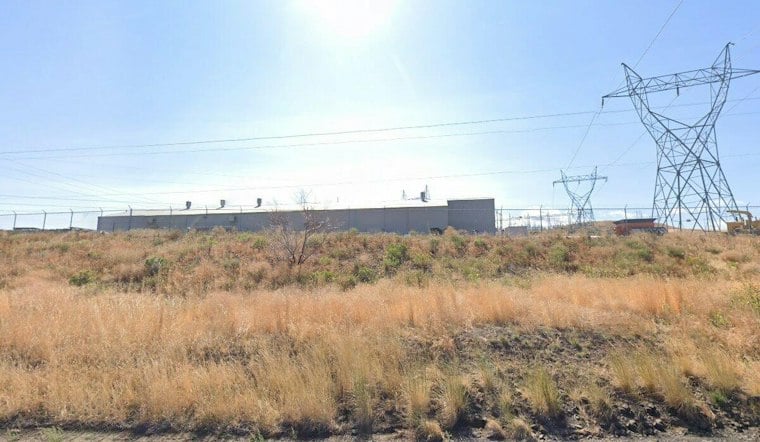
Residents of Dallesport, a small community along the Columbia River in Klickitat County, Washington, are organizing against a proposed hyperscale data center campus that could rank among the three largest data centers in the United States by energy capacity. No permit applications have been filed yet, but neighbors say they are not waiting to find out what comes next.
The site is owned by Scott Webster, who has contracted with Cushman and Wakefield to market the property, according to KUOW. Marketing materials describing the project became public only after Klickitat County community members filed a public records request. Those materials describe a potential campus covering nearly 300 acres and millions of square feet of development, with energy capacity reaching one gigawatt — a scale that, per analysis cited by KUOW from the research firm Cleanview, would place it among the nation's biggest data centers.
Records reviewed separately by the Goldendale Sentinel add texture — and some discrepancy — to those numbers. Klickitat PUD records describe a proposed 345.96-acre site, while the Cushman & Wakefield listing referenced a 296-acre parcel, a gap the Sentinel's reporting does not resolve. Separately, a project request cited by the Sentinel projected an initial data-center load of 300 to 350 megawatts with room for additional expansion, while the Cushman & Wakefield marketing described a potential 500-megawatt data-center load supported by up to 1 gigawatt of LNG-backed generation capacity alongside a 50-megawatt solar component.
Neighbors Living in the Shadow of the Pipeline
Natalie Hassell lives about one mile from the proposed site and is among those working to block it, according to the same report. She has written to each of the Klickitat County commissioners urging them not to allow the project to move forward, and says her objections extend beyond the data center itself: she opposes artificial intelligence broadly and is concerned about surveillance technology.
Jenn Sharp lives roughly 1,600 feet from a gas pipeline and opposes any extension of that pipeline tied to the project, the station's report notes. A pitch deck tied to the proposal lists Columbia River hydroelectricity, solar power, and liquefied natural gas among potential power sources, and indicates plans to use renewable energy along with exploring a closed-loop water system — details that have done little to ease either woman's worries about the project's resource and environmental costs.
A Push for a Statewide Pause
Sharp and Hassell say they view opposition to the Dallesport proposal as part of a broader effort to slow the rapid rollout of AI infrastructure. Sharp plans to advocate for a statewide data center moratorium during Washington's upcoming legislative session, telling the outlet she wants a pause on data centers and AI so humanity can catch up. Community members are also pressuring local officials directly and working alongside area nonprofits and activists to push for local and statewide moratoria on new data center construction.
Webster, for his part, says he is seeking a development partner committed to a meaningful, long-term economic opportunity for Dallesport and Klickitat County, and believes the project could bring jobs and infrastructure improvements. He has said he supports a community benefits agreement that would establish formal commitments around jobs and infrastructure. Columbia Gorge News reported that Webster's assistant had previously given the Washington State Standard the information that the property was still being evaluated for data-center development and advanced chip manufacturing; the Goldendale Sentinel separately reported Webster's statement that no final development decision had been made.
Early-Stage Paperwork, Not a Done Deal
The Goldendale Sentinel's reporting underscores just how preliminary the project remains. Klickitat PUD has submitted Line Load and Interconnection Request forms to the Bonneville Power Administration, paperwork that simply allows BPA to begin studying the request, and the project sits in BPA's feasibility-study phase. KPUD has said it has not seen a water plan for the proposed project at this stage, and Webster has said the Dallesport property continues to be actively farmed, which remains its current and foreseeable use.
Columbia Gorge News reported that KPUD submitted the Line Load and Interconnection Request in August 2025 on behalf of Core Peninsula LLC, seeking 1,000 megawatts of transmission capacity; this was the request previously reported by the Goldendale Sentinel. The utility later clarified that any new substation tied to the Dallesport proposal would be located in Dallesport itself, not in nearby Lyle. The same outlet reported that if all seven data centers currently proposed in Klickitat County were eventually built, they would add nearly 5,955.5 megawatts of electricity demand flowing through the county.
A Regional Pattern of Pushback
Dallesport's organizing effort mirrors fights playing out across the Pacific Northwest. In Oregon, OPB reported that Gov. Tina Kotek directed environmental regulators to pause certain data-center permits through July 2027, after a commissioned poll found nearly two-thirds of likely Oregon voters favored a temporary ban on data centers. Some Oregon lawmakers are working to regulate data centers, according to Government Technology.
Not every Oregon community sees the moratorium as good news. The city of Umatilla declared an emergency in response to the state's permitting pause, citing a threat of widespread financial loss; staff there estimated the city could lose more than $2.5 million in annual tax payments and $12 million in water infrastructure improvements tied to canceled projects. Meanwhile in Morrow County, Irrigon residents raised concerns about future development at a city planning commission meeting even as county officials and Amazon representatives held a promotional event nearby in Boardman, with one resident calling for more transparency and warning the county could become a leader in air pollution.
Illinois offers a glimpse of what regulation after the fact can look like. Aurora adopted a 180-day moratorium before enacting what ABC7 Chicago described as the state's most detailed data center rules in March 2026, requiring annual public reports on energy, water, and noise. Meta's data center in nearby DeKalb voluntarily disclosed drawing roughly 76,000 gallons of water a day, about 2.5% of the city's average daily use, while data centers across Aurora, DeKalb, and Elk Grove Village paid a combined sum well over $100 million in property taxes between 2022 and 2024 — numbers that illustrate both the fiscal upside and the resource questions now shadowing the Dallesport debate.





