

























































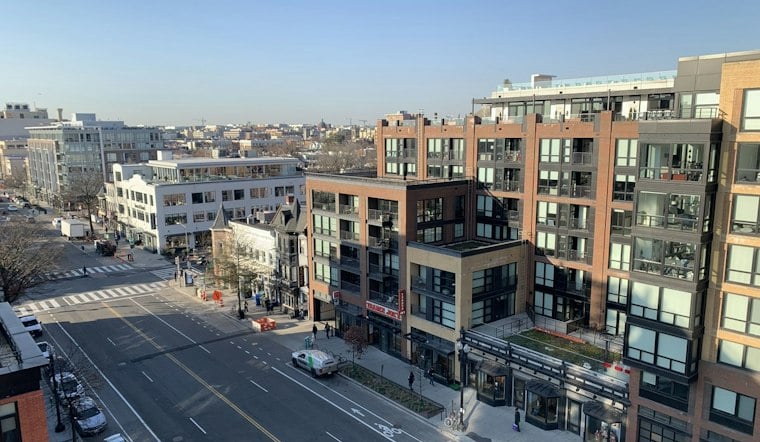
Sixteen multifamily properties across the Washington, D.C. region traded hands for a combined $1.8 billion in the third quarter of 2026, pushing year-to-date sales volume past the entire total recorded in 2025. The region's year-to-date median sale price settled at $297,800 per unit, as investment activity strengthened and the apartment market showed further signs of stabilizing after a rocky stretch.
The figures come from Northmarq's third-quarter report on the Washington-area multifamily market, as first detailed by Connect CRE. Regional vacancy declined 10 basis points during the quarter to 5.7%, marking the first quarterly decline in more than a year, though it remains 60 basis points above where it stood twelve months earlier. Asking rents held steady at $2,233 per month, unchanged from the second quarter but still down 0.8% year over year.
Deliveries Slow as Job Losses Ease
Per the Northmarq report, a slower pace of new apartment deliveries has coincided with easing employment losses across the region, a combination that appears to be taking some pressure off the market after months of rising vacancy. Regional deliveries are projected to total roughly 9,000 units for all of 2026, about 20% below the 10-year average, the same report notes. Even so, total regional employment has contracted by 1.6%, with losses totaling more than 50,000, the report states.
The slowdown in construction follows an earlier stretch of stabilization that Northmarq flagged back in the second quarter, when a swing in net absorption halted a multi-quarter rise in vacancy and pushed asking rents higher for the first time in over a year. That same Q2 report projected that Washington-area rents would end 2026 higher overall, reversing annual declines posted in each of the three prior quarters.
A Tale of Two Markets Within the Region
The recovery is not playing out evenly across Washington's submarkets. Northern Virginia rents were nearly flat from a year earlier, and the decline in Class A rents across the broader region has narrowed, according to Northmarq. The District and Suburban Maryland, meanwhile, posted a second consecutive quarter of declining vacancy, yet rents in those subregions continued to fall even as vacancy eased.
How quickly that trend turns around in the District and Suburban Maryland will likely shape how broad the regional recovery ultimately becomes. Trades in those submarkets have tended to involve smaller and older assets, a pattern distinct from the larger institutional deals concentrated in Northern Virginia, which captured roughly 60% of regional dollar volume during the first half of 2026 — more than double its share from a year earlier, per Northmarq's second-quarter report. Suburban Maryland accounted for about a third of that first-half volume, with the District making up roughly 7%.
Fairfax County's Shift Toward Older Buildings
Fairfax County's third-quarter sales activity shifted notably toward older Class B and Class C properties, which accounted for roughly three-quarters of the county's quarterly dollar volume, Northmarq's report found. The report attributed the county's median sale-price decline largely to that shift in the types of properties changing hands rather than to any broader repricing trend.
The third-quarter surge builds on a strong first half of the year. Washington metro multifamily sales volume reached approximately $3.8 billion between January and June, including $2.1 billion in the second quarter alone, according to Northmarq's mid-year report — a figure about 62% higher than the $1.3 billion recorded over the same stretch in 2025. The largest transaction of that first half was Preserve at Westfields, a 595-unit property sold by Northwood Ravin for $258.5 million. Occupancy across the Washington metro finished the second quarter at 95.3%, up 60 basis points since the end of 2025.
Diverging Estimates on Total Sales Volume
Not every research firm is measuring the market the same way. Matthews reported that Washington, D.C. recorded $17.0 billion in multifamily sales over the trailing twelve months, a 235% increase over the prior twelve-month period, with the third quarter alone accounting for $10.64 billion — a figure far larger than Northmarq's $1.8 billion tally for 16 regional property trades. Matthews noted that CoStar's own count put Q3 volume at $1.99 billion, which would imply trailing twelve-month volume of $8.4 billion on that basis, a number that itself diverges from Matthews' separate figures.
Matthews attributed its outsized third-quarter number to entity-level activity, noting that its Q3 volume was 5.4 times the prior four-quarter average and likely reflected the merger between AvalonBay and Equity Residential rather than a traditional surge in individual property sales. The varying figures underscore how differently firms can define and measure what counts as a multifamily sale in a single quarter.
Connect CRE's report on the Q3 findings was authored by Jasmine Kilman, content director of Connect Commercial Real Estate.



