

























































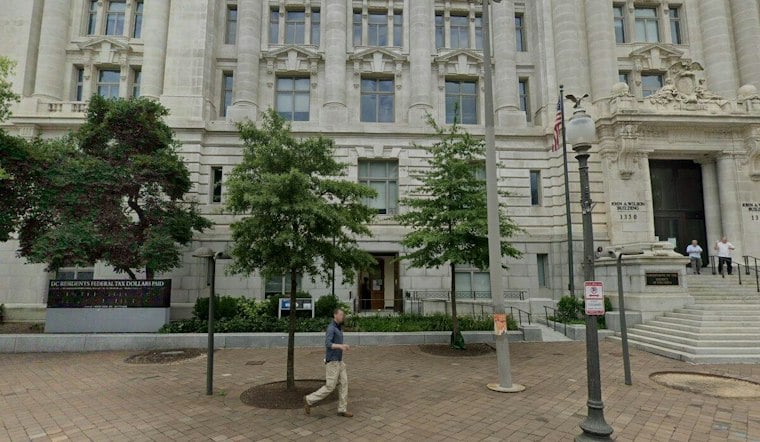
Rats chewing through car wiring, sewage bubbling up through a sink, and a roof leak that's stayed on the repair books for more than a year — these are everyday realities inside some of Washington, D.C.'s fire, EMS and police buildings, according to maintenance records reviewed as part of a push by D.C. lawmakers to force the city to finally fix them. On Monday, a D.C. Council committee unanimously advanced legislation meant to overhaul how the District plans, funds and tracks repairs at these facilities.
The D.C. Council's Judiciary and Public Safety Committee voted to advance the First Responders Facilities Modernization Act of 2026, according to WJLA. The bill would require the mayor and the Department of General Services to develop recurring master facilities plans, publish annual updates on safety concerns, staffing needs and underused or vacant properties, and produce six-year capital improvement plans spelling out project costs, timelines and justifications. It would also set standardized design specifications for police stations, substations and fire stations, and require public feasibility analyses before any project enters a capital plan.
The bill would add a first-responder planning framework to an existing District requirement: D.C. law directs the Department of General Services to publish an annual maintenance plan, beginning in 2025, covering maintenance goals, how facilities are prioritized, scheduled preventative work and estimated costs. That annual plan focuses on upkeep; the proposed legislation would require recurring, longer-range facilities planning and six-year capital plans for police, fire and EMS buildings. The existing maintenance-plan requirement took effect in 2024.
Rats, Mold and a Harbor Patrol Facility in Disrepair
The station's review of D.C. Department of General Services records found sewage backups, rodent infestations, roof leaks, heating problems and deteriorating infrastructure across public safety facilities citywide. A harbor patrol facility shared by the Metropolitan Police Department and Fire and EMS in Southwest Washington illustrates the pattern: maintenance records show a September report of a roof leak, a June report of sewage coming up through a sink, and a high-priority mouse infestation work order filed on November 19. Both the roof leak and mouse infestation work orders remained open at the time of the station's review.
At the D.C. Fire and EMS training academy on Shepherd Parkway in Southwest, maintenance reports cited crumbling steps, heating problems and a severe rain-related leak. That leak was first reported on October 30, 2025, and the work order remained open more than a year later. The station's reporting notes that an open work order does not necessarily mean a repair remains incomplete, though the timeline underscores how long some fixes can linger in the system.
Why Firehouse Repairs Aren't Just Cosmetic
D.C. firefighters work, eat and sleep in their stations during 24-hour shifts, using the buildings to decontaminate, prepare meals, rest and maintain equipment. Some firehouses date back to the era when horses pulled fire engines, and members have reported rats chewing through car wiring inside the stations. Fire companies are positioned strategically throughout the District to reach emergencies quickly, but firehouse garage doors can open and close dozens of times a day, and when one fails, a firetruck literally cannot leave the building — a malfunction that can delay the department's response to the public.
Dave Hoagland, president of the D.C. Firefighters Association, IAFF Local 36, said deferred maintenance can let manageable problems grow into bigger ones, and that aging infrastructure and maintenance delays create challenges across the department. He also said some roof replacement projects currently lack funding. The firefighters union supports similar requirements being applied across public safety facilities broadly.
The backlog sits alongside preventative-maintenance efforts already underway. Fire and EMS says it began quarterly servicing of plumbing, electrical and HVAC systems at its facilities in 2021, and that DGS later added an HVAC inspection and testing program. The department identified the average age of its buildings as its most consistent maintenance challenge, underscoring the difference between routine servicing and the larger replacements or modernizations that require capital funding. The department’s oversight responses describe those programs.
Council Members and MPD Weigh In
Councilmember Brooke Pinto, who chairs the Judiciary and Public Safety Committee, said virtually all MPD stations and substations need modernization, and that most fire and EMS facilities do too. She raised concerns that outdated buildings could make it harder to recruit first responders, and said those workers deserve habitable facilities that aren't leaking and stay warm in winter and cool in summer. Councilmember Charles Allen said firehouses function as homes where firefighters live for a full day at a time, and that many of the District's facilities are in poor condition.
Metropolitan Police Department Assistant Chief Nikki Lavenhouse said police facilities need improvement and that MPD supports modernized stations and better working conditions, noting that some of the same facility issues existed when she was a patrol officer roughly 18 years earlier. The District currently operates 33 fire stations, seven police stations and three police substations, and the bill would also create a civilian facilities specialist position within MPD to coordinate maintenance and capital improvements with the Department of General Services.
The Numbers Behind the Backlog
The Department of General Services has reported that only two fire stations were modernized over the preceding five years. DGS identified roughly 80 fire and EMS facility projects valued at about $42 million, along with 45 MPD facility projects carrying a combined budget of $11 million — public safety facility projects with combined reported budgets and values totaling $53 million. Osei Headley, deputy director of DGS's capital construction services division, said many of those projects amounted to targeted improvements rather than full modernizations, and cautioned that reported budgets and values don't necessarily represent money already spent.
DGS submitted 10 fire and EMS modernization projects for capital improvement funding, and five of those ten received design funding. Moving the remaining projects into actual construction would require DGS to request additional funding, and officials have said public safety facility investments remain subject to the District's broader budget process — meaning passage of the legislation would not guarantee funding for every project on the list.
The District’s proposed FY2027–32 capital plan includes more than $500 million for a broad slate of public-safety investments, not just station renovations. The package includes $350 million for fire trucks and ambulances and $27 million for a new fire station at the RFK campus, alongside other equipment and technology spending. Those figures show why a facilities plan and an appropriation are separate steps: the bill could make needs and priorities more visible, but construction still competes within the wider capital budget. The mayor’s budget announcement outlines the six-year package.
Modeled on a School Facilities Law
The bill is modeled after the Planning Actively for Comprehensive Education Facilities Act of 2016, known as the PACE Act, which created a framework for planning investments in D.C. public schools. DGS has said more than 30 public schools were modernized in the decade following that law's passage, a track record supporters are hoping to replicate for fire, EMS and police buildings.
The Council held a hearing on the legislation on September 23, and the Judiciary and Public Safety Committee advanced the bill on Monday. Supporters say the measure would give lawmakers and the public clearer information about facility needs, costs, timelines and implementation going forward. The First Responders Facilities Modernization Act is expected to go before the full D.C. Council next month, where it will face a final vote before potentially becoming law.





