

























































A 40-year-old Deerfield Beach architecture firm just got a new parent company built on artificial intelligence. GHA, formerly known as Gallo Herbert Architects, announced it has joined cove, an Atlanta-based AI-first architecture practice, marking the first time a firm has joined under cove's AI roll-up strategy and giving the young company its first foothold in South Florida.
The deal was announced Monday, and according to cove's announcement, the move also marks the company's expansion into South Florida. GHA will keep operating under its own name as a cove.inc company, and Brian Herbert, who has led the firm for about 30 years, will continue as CEO. The terms of the agreement were not disclosed, per the same release.
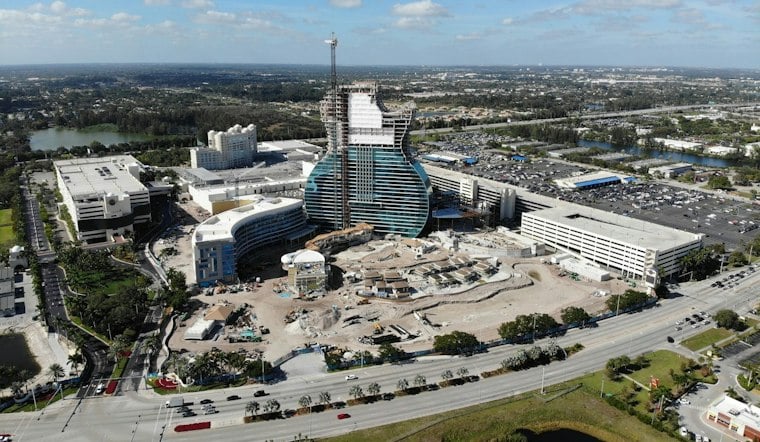
GHA brings four decades of South Florida relationships to the arrangement. The firm has designed affordable and senior housing, retail, self-storage and public projects since 1985, and is licensed in 13 states and Washington, D.C., while also working in the Caribbean and Central America, the announcement notes. Its project list includes a 108,000-square-foot headquarters and design center for Hard Rock International and the Seminole Tribe of Florida, according to the same source.
What Cove Brings to the Table
Cove was founded in 2017 and is based in Atlanta, where it began, per Common Edge, as a software company before expanding into architecture itself. Its pitch to GHA and future partner firms centers on proprietary technology built in-house that the company says produces feasibility studies and fully coordinated design iterations 40 to 50 percent faster than traditional practice, according to the prnewswire release. Under cove's roll-up model, firms that join keep their names, teams and design identities while gaining access to that technology.
Cove describes its design process as mapping roughly 87 steps from concept to construction drawings, with AI layered into each one, the company told Common Edge. Despite the AI-first branding, cove says only about 10 percent of its system actually runs on large language models — the rest is code the company wrote itself, per the same report. On an earlier project, a 15-unit housing complex at 1247 Ralph David Abernathy Boulevard in Atlanta's West End, cove reported a 60 percent reduction in design timelines, 95 percent accuracy on cost estimates and a 40 percent cut in design iteration expenses, according to Bisnow.
Why Architecture Firms Are Looking at AI
The GHA deal lands as the architecture industry grapples with a sluggish market and uneven returns from new technology. The AIA Firm Survey Report 2026, drawing on data from 900 firms, found firm revenue down an average of 3 percent from 2025 and expected to stay flat in 2027. The same AIA data cited elsewhere shows 60 percent of firms implementing AI report improved efficiency in their workflows, a figure cove itself has pointed to on its own blog.
Cove's leadership has framed the GHA deal as proof of concept for a broader strategy. As the citybiz report on the announcement notes, cove co-founder and CEO Sandeep Ahuja said architecture firms that pair deep expertise with real technology will define a new era for the profession. Brian Herbert, for his part, said joining cove will let GHA test ideas earlier, answer clients faster and continue its established way of working, according to the same citybiz report.
GHA's South Florida Footprint
GHA's portfolio stretches across commercial and public projects in the region. The firm designed Miramar Square, a 355,000-square-foot lifestyle center in Miramar, Florida, according to GHA's own project listings. It also developed a master plan and repositioning program for John Knox Village, a 68-acre campus in Pompano Beach, per the firm's site. The company additionally completed the Heart of Boynton Village redevelopment, which GHA describes as an award-winning project.
Cove, meanwhile, says it remains committed to its hometown of Atlanta even as it expands south, pointing to local projects including the restoration of the historic Ashby Theatre on Atlanta's westside. The company describes itself as working with real estate developers from early feasibility through construction documents, with a stated goal of helping clients test more options early, reduce rework and keep projects on schedule.



