

























































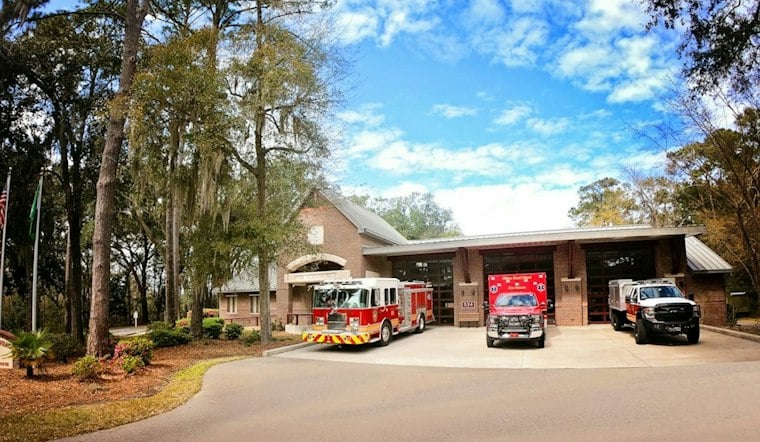
Elmwood Place’s fire and emergency medical services are scheduled to shift to St. Bernard on Dec. 1. The firefighters’ association has raised questions about where crews will be stationed, how quickly they can reach calls and what the arrangement will cost residents over time. It has also questioned the possible effect on St. Bernard’s coverage, according to WCPO 9 Cincinnati.
What residents have been told about coverage
The association has questioned whether the distance from St. Bernard’s stations was considered and how taking on hundreds of additional calls a year might affect service elsewhere. Spears said St. Bernard’s fire chief had assured him the departments would work through coverage concerns, and he expressed confidence that St. Bernard could meet Elmwood Place’s needs, WCPO reported. Spears also said St. Bernard had approached the village about providing full coverage and would review Elmwood Place’s equipment for items it might use.
An ordinance cited in the article calls for St. Bernard’s fire chief to provide Elmwood Place with monthly reports on activities and services. The St. Bernard ordinance is the cited record; whether that reporting provision applies to the new service arrangement is not established here.
The decision and the department’s capacity
Elmwood Place Village Council approved the change 5-0 at a special meeting on Nov. 17, with one member absent. The firefighters’ association said it had not received appropriate input or notice and that department command and village administration had not discussed the decision beforehand. According to WCPO, members received letters the day after Thanksgiving saying their services would no longer be needed starting Dec. 1.
Spears, a former firefighter, cited village finances, difficulty covering shifts and aging equipment as reasons for the transition. WCPO reported that the department had 17 staff members, handled about 800 to 900 calls annually and had historically used volunteers to fill staffing gaps. Spears said the village could not operate a station with six firefighters. He also cited a 34-year-old fire engine and a seven-year-old squad vehicle that the village could not afford to replace. Firefighters had been paid $13.50 an hour under the previous arrangement.
Volunteer staffing pressures across Ohio
About 70% of Ohio’s nearly 1,200 fire departments are volunteer departments or have some volunteer component, and those departments have faced declining volunteer numbers while calls have increased, according to the Ohio State Fire Marshal Portal. That combination points to broader staffing pressure for departments that rely on volunteers.
Spears acknowledged that firefighters received notice closer to the transition than he had wanted. He said Elmwood Place and St. Bernard had revised their agreement before completing it, but did not disclose its financial terms. He told WCPO the cost would be lower than what he believes Elmwood Place would have to spend to run an adequate department of its own.
Plans for the station and equipment
Elmwood Place intends to sell equipment it no longer needs. The former fire station is expected to stay a village building; Spears said the maintenance department would probably use it after the trucks are sold, WCPO reported.
Other Ohio communities face different choices
The Elmwood Place change comes amid varied approaches to funding and arranging emergency services elsewhere in Ohio. In Southwest Ohio, 11 communities were considering first-responder levies, including an 8-mill proposal in Lockland expected to raise more than $601,000 and a Forest Park levy projected to generate more than $2 million annually, according to WVXU.
In another unsettled service arrangement, New Philadelphia and Goshen Township had not reached a new fire and EMS agreement before their contract’s Dec. 31 expiration. New Philadelphia residents paid $111.11 per person for service, compared with $44.48 per Goshen Township resident, the Times Reporter reported. Hiram Township took a different path, building its own department in under two months with donated and rented equipment after a dispute with Hiram Village; News 5 Cleveland reported the two governments were operating separate departments in the same community during mediation.
St. Bernard’s service is scheduled to begin Dec. 1. Whether response times and costs match the association’s concerns can be assessed only after the new arrangement is in operation.





