

























































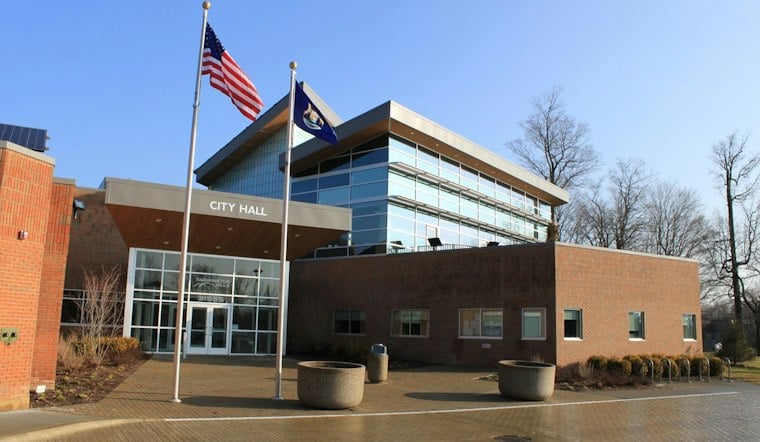
A Farmington City Council meeting turned into a show of hands this past Tuesday, with nearly 80% of attendees raising theirs to signal they had come to protest a potential data center in the city. More than an hour of public comment followed, as residents pressed officials on water use, pollution, and what they described as a lack of transparency about the city's dealings with companies in the data center industry.
A Packed Room and a Month of Pent-Up Questions
The turnout followed an October informational session the Farmington City Council held on data centers, an event where, according to Tri-City Record, the public was not permitted to speak. At Tuesday's meeting, residents cited city non-disclosure agreements as a specific source of concern, and members of the San Juan County Data Center Dissent Coalition addressed the council directly.
Among those who spoke was Cheyenne Justice, a San Juan College student, who said a data center would strain the water and money available to Farmington and Aztec residents and farmers. Steven Shelby told the council that data centers consume substantial water and electricity while offering few long-term jobs, and Mary Rankin said data centers use water and produce wastewater that would stress an already overburdened system. Residents also raised concerns about noise and pollution tied to such facilities, concerns that carry particular weight in a city that serves as an agricultural hub and regularly experiences summer droughts.
The Mayor's Denial, and the NDAs That Came Before It
Farmington Mayor Nate Duckett told the crowd there is no formal proposal for a data center, and that he has not seen drawings, construction documents, or engineering plans. He also denied that the city was in talks to bring one in — a statement that sits alongside later reporting from the same outlet that the city had signed non-disclosure agreements with data-center developers Grid Reform LLC and Diverse Development LLC. Duckett said he has never personally signed an NDA, and argued that companies considering any business development often sign such agreements early on, even for projects that never materialize.
One of those companies, Diverse Development LLC, told the paper in October that it has no active projects in Farmington but is exploring the feasibility and suitability of a few local properties. Separately, San Juan County has said no data center projects have been submitted for approval or permitted through the county, though officials there acknowledged being aware that companies are exploring opportunities in the region, per a statement from the San Juan County Commission. The county said any project that does come before commissioners would be carefully evaluated, including on water use and power generation.
Duckett has also told The Santa Fe New Mexican that while the city has fielded inquiries, it has not been approached about a proposed data center, and that Farmington's city-owned electric utility lacks the capacity for one — meaning any such development would need to generate its own power.
Residents Want a Local Moratorium, No Matter What the State Does
Brandi McAlexander told the council she believes it has not been sufficiently transparent, and that it may have entered NDAs and discussions without clearly informing residents; she said residents need to show up and participate to prompt any real action. Farmington residents are now seeking a formal commitment that the city will not discuss or pursue a data center in San Juan County, and a city moratorium on data centers regardless of what the governor ultimately decides. Duckett, for his part, committed on behalf of the council to greater openness if the situation changes, and said any project submitted for city overview or review would be brought to the public before moving forward.
The politics of a potential moratorium stretch beyond Farmington. Democratic gubernatorial nominee Deb Haaland has committed to signing an executive order pausing new large-scale data center proposals if elected, according to Source New Mexico, while the state's House Democratic Caucus has said it is preparing legislation for the 2027 session to address data center concerns. Duckett has said he believes New Mexico would not see a new data center for two years under such a moratorium.
Water Numbers and Warnings From Elsewhere
The water anxiety isn't abstract for a region that, per the dossier's timeline, saw record-low water supply this past summer followed by flooding after the drought. Statewide, researcher Margaret Cook told state lawmakers that New Mexico's data centers currently use just over 500 million gallons of water annually — about 0.5% of total state water use — but that figure could jump to 23.6 billion gallons a year if every data center currently planned for the state were up and running, Source New Mexico reported.
Farmington's fight also echoes disputes playing out elsewhere. In Eastern Washington, Amazon's proposed 134-acre data center campus near the Columbia River drew pushback at a Walla Walla County commissioners meeting Monday, where many attendees called for a one-year, countywide moratorium, according to GeekWire. In a separate action in Western Washington, Skagit County commissioners had already adopted restrictions on data center development in unincorporated areas the month before. And in Farmington, Minnesota — a different city of the same name — five officials signed a non-disclosure agreement with developer Tract in October 2023, more than six months before residents learned of a proposed 2.5-million-square-foot project slated to rise just 250 feet from homes, the Star Tribune reported. The Minnesota Center for Environmental Advocacy has since sued four Minnesota cities over what it alleges is a lack of transparency and incomplete environmental review in similar data center deals.



