

























































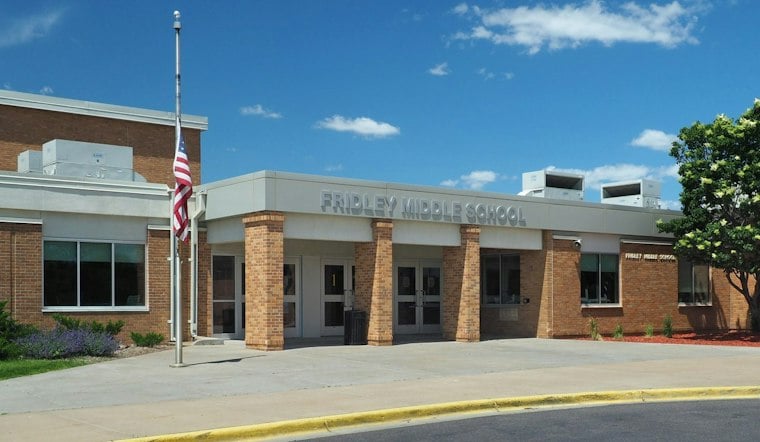
Eleven Minnesota schools are now sitting on the state's list of districts in serious financial trouble for the 2024-25 school year, and one of them, Fridley Public Schools, is in deep enough water that the state is bringing in an outside auditor to dig through its books. The list includes seven public school districts and four charter schools, all flagged for spending well beyond what they actually have on hand.
According to 5 EYEWITNESS NEWS, the statutory operating debt list, known as SOD, covers districts that spend at least 2.5% more in a year than they actually have. Fridley had $8.3 million in SOD debt as of the end of the 2024-25 school year and ranked third highest statewide in budget overspending percentage, at 16.18%, trailing only Upsala Area Schools at 28.53% and Kenyon-Wanamingo School District at 16.47%. Robbinsdale Area Public Schools, meanwhile, carried more than $9.5 million in SOD debt, the station reported.
A District the State Calls Headed for a 'Debt Spiral'
Fridley's troubles go well beyond a line on a list. The Minnesota Department of Education warned that Fridley was in a debt spiral and has requested paperwork immediately showing the district's plan to turn its finances around, per 5 EYEWITNESS NEWS. The district was placed on the state's SOD list in March, according to the Minnesota Reformer.
Nearly ten months after its fiscal year 2025 audit deadline passed, that audit still has not been completed, and the delay could cause the district to miss its 2026 audit deadline as well, the Reformer reported. The outlet noted that the state education department says it cannot approve the district's current recovery plan because the draft is not based on concrete financial information due to the missing audit. The Hometown Source adds that Fridley was supposed to submit that FY25 audit by Dec. 31, 2025, and simply did not.
Short-Term Borrowing and a Credit Rating Falling Apart
To keep the lights on, Fridley borrowed $11.5 million in short-term bonds in January, then issued $23.4 million in new bonds in September to repay that borrowing and cover cash flow for the current school year, the Reformer's report states. The district's own financial advisor has projected it will need to borrow again next fall.
Moody's downgraded Fridley's bond rating to junk status in January, lowered the rating again in July, and withdrew the rating entirely in September, citing insufficient financial information, the same account notes. The district's own SOD recovery plan estimates its unreserved fund balance will sit at negative 16% at the end of fiscal year 2025 and could balloon to negative 81% by 2029. Fridley's annual operating revenue runs around $50 million against roughly $60 million in operating expenses, a gap the Minnesota Department of Education has called a matter of serious concern regarding the district's financial management.
Budget Cuts, an Outside Audit and a Looming Deadline
The district's recovery plan includes $2.9 million in budget cuts for the current school year, with $600,000 of that coming from school-level staff, per the same reporting. The state education department sent Fridley a letter on Oct. 20 detailing serious concerns about its financial management, statutory operating debt and the missing audit, according to the Hometown Source. Fridley must provide the requested financial information by Nov. 6.
The Minnesota Department of Education also plans to conduct an independent audit of Fridley's budget, 5 EYEWITNESS NEWS reports, while working with the district on a longer-term plan to address its financial problems. Separately, the Reformer notes that Fridley's enrollment has declined in recent years due to lower birth rates and competition from open enrollment and charter schools, a pressure familiar to shrinking districts across the state.
Why Districts End Up on the List, and How They Get Off
Minnesota Association of School Business Officials president Andrew Adams told 5 EYEWITNESS NEWS that the budget impact of landing on the SOD list varies widely because district budgets differ so much in size. Districts facing SOD, he said, may need to reduce staffing, cut contracted services or purchases, and maximize state and federal revenue — or seek an operating referendum to raise more dollars per pupil.
Dr. Renee Sbrocco Corneille described placement on the list as quite rare and generally something that happens only when things are going poorly, according to the station's report. She said districts in that position may have to eliminate programs and consider potential school closures, and added that districts can slide into SOD more quickly if their communities cannot afford higher taxes during a difficult economy.
A Cautionary Tale in St. Cloud
Not every district on the list survives the process. Athlos Academy of St. Cloud appeared on a prior SOD list and has since closed permanently, per 5 EYEWITNESS NEWS. Earlier reporting from KNSI shows the state notified the charter school on Dec. 13, 2024, that it was in statutory operating debt, after its unreserved General Fund balance fell to negative 2.7% as of June 30, 2024, with a revised FY2025 budget projecting a negative 11.2% balance by that November. Volunteers of America of Minnesota ultimately declined to renew the school's charter, citing persistent deficiencies in governance, enrollment and financial viability.
Other districts have managed to work their way out. Kenyon-Wanamingo submitted a financial recovery plan to the state on Jan. 31 that was approved and is designed to bring the district out of SOD by 2027, according to KTTC. Alden-Conger previously appeared on the SOD list from 2010 through 2013 and returned to it again in 2023, per 5 EYEWITNESS NEWS, while Alden-Conger and St. Charles were also named as other southeast Minnesota districts grappling with SOD issues. The Minnesota Department of Education says it plans to release an updated SOD list within the next couple of months.





