

























































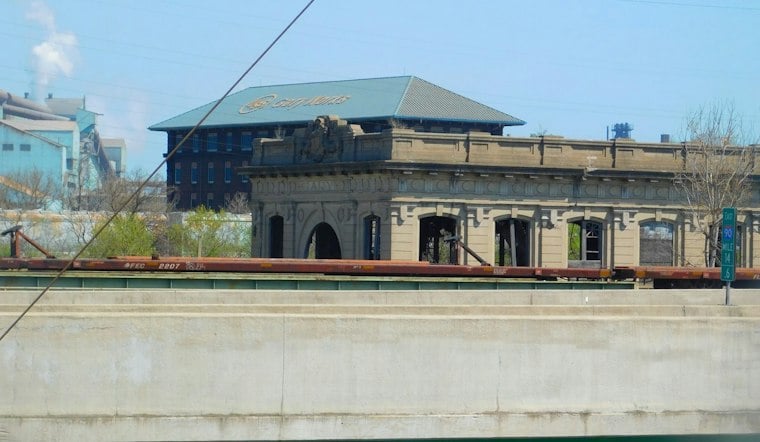
Gary residents packed a Tuesday night meeting to question city officials and a U.S. Steel attorney over a proposed economic development agreement that would forgive nearly $99 million in debt and clear the way for up to $195 million in plant and infrastructure investment. The deal covers roughly 3,133 acres around Gary Works, and it's now headed toward a Gary Common Council vote expected Dec. 1.
The Gary Common Council Ways and Means Committee heard details of the agreement and took public comment at the meeting, according to the Chicago Tribune. Beyond the debt forgiveness, the proposal includes a $4 million investment in the Gary Housing Trust Fund and about $14.7 million earmarked for public safety and economic development, the Tribune reported. City officials project the deal would generate roughly $247 million in property-tax and tax increment financing revenue over the next 25 years.
How the TIF Would Work
Brandon Comer, the city's financial advisor, told residents the agreement would not create a new TIF district but would instead reestablish one first created in 2019 — and he insisted the city would not lose tax revenue because of it, per the Tribune's account of the meeting. Comer said Gary originally borrowed $120 million against that 2019 TIF district, with $100 million funding mill investments and $20 million going to the city and other organizations to cover other accounts. He added that if the newly proposed deal does not move forward, those 2019 TIF investments would require repayment of almost $100 million.
Comer characterized forgiving that existing debt as the first term negotiated in the new agreement. He also said the roughly $195 million the city would borrow under the proposal would be repaid purely through TIF revenue rather than through a city obligation or general taxes — a distinction he repeated to push back on resident worries about the city's exposure. Reestablishing the TIF, he said, would let each taxing unit increase by about 30% because the underlying property's baseline value has risen.
Residents and Officials Push for More
Not everyone in the room was convinced the numbers added up in Gary's favor. Adam Hall, vice president of the Gary Plan Commission, who also voted on the 2019 U.S. Steel deal as a member of the redevelopment commission, said he worried the city wasn't getting as much as it could and said he could not fully evaluate the current proposal because he had not seen hard numbers. Bruce Curry urged council members to push U.S. Steel for the best possible deal for the city, while John Allen questioned whether Gary could afford another TIF of this size without shrinking others.
Kenneth Whisenton, who chairs the Ways and Means Committee, said Gary needs resources for public safety, public education and infrastructure, and that residents deserve answers. Carolyn McCrady, a member of Gary Advocates for Responsible Development, told the committee Indiana cities will need more money once Senate Enrolled Act 1 takes effect — a concern Comer addressed directly, saying the agreement would help offset funding losses the city expects because of that law. Gary Common Council Vice President Darren Washington went further, saying he would vote no on the deal unless the council hires an independent finance consultant to review it, according to Shanghai Metals Market.
U.S. Steel's Timeline and Stakes
Dennis Otten, an attorney at Bose McKinney and Evans representing U.S. Steel, told the committee the company and city have worked on the agreement for about eight months. He said the first investment phase would bring the Gary Works plant up to date and make it suitable for future production, and that a second phase, if it happens, would generate far more TIF revenue — though the Tribune's reporting makes clear that second phase remains conditional. The proposal still needs sign-off from the Common Council and three city commissions: the economic development commission, the plan commission and the redevelopment commission, the Tribune reported in an earlier report on the proposal.
An economist at Indiana University Northwest, Anthony Sindone, preliminarily estimated the broader investment could generate a total economic impact of about $4.7 billion across Gary and the surrounding region, though the actual payoff would hinge on spending and timing, per Shanghai Metals Market's report. The stakes for Gary are tied to a long industrial decline: an Indiana University study cited by the Tribune found the three Lake Michigan-area steel mills have lost more than 55,000 jobs since employment peaked in the 1970s, leaving about 9,000 jobs today.
School funding projections tied to the deal have varied slightly between outlets. Gary's own news release, as reported by the Tribune, said U.S. Steel was expected to generate $90 million for local schools, while WRTV reported that more than $90 million would go to local schools. Either way, the figures underscore how much is riding on a deal residents are still pressing the city to sharpen before next week's scheduled vote.





