

























































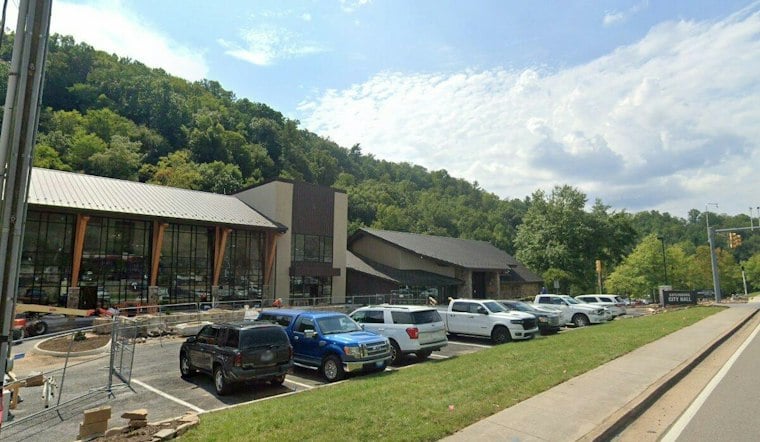
A decade after wildfires knocked out power, internet and phone service inside Gatlinburg's emergency operations center, the city is building a new one. The upgrade is part of an approximately $20 million expansion of its public safety building, and officials are hoping to have all construction finished by mid-December.
The project adds office and training space for police and fire staff, according to WVLT. The new emergency operations center sits where a breezeway once connected the police and fire departments, and it will double as the City Commission meeting room. The room now has three screens and updated technology meant to help city departments share information more easily.
City staff member Seth Butler said the old emergency operations room had simply been outgrown. The police and fire complex was built in the late 1980s and had never been expanded, and Butler said both departments had nearly doubled in force since then — leaving staff to fill a cramped space never designed for a modern emergency response.
What the Old Room Couldn't Handle in 2016
The stakes behind the upgrade trace back to November 2016, when wildfires swept into Gatlinburg and the city's emergency operations center — then located in a small room inside the fire department — had to be abandoned as flames moved eastward. The report notes that the center relocated to the community center as the fire approached.
A report on the response found that fire had disrupted electrical, internet and cellphone services at the emergency operations center established inside the main Gatlinburg fire hall, according to govtech.com. At 10 p.m. on Nov. 28, 2016, officials moved the operation roughly three miles east to the Gatlinburg Community Center on Proffitt Road, per the same account.
A separate account of that response found that downed power lines had shut down Gatlinburg's emergency operations center and dispatch system entirely, as reported by govtech.com. That reporting also found dispatchers were relying on an internet-based phone system with no backup in place at the time. Then-Police Chief Randy Brackins said of the outage, “It was down at least a couple of days.”
Lessons Applied Since the Fire
Former assistant fire chief Charlie Cole told WVLT that the city overhauled its approach in the years since, saying, “The city has made changes to notifications, apparatus, manpower and training.” Cole said Gatlinburg implemented every change recommended in its after-action report and now has more equipment for what he called “fast attack” responses to wildfires than it did in 2016.
Those changes extended beyond staffing and gear. A report on the wildfire response noted that a fire-damaged siren and public address system downtown was slated to be replaced with a high-technology option providing multiple layers of communication, according to govtech.com's reporting on the city's alert-system review.
A Years-Long Build With a Shifting Price Tag
The public safety expansion has been in motion for some time. Earlier coverage from themountainpress.com described a planned three-story complex with space for police, fire and an emergency operations center that would double as the City Commission room — the same dual-purpose design now nearing completion. City Manager Greg Patterson said at the time that the project was on schedule despite roughly 25 rain days, and officials then hoped to move into the new building by around August of the following year.
That earlier reporting put the estimated cost of the public safety addition at around $10 million, a figure that predates WVLT's later description of an approximately $20 million expansion; the dossier does not clarify whether the two estimates cover the same scope. The Gatlinburg Board of Commissioners had selected Horner Building Company as general contractor for the project, according to a report from citizenportal.ai, and a separate city meeting report said construction on the Public Safety Building Addition began April 21 and was intended to create expanded office and training space.
One Room Built for Teamwork
Butler said the new center offers more space and different breakout areas than the old one, letting staff from different departments work together in a single room instead of squeezing into what used to be a converted hallway. The city currently opens its emergency operations center once or twice a year, sometimes more, for events including snowstorms, flooding and fires, Butler said.
Butler said officials hope they will be able to open the new room as an emergency operations center whenever it's needed — though, naturally, they hope that need stays rare.



