

























































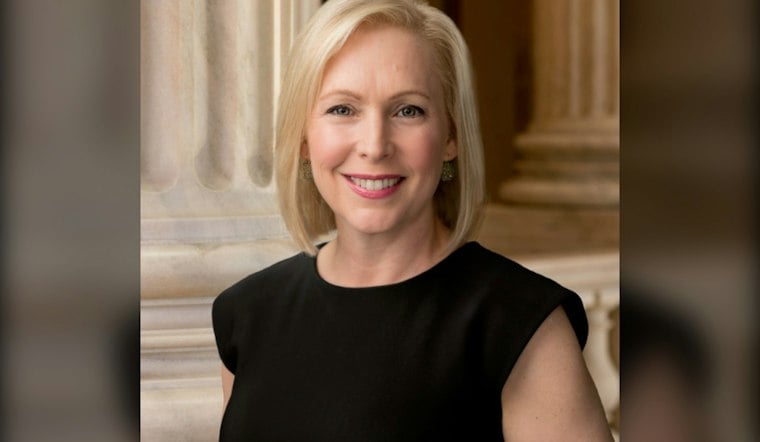
Sen. Kirsten Gillibrand says Democrats could reach 60 seats in the U.S. Senate by 2028. The party now holds 56 seats, so reaching 60 would require a net gain of four; the number of seats Democrats would need to win overall would depend on how many they also lose. Gillibrand, a New York Democrat seeking another two-year term leading the party's Senate campaign arm, has begun identifying Republican-held seats she believes Democrats could contest.
Gillibrand called 60 seats “definitely possible,” according to NBC News, which reported that Democrats flipped nine seats in 2026 to secure their current 56-seat majority. Among the Republican-held seats Gillibrand identified as potential targets are Wisconsin, held by Ron Johnson, and North Carolina, held by Ted Budd, according to Newsweek. The New York Daily News also identifies Johnson and Budd as Republican senators from those states.
What 60 votes mean in Senate procedure
The 60-seat goal refers in part to the Senate’s cloture process: PBS explains that 60 senators voting yes can end debate, though debate may continue for up to another 30 hours. “Filibuster-proof” is therefore shorthand for reaching that debate-ending threshold, not a guarantee that every Senate procedure disappears or that 60 votes automatically enact legislation.
Longer-Shot States Enter the Conversation
Beyond the top two targets, Gillibrand pointed to Iowa, Kansas and South Carolina as states where Democrats could invest money and attention heading into 2028, per the same Newsweek report. Iowa's Chuck Grassley, a Republican, would be 95 years old on Election Day in 2028 and has not said whether he will seek reelection, according to the Daily News. Democrats may also compete for seats in Kansas and Utah, with Utah described as a state trending toward Democrats, the Daily News reports.
The 2026 midterms set up this conversation in the first place. Democrats were considered heavy longshots to flip the Senate heading into that cycle but instead won races in Kansas, Texas, Alaska and Mississippi, according to the Daily News. CNN's analysis found that if Democrats won Alaska, they would have flipped seven states that President Donald Trump carried by at least 11 points in 2024 — a flip CNN says would force Republicans to defend blue territory just to retake the majority in 2028. CNN also identified Arizona, Georgia, Nevada, Ohio and Pennsylvania as states where Republicans would have good pickup opportunities of their own in 2028.
The Fetterman Question in Pennsylvania
No seat looms larger over Gillibrand's math than Pennsylvania's, where Democrats must first resolve the situation surrounding Sen. John Fetterman, according to the Daily News. Fetterman said last week he is considering another run for his seat, The Philadelphia Inquirer reported, even as more than three out of four Pennsylvania Democratic voters viewed him unfavorably in a September poll cited by the same outlet. Fetterman may face intraparty opposition in a Democratic primary, the Daily News reports. Fetterman has supported President Trump on some issues and gave a speech to the midterm GOP convention, according to the Daily News.
Gillibrand has not endorsed Fetterman outright. She told the Inquirer that Democrats are assuming he will run for reelection and would support him if he wins the Democratic primary. She also predicted Democrats would win Pennsylvania if Fetterman becomes their nominee, the outlet reported. Fetterman has not confirmed whether he will seek reelection in 2028.
Ohio's New Senator and the Road Ahead
Democrats also have a seat to defend in Ohio, where Sherrod Brown returned to the Senate after defeating Husted in a special election to fill the term originally won by JD Vance in 2022, according to the Daily News. Gillibrand has portrayed the political environment as a Democratic wave she expects to last through two election cycles.
History offers Democrats a cautionary parallel. In 2008, the party won five Senate contests to grow its majority from 51 to 56 seats while four other races remained unresolved, according to The Guardian. Had Democrats swept all four of those remaining contests back then, the paper noted, they would have reached 60 seats for the first time in 30 years — a milestone that, in the end, did not fully materialize. Gillibrand is seeking reelection as chair of the Democratic Senatorial Campaign Committee at a leadership vote scheduled for December 1, according to Newsweek, a vote that will determine whether she gets to keep steering the party's hunt for that elusive sixtieth seat.





