

























































Gilroy's South County homelessness committee spent six months and six meetings on a local plan. What it brought back was a single recommendation: a designated, managed site for unhoused people, with no location, construction method, cost or funding source attached.
The thin deliverable matters because the city is already on a separate clock to clear Camp Hope. San José Spotlight reported that the ad hoc committee stopped at the concept after Destination: Home paid for a consultant-led process meant to produce priorities and next steps.
A Concept Without a Business Plan
The recommendation is for a stable, managed site. It does not say where that site would be built, who would operate it, what it would cost or which pot of money would pay.
That is a step back from the level of detail Mayor Greg Bozzo had already promised. On Nov. 2, he told colleagues the committee would return to the full council with a business plan and more specifics on an encampment concept, Gilroy Dispatch reported. The preferred outcome described then was a designated encampment with access rules, service providers, showers and restrooms. The newer presentation still does not turn that sketch into a project.
Terence Fugazzi said he was disappointed that six meetings produced a report without substantial facts or recommendations. The gap is not subtle. A managed site is an idea. A site with an address, a budget and an operator is a decision.
Ten Seats and a Paid Convener
Councilmembers approved a Homebase consulting proposal in April. In May they formed a 10-person committee, with Bozzo as chair.
Gilroy Councilmembers Kelly Ramirez and Dion Bracco sat with him, along with Morgan Hill Councilmember Soraida Iwanaga. Business and property owners Chris Vanni and Ann Marie McCauley joined service providers and advocates Vanessa Ashford and Vicky Martin. Aubrey Tasby and TJ Napihaa represented residents with lived experience of homelessness.
Homebase, a nonprofit adviser that helps cities develop plans to end homelessness, built agendas and meeting materials with Bozzo, ran the discussions, took notes and was supposed to document priorities and implementation steps. Rachelle Bedell said the firm provided technical assistance and facilitation while the committee examined Gilroy's response, heard lived-experience testimony and looked at approaches used by other California communities, including Tulare and San Jose. The process also included outreach to supportive service providers. Homebase representatives did not respond to requests for comment.
Destination: Home covered the six meetings with $54,557 for the Homebase work, at roughly $9,000 a meeting. Chelsea Muller said the organization was glad to fund Gilroy so the mayor and city leadership could explore strategies through an inclusive process, with a skilled convener, local providers and people who had been homeless.
McCauley argued the work should not be rushed. She said the committee can build a local plan from demographic information and look for solutions that do not create more fear, and that the city should revise a homelessness policy she described as consisting only of abatement. Bozzo said he appreciated the council's direction and the chance to keep exploring, and that the work should better support people experiencing homelessness while answering the broader community's concerns.
Camp Hope and a Dec. 15 Deadline
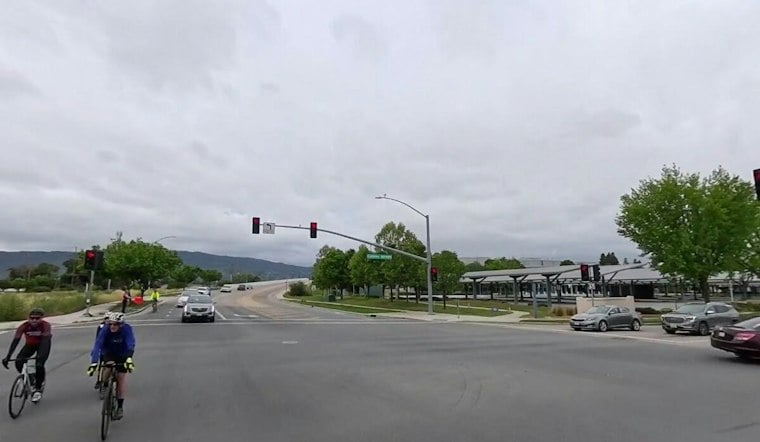
Camp Hope sits near the Sixth Street overpass along U.S. 101, at East Sixth Street and Camino Arroyo Drive. Residents have self-managed the encampment for about the last year. The city has funded occasional cleanups and had allowed roughly two dozen people to run the camp themselves. One city-staff count put the population at about 20; other reporting has put it at about 25.
On Nov. 2 the council voted 4-3 to sweep the camp by Dec. 15, with shelter and services to be offered to residents. Bozzo, Ramirez and Bracco voted against that plan. Other councilmembers said Camp Hope should not be treated differently from the rest of the city's homeless population.
Ashford, who serves on the committee, said she was concerned the camp could be at risk without a solid proposal to preserve it. She also said residents need a destination, or businesses would become more upset, and that there are no perfect solutions. The vote does not, by itself, show where anyone will go. The managed-site recommendation does not answer that either.
Gilroy's current annual cost for homeless services was reported at $875,000, a figure that includes police and community-development staff responses. That is the city's existing bill, not a price tag for a new site.
Fewer People Counted, Faster Replacement
The 2025 Santa Clara County point-in-time count found about 959 unhoused people in Gilroy, roughly 8% fewer than in 2023, Gilroy Dispatch reported. San José Spotlight has described the recent numbers as a population that appears to be declining.
The same year cut the other way on housing exits. For every Gilroy household that secured long-term housing, another 1.1 became homeless. A smaller census and a replacement rate above one can both be true. People can leave the count while new homelessness still outruns the exits.
What Other Cities Put on the Table
The committee's research file included places that have already picked a model, which makes Gilroy's missing specifics easier to see.
In Tulare, a temporary encampment grew to as many as 150 campsites. A city staff report cited by the Dispatch said calls for service fell from 192 to 38 during the program's first nine months. The city later developed its CARES Emergency Shelter to replace that temporary camp with a safer, more comprehensive shelter, according to the City of Tulare. Valley Voice reported a $12.5 million project of roughly 25,000 square feet, with room for as many as 400 guests. The city's share was about $7.3 million, with county, state and federal sources covering the rest.
Closer to home, San Jose officials in September 2024 selected a location for the city's first sanctioned tent sleeping site. Neither example is a Gilroy budget or a Gilroy address. They are the kinds of choices — site, capacity, operating model, who pays — that this committee's recommendation still does not make.
Dec. 15 remains the council's deadline to clear Camp Hope, with shelter and services supposed to be offered. The longer idea, a managed site, is still a sentence without a map or a check.





