

























































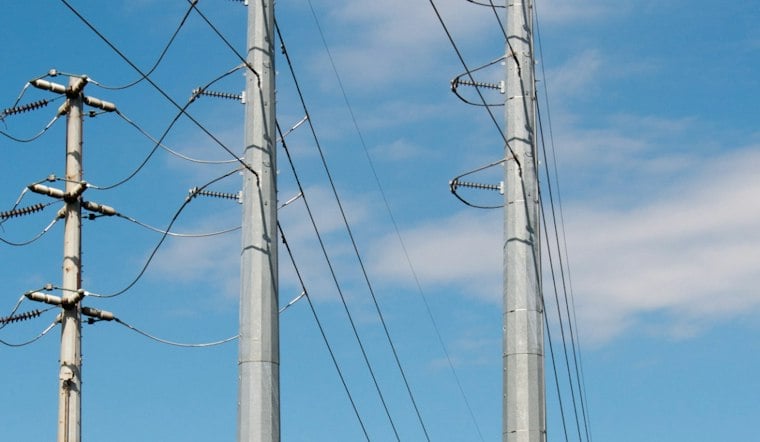
Google and Ohio Power Company have jointly filed a proposal with state regulators to replace 15.5 miles of aging Columbus transmission lines with advanced conductors, a project the tech giant says it will fund the incremental cost of installing in exchange for faster delivery of electricity to its local data center. The $10.8 million incremental cost would come straight out of Google's pocket, and if regulators sign off, the upgraded lines could be humming by late 2028.
The filing, submitted to the Public Utilities Commission of Ohio, is described in a joint announcement from the two companies as a proposal to deploy advanced transmission technology along a stretch of lines in Columbus, according to Google Cloud Press Corner. Ohio Power Company, a unit of Columbus-based American Electric Power that was formerly known as AEP Ohio, plans to swap out 50-year-old wires for conductors capable of moving more electricity through the same existing infrastructure, per reporting from Ohio Tech News.
For Google, the payoff is concrete: the upgrade would let 24 megawatts of capacity the company has already contracted for reach its Columbus data center roughly two years sooner than it otherwise would, per the Google Cloud Press Corner announcement. The company is billing the arrangement as a model for a voluntary transmission participation agreement, in which a large electricity customer funds grid improvements that end up benefiting other ratepayers too.
Why the Timing Matters for the Grid
The upgrade is arriving amid a documented crunch in central Ohio's power supply. A trade publication, Data Center Frontier, reported that power demand in the region — a hotspot for data center development — is expected to more than double over the next five years, while building new generation and transmission facilities can take seven to ten years. That mismatch helps explain why Google and Ohio Power Company are framing speed, not just capacity, as the point of this deal.
The companies also say the project is tied to a much larger undertaking: a planned 765-kilovolt regional transmission buildout across central Ohio. Once that broader expansion is finished, the newly upgraded Columbus lines are expected to unlock more than 700 megawatts of additional corridor capacity, according to the joint announcement. The companies further expect the advanced conductors to reduce electricity lost along the lines and modestly lower transmission costs for other customers, though those effects are presented as company projections rather than independently measured results.
The arrangement lands against a backdrop of rising scrutiny over who pays for the grid buildout that data centers require. The Columbus Dispatch described growing public and political pressure on technology companies to help mitigate the costs that data centers impose on electric utilities. In a separate but related sign of the pressure facing utilities, AEP Ohio proposed a new rate category in May 2024 aimed at data centers and cryptocurrency mining or mobile data center operations, Data Center Frontier reported.
Executives Frame the Deal as a New Model
Google has spent 15 years developing commercial models to bring new power generation — including nuclear and geothermal — onto the grid, Ohio Tech News reports. Amanda Peterson Corio, Google's global head of energy and power, said Google has a long history of pioneering frameworks for corporate energy buyers to bring new forms of generation onto the grid, framing this deal as an extension of that work. Google has said the agreement offers a way for data centers to expand transmission capacity years faster while also lowering local consumer costs and improving grid reliability.
Marc Reitter, Ohio Power Company's president and chief operating officer, said the Google-funded transmission technology, combined with planned grid investments, will unlock more future corridor capacity for central Ohio and pass savings along to customers, according to the same report. Reitter's comments echo FirstEnergy's own framing of a separate, much larger central Ohio transmission initiative intended to support rising electricity demand as more manufacturing facilities, data centers and electric vehicles come online, according to FirstEnergy. That FirstEnergy-Transource project, and a related account from Renewable Energy World, describe roughly 300 miles of new 765-kilovolt lines and substation upgrades planned for the region, underscoring how much larger infrastructure investment the Google-funded project is riding alongside.
Workforce Funding Rounds Out the Package
Beyond the transmission upgrade itself, Google is committing $1 million to support three workforce and supply-chain initiatives, though the dossier behind the announcement does not specify exactly how that funding will be split. Ohio Tech News reports the money is intended to address constraints in grid construction and domestic equipment manufacturing by expanding lineworker training and apprenticeship resources in Ohio, building a hands-on advanced-conductor installation curriculum developed with hardware vendors and national training partners, and supporting employer-driven manufacturing apprenticeships and regional industry partnerships across the state.
It is not the first time Google has put money behind Ohio's grid workforce. In May 2025, the company announced six Ohio-based organizations as the inaugural recipients of its $1 million Ohio Grid Innovation Fund, launched alongside the Columbus Region Green Fund and Elevate, according to the Columbus Region Green Fund. That fund backs community-led work in energy efficiency, industry workforce training and energy education. On a national scale, Google has said that since 2022 it has provided more than $1 billion globally for training and skilling initiatives, which the company says has helped more than 100 million people gain digital and AI skills, and Google.org separately committed $50 million toward skilled-trades training meant to prepare more than 300,000 workers across more than 20 states, according to Google.
Google says it has invested more than $20 billion in Ohio since 2019 and, as of 2025, supports more than 3,000 direct and supplier jobs across the state. For now, the Columbus transmission upgrade remains a proposal: it still needs approval from the Public Utilities Commission of Ohio and the Ohio Power Siting Board before any wires come down, and the companies' own timeline puts the project in service by late 2028 if that approval comes through.




