

























































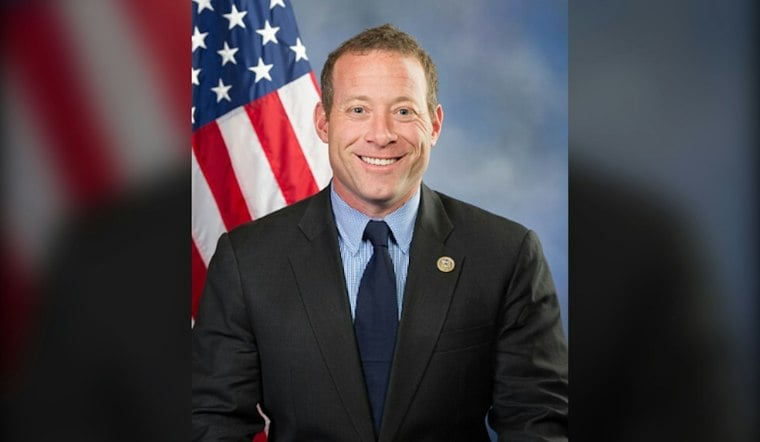
Rep. Josh Gottheimer stood before North Jersey veterans at Bogota VFW Post 5561 on Friday and announced three new bipartisan bills aimed at expanding VA disability benefits for veterans diagnosed with certain illnesses after they left military service. The proposals target sarcoidosis, a cluster of neurological diseases linked to PTSD, and a decades-old VA list of chronic conditions that Gottheimer's office says has not been updated since 1988.
Gottheimer, who represents New Jersey's 5th District, introduced the legislation together with U.S. Rep. Mike Lawler of New York, according to WRNJ Radio. The Veterans Day roundtable brought together local veterans and veterans service organizations to discuss the proposals, which would still need to clear Congress before any of them could become law.
What the Sarcoidosis Bill Would Change
The first measure, the Sarcoidosis After Service Recognition and Coverage Act, would expand eligibility for veterans diagnosed with sarcoidosis, an inflammatory disease that can affect multiple organs. Under current VA rules, sarcoidosis is presumed connected to military service only when it becomes at least 10% disabling within one year of separation, subject to other provisions including the PACT Act. The new bill would eliminate that one-year limitation for eligible veterans whose sarcoidosis becomes at least 10% disabling later in life.
Mary McGowan, president and CEO of the Foundation for Sarcoidosis Research, endorsed the bill on behalf of veterans diagnosed with the disease or still seeking a diagnosis, estimating that as many as 32,000 veterans fall into that category. Saul Kuciauskas, vice president of the Life & Breath Foundation, also backed the measure, pointing to how difficult sarcoidosis can be to catch in the first place. He said patients often see four or more physicians and wait three to five years from their first symptoms before getting a diagnosis — a delay that can push them past the current one-year eligibility window entirely.
Linking PTSD to Later Neurological Disease
The second bill, known as the LINK Act, would establish a presumed connection between service-related PTSD and certain neurological diseases. Under the proposal, eligible veterans with service-connected PTSD could qualify for VA disability benefits if they later develop dementia or Parkinson's disease, conditions that can emerge years or decades after a diagnosis of PTSD.
The third bill, the Protecting Vets From Chronic Illness Act, would require the VA to review its list of 41 chronic diseases presumed connected to military service. Gottheimer's office says that list has not been updated since 1988. The bill would require the agency to recommend potential additions and consider extending eligibility deadlines for conditions that become disabling after a veteran's time in uniform has ended.
A Veteran Population Still Waiting on Compensation
The stakes are significant locally. Gottheimer's office says New Jersey is home to nearly 300,000 veterans, including roughly 38,400 spread across Bergen, Passaic and Sussex counties — 22,085 in Bergen, 10,616 in Passaic and 5,683 in Sussex. More than 65,000 New Jersey veterans currently receive VA disability compensation, and the same office figures put the number who received VA health care in 2023 at nearly 74,000.
A broader demographic picture from NJ.com shows the state's veteran population is aging and diversifying: in the fiscal 2023 state summary, 52% of New Jersey veterans were 65 or older, and 8.8% were women.
Momentum From a Big Win in Washington
The announcement came the same week the House passed the bipartisan Major Richard Star Act, which would let eligible veterans medically retired for combat-related injuries receive both their military retirement pay and VA disability compensation without reductions. Gottheimer's office estimates approximately 59,000 veterans could benefit from that change. It follows another local milestone from this past summer, when the House passed Gottheimer's bipartisan bill to rename the VA clinic in Newton in honor of Anthony “Tony” J. Gallopo, a local veteran who advocated for the clinic.
Gottheimer has also introduced legislation aimed at improving the VA's ability to hire post-9/11 veterans, alongside other pending measures referenced at the roundtable — including the Data-Driven Suicide Prevention and Outreach Act, which would use artificial intelligence to help identify suicide risk factors among veterans; the Veterans STAND Act, aimed at expanding assistive technology for veterans with spinal cord injuries; and the VETS Act, which would establish resident advocates at VA residential facilities and state veterans' homes.
Gottheimer said he has worked across the aisle to improve veterans' benefits and care and to find common ground, a framing that matches the roundtable setting where veterans, advocates and lawmakers from both parties gathered under one roof in Bogota. None of the three newly announced bills has advanced beyond introduction, and each would require congressional approval before changing what any veteran is actually eligible to receive.



