

























































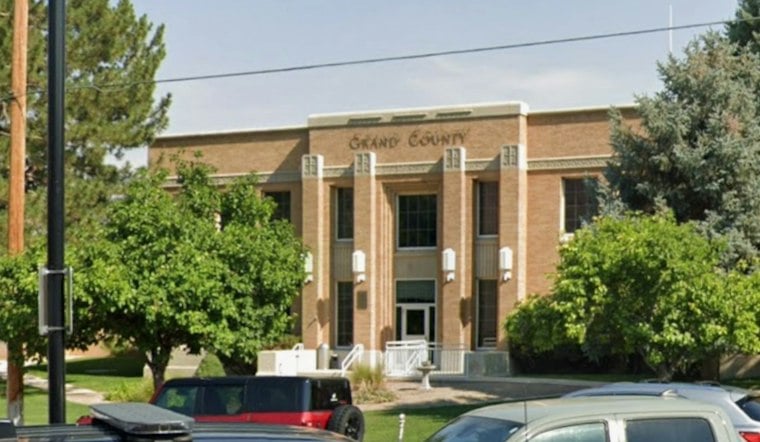
Grand County commissioners voted unanimously Nov. 4 to spend up to $5,000 hiring an engineering firm to draft policy options for data centers, including the possibility of banning them outright across the rural southeastern Utah county. The move comes as officials weigh competing concerns about scarce water, strained electricity supplies and the financial pressures these massive computing facilities could place on a community still figuring out how to define them in its own rulebook.
The contract with Sunrise Engineering directs the firm to prepare draft rules exploring two paths: an outright prohibition on data centers, or a framework allowing smaller facilities under specific conditions, according to Moab Times. Sunrise Engineering, which is also assisting the county with a broader rewrite of its land-use code, will prepare proposed ordinance or land-use code language for both regulatory options so the planning commission can review them. Melisa Jeffers said the firm expects to deliver draft options within two weeks of the approval, the outlet reported.
Grand County's land-use code currently does not define data centers or set permanent standards specifically for them, a gap officials are racing to close. A temporary land-use regulation approved July 7 paused acceptance, processing and approval of applications for data centers, data-center power plants and associated digital infrastructure, with that pause set to expire Jan. 3, 2027. At the time the pause was adopted, the county said it had no pending applications in the pipeline, according to The Salt Lake Tribune, which quoted an official saying, “Nothing's in a queue, and nothing has been submitted.”
Why the Numbers Alarm Officials
The stakes behind the debate are tied to resource math that has unsettled local officials. A county staff estimate found that a single mid-scale data center could require nearly two to four times the electricity Grand County currently uses annually, per the same Tribune report. Water use is just as daunting: staff estimated a mid-scale facility could consume water at a rate equivalent to roughly 25% to 50% of the City of Moab's annual aquifer draw. Data centers house computer servers and other equipment used to store and process digital information, and they require substantial electricity both to run that equipment and to remove the heat it generates — demand that officials note varies with facility size, computing workload and cooling technology, and that ultimately supports things like cloud computing, financial transactions and artificial intelligence.
The planning commission has asked that any policy address state requirements, water scarcity, power demand and financial impacts on the community. Commissioners also want definitions that distinguish true data centers from computing equipment that merely supports another permitted business, such as a bank's server room. On Oct. 26, the planning commission identified the county's major utility overlay as an issue worth examining, with Dan Stenta discussing how existing county utility regulations could apply to infrastructure serving data centers, including substations.
Commissioners Split on Prohibition Versus Conditions
Not everyone on the planning commission agrees on how far the rules should go. Planning Commissioner Robert O'Brien has favored prohibiting data centers altogether, raising concerns about their resource demands and compatibility with other land uses in the county. “I don't think it's necessarily a bad thing to say no to certain things,” he said, per Moab Times reporting.
Commissioner Randy Day has instead favored allowing facilities to operate under conditions, including adequate water and power supplies and suitable locations. “If you can prove you can do it and get the power to it, god bless,” Day said. The commissioners have disagreed over whether the county could even legally prohibit data centers, and on Oct. 26 they agreed to keep exploring both the prohibition and small-facility approaches rather than settle on one path. The planning commission has also discussed noise, lighting, building footprints and distances from neighboring uses as part of any eventual rules.
When the item came up for a vote Nov. 4, county commissioners pulled it off the consent agenda for discussion because its summary didn't specify the multiple alternatives being requested. Trish Hedin clarified that the assignment covers both a no-data-center scenario and a small-data-center scenario. Mary O'Brien urged commissioners to keep prohibition among the options under consideration, saying, “That open discussion can really only happen if the option of not permitting data centers is on the table, and when Grand County residents are at the table.”
What Comes Next
Planning commission review, public hearings and county commission consideration are all expected to follow once Sunrise Engineering delivers its draft options, though no dates had been set as of Nov. 5. Grand County isn't alone in grappling with the issue. In September, Salt Lake County directed staff to develop new data-center regulations for unincorporated areas and paused consideration of new facilities there. Box Elder County has adopted a 180-day moratorium on new data centers and data-center power plants on unincorporated land, while Iron and Cache counties have each adopted similar 180-day pauses while they work out their own regulations.





