

























































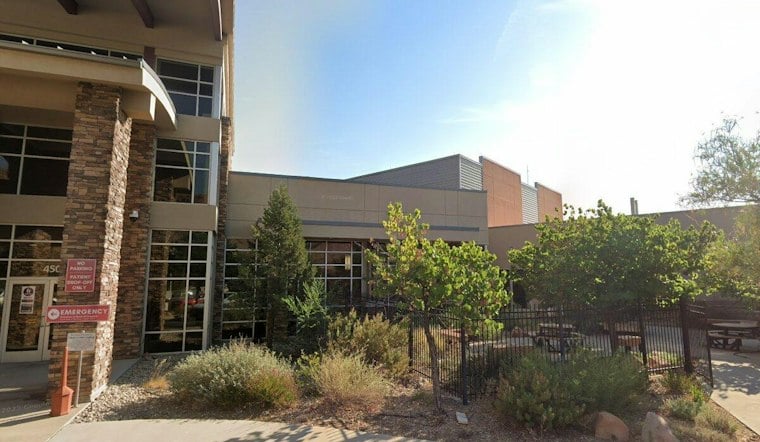
Grand County has landed a state-administered federal grant meant to widen health care access across rural Utah; patients of the Moab Free Health Clinic and the Southeast Utah Health Department may be referred to the ride-program coordinator. State officials say most of a $195.7 million pot of funding set aside for the effort has now gone out the door. The money traces back to nearly $196 million earmarked for rural Utah health care through the One Big Beautiful Bill Act in 2025, and it's meant to touch everything from hospital equipment to ambulance services in the state's farthest-flung communities.
According to KSL, the $195.7 million is intended to help rural hospitals and clinics, expand telehealth services, boost resources for emergency medical services, and support efforts to recruit and keep health care workers in rural communities. State officials told the outlet the money is now headed to projects on the ground, and that most of the funds have already been distributed. The Rural Health Transformation Program, which is funneling the cash, requires each state receiving the money to show how it will be used within legal parameters.
Where the Money Is Actually Going
The scale of the award traces to a $50 billion federal initiative. Utah received $195.7 million as part of the program's first year, according to The Salt Lake Tribune — though the Utah Hospital Association's own account puts the first-year award at $195 million. The state's health department has sorted the money into 24 different categories, with much of it going toward hospital equipment, telehealth projects, a community paramedicine program, and incentives meant to recruit and retain rural health workers, the Tribune reported. About 15% of the funding is earmarked for broader programs that stretch beyond clinical care entirely, including water treatment, school physical education programs, trail signage, food producers, and active transportation projects, per the same report.
Money has been slow to actually move, at least through the summer. As of July 14, only $71.3 million of the $195.7 million had been obligated, the Tribune noted. The state's application to the program cleared a federal hurdle months before that: the Centers for Medicare and Medicaid Services approved Utah's bid on December 29, 2025, according to the Utah Hospital Association.
A Grand County Ride Program Takes Shape
One concrete example of the program's reach is unfolding in Grand County, where commissioners have unanimously approved a Rural Health Transformation Program grant agreement with the Utah Department of Health and Human Services. The county plans to use the money to launch a pilot offering free rides to medical appointments in Moab, Price, Grand Junction, and Salt Lake City, with service expected to begin around April 2027, according to Moab Sun News. The agreement caps payments at $757,283.44 through September 2028, requires no local match from the county, and directs 83% of the money to direct services for residents, the outlet reported.
Why Rural Utah Needed the Boost
The funding arrives against a backdrop of national strain on rural hospitals. Nationally, 146 rural hospitals closed between 2005 and 2023, according to the Utah Hospital Association. Utah has so far avoided that trend — the association reports that zero rural hospitals in the state are currently at risk of closure — even though Medicaid accounts for roughly 13% of rural hospital revenue statewide, a dependency that leaves facilities exposed if federal support shifts.
Utah's rural health systems have leaned on technology to stretch limited staff and specialists across long distances. The state's hospitals provide nearly a dozen telehealth specialties to rural facilities, including stroke care, burn treatment, ICU support, and neonatology, the hospital association notes. In Roosevelt, Uintah Basin Medical Center uses tele-oncology to treat cancer patients without requiring them to travel for every appointment. The new funding includes investments to recruit and retain rural health workers.




