

























































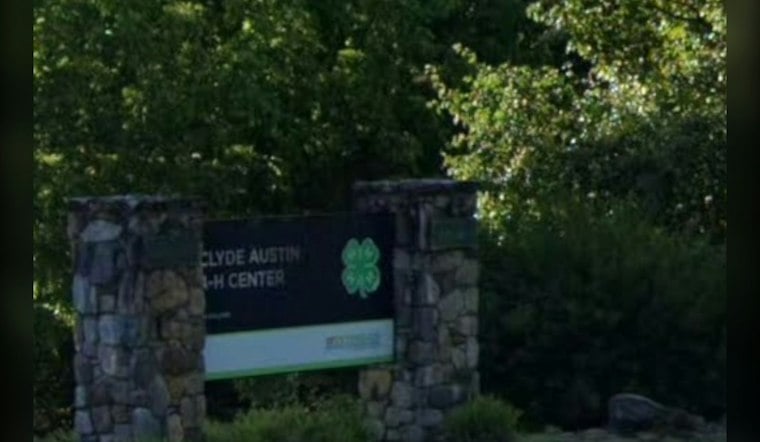
The dining hall at Clyde Austin 4-H Center in Greeneville burned to the ground on Nov. 11, a building that had fed generations of 4-H campers, including thousands from Blount County, since it was rebuilt in 1982. No one was hurt, and officials say the hall was empty when the flames took hold.
The fire was first spotted by a man mowing grass on the property, who heard popping noises before turning to see the dining hall engulfed, according to Greeneville Fire Department Lieutenant Michael Kinser, as reported by the Greeneville Sun. Greene County 911 Dispatch logged the call at 1:06 p.m. that day, and multiple fire departments were sent to the scene. By the time crews arrived, the blaze had already taken hold of the structure.
Six fire departments ultimately responded to help battle the flames, according to WJHL. Crews turned to a pond on the property, setting up drafting operations to pump water onto the fire. Firefighters were still spraying down hot spots in the collapsed building two and a half hours after the initial call came in. The dining hall was completely destroyed, officials told WCYB, which also confirmed the building was unoccupied and that no injuries were reported.
State Investigators Take Over the Case
Because Clyde Austin 4-H Center sits on state property, the Tennessee Bureau of Investigation has jurisdiction and is leading the probe into what sparked the fire. Greene County Sheriff David Beverly said the TBI would investigate the cause, and the agency has said its special agent fire investigators are working alongside the Greene County Sheriff's Office to pin down the fire's origin. The TBI has said it does not suspect foul play, and that the investigation into the cause remains ongoing.
The center is owned by UT Extension and the University of Tennessee Institute of Agriculture, which has said it plans to rebuild the dining hall and has already fielded interest from sponsors wanting to help, the station's report notes. Kelli Roberson, UTIA's east region director, told committee members during a Tuesday visit that the university was waiting on site reports before determining its next steps and a timeline, and that she expected information about options within about two weeks.
A Hall Built to Replace World War II Surplus
The dining hall that burned traced back to a 1979 renovation project that closed the camp and, after running two years longer than planned, was completed in 1982. That rebuild delivered a new dining hall, three new barracks, and a 200,000-gallon swimming pool. The three barracks replaced World War II surplus structures that had been moved to the camp from Camp Forest back in 1948, and the camp's original dining hall was converted into a recreation center for campers.
Until the camp's 2002 renovation, the dining hall that just burned was the only camper building with central heat and air, a detail that underscores how central the structure was to daily life at the center long before this year's fire. Clyde Austin 4-H Center first opened in the summer of 1949 with a recreation and dining hall that seated 300, according to the center's own history page. The 4-H Lodge was added to the campus in 2011 for smaller groups, and a broader remodeling in 2014 saw buildings repainted, fixtures and doors replaced, and a new pool constructed.
What the Loss Means for Campers
The center serves children across 30 counties in the Eastern time zone, including some from outside Tennessee, and has hosted summer camp for thousands of Blount County 4-Hers over the decades, generations of whom have eaten in the dining hall since 1982, according to The Daily Times. In June 2025, 318 children attended a camp session at the center, including more than 60 from Greene County alone.
No camps were underway at the center when the fire broke out, but several events planned for the coming weeks will now need to be canceled. Smaller 4-H and extension events may end up using the 4-H Lodge over the winter and spring as a workaround while the university sorts out the dining hall's future, though no final plans have been confirmed.





