

























































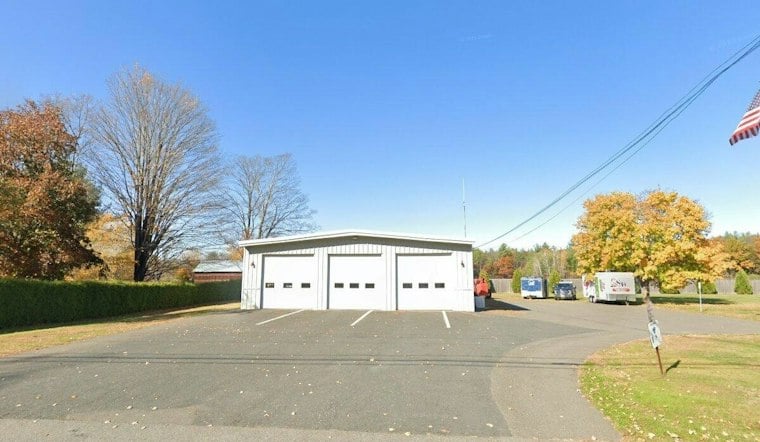
Hatfield will now pay the Town of Whately $500 when Whately firefighters are the primary responders to a fire call inside Hatfield's borders, under a new fire coverage agreement the town's Select Board approved by a 3-0 vote. The deal was approved at the Select Board's Nov. 17 meeting and also includes retroactive payments covering 14 calls dating back to July 1, as Hatfield grapples with daytime staffing gaps that have left its own department leaning heavily on its neighbor to the north.
What the Agreement Actually Covers
The arrangement, reported by the Greenfield Recorder, sets a $500 charge for each fire call where the Whately Fire Department is the primary responder in Hatfield. It also builds in a one-to-one forgiveness system: if Hatfield firefighters respond as the primary agency to a call in Whately, that balances out one of the $500 charges. The deal covers individual fire calls — it does not extend to general mutual aid for larger incidents like significant structure fires or serious crashes on Interstate 91 that require multiple departments working together.
Whately Fire Chief JP Kennedy estimated that in 2025, his department was the primary responder on 29% of calls made to Hatfield, according to the same report. Town Administrator Andrew Levine told the Select Board the $500 fee may run a bit higher than what it actually costs Whately to respond — he put the real figure closer to $300 per call. Select Board member Luke Longstreeth raised concerns about both the per-call fee itself and the retroactive payments stretching back to July 1, the Recorder's reporting notes.
Why Hatfield Needs the Backup
The core problem is staffing. Hatfield's call firefighters are frequently unavailable during the day because they hold other jobs elsewhere, leaving gaps that Whately has stepped in to fill. Compounding the shortage, Fire Chief Robert Flaherty is cutting back his hours in Hatfield as he transitions into the role of interim fire chief in Hadley, per the same account. Hatfield's own fire department has acknowledged on its website that it has no full-time staff available.
Select Board member Ed Jaworski described the agreement as something close to an insurance policy — a way to guarantee someone shows up on scene even when Hatfield's own call firefighters can't. He said the deal also sets the stage for future reciprocal arrangements between the two towns, and Whately officials have maintained that their department has effectively been covering Hatfield calls for a couple of years already, the article notes. Jaworski added that regionalizing public safety services may simply be a necessity for small towns like his going forward.
A Bigger Decision Still Looms
The Whately agreement is really a stopgap while Hatfield works out a far larger question: whether to build a full-time fire department or lean further into outsourcing. One option on the table would bring on a full-time fire chief along with four full-time firefighter-paramedics and four full-time firefighter-EMTs. The alternative would shrink the department to mostly on-call status under a part-time chief, with services potentially routed through a public EMS provider or private partner. Costs for both paths are still being calculated, the Recorder reports.
Hatfield has already taken one step toward outsourcing on the medical side, signing a partnership with South County EMS to handle most ambulance calls. That interim contract, approved earlier this fall, carries a weekly fee of $9,046 — roughly $38,000 a month — according to a separate Daily Hampshire Gazette report. That same report noted Whately had initially sought retroactive payment for roughly 16 calls since July 1, a figure that differs from the 14 calls specified in the finalized agreement; the reason for the discrepancy isn't explained in available reporting.
Override Vote Looms Again in Early 2027
Levine is now developing a warrant for a special town meeting that would aim to keep fire and EMS service in-house rather than continuing to outsource. The Select Board has scheduled that special town meeting for January 26, 2027, followed by a Proposition 2½ override election on February 2, 2027. Levine has said a successful override would let the town terminate both the Whately agreement and the South County EMS contract before July 1, 2027. A community forum is planned before the town meeting, giving residents a chance to weigh in before deciding whether Hatfield should move toward round-the-clock, full-time fire coverage.
This isn't Hatfield's first attempt at funding full-time coverage. Voters rejected a fire-and-ambulance override in May 2025 — reported as $488,200 by the Gazette, though an earlier April 2025 article from the same outlet had cited the Select Board's initial request at $480,200. Flaherty said at the time that since 2020, nearly a quarter of all calls to the department — about 75 per year — went unanswered because of staffing shortages. Following that vote, the department was set to remain mostly a 7 a.m. to 11 p.m. operation, with call members covering overnight emergencies. The rejected override would have adopted a plan included in a 2023 consultant's report.
A Regional Pattern
Hatfield's predicament mirrors a broader staffing crunch playing out across Massachusetts. A 2025 survey of 182 local firefighter unions found that only three departments statewide — Boston, Brookline and New Bedford — staff both engine and ladder trucks with four firefighters each, the minimum standard set by the National Fire Protection Association, according to WBUR. In nearby Hadley, the station reported that the fire department typically has just two firefighters on duty at a time — and when an ambulance call takes them out the door, zero firefighters remain available at the station. Medway's town manager told WBUR there was simply no way the town could afford four firefighters on both engines and ladder trucks while also covering ambulance calls.
Similar regionalization efforts are underway outside Massachusetts as well. In Pennsylvania's Lehigh Valley, communities have been grappling with declining volunteer firefighter numbers and difficulty maintaining reliable coverage, according to a report from Lehigh Valley Public Media. Easton recently agreed to provide fire suppression, rescue and limited quick-response services to neighboring West Easton, with extra compensation kicking in if annual responses exceed 38 calls — a threshold based on the 2022-2024 average. That agreement can run for up to five years and be renegotiated annually, offering one possible template for the kind of longer-term regional arrangement Hatfield and Whately officials have suggested could eventually follow their current deal.



