

























































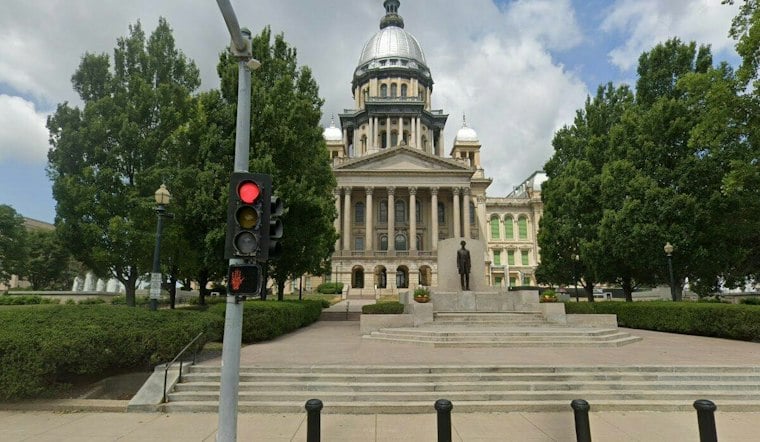
Illinois is on track to close fiscal year 2027 with a $927 million surplus, but state budget officials warn that cushion could flip into a nearly $2.4 billion deficit the very next year as federal policy changes shift new costs onto the state. The current fiscal year ends June 30, 2027, and the following one could look dramatically different as Medicaid and food assistance programs absorb changes tied to federal law.
The projections come from the Governor's Office of Management and Budget, which released its annual Economic and Fiscal Policy Report on November 13. As reported by Capitol News Illinois, the report includes a five-year projection of state spending and revenue, and it shows the current-year surplus is being driven largely by strong corporate income tax and sales tax revenue. Gov. JB Pritzker is expected to present a full budget proposal to lawmakers in February 2027, as reported by Shaw Local.
Pritzker has already proposed a $728 million supplemental spending plan for the current year, which would still leave the state with a $199 million surplus when fiscal 2027 closes. The governor reportedly plans to set aside funds for federal healthcare and food assistance changes, disaster relief, state employee health insurance changes, and a special reserve fund that would let him address budget gaps immediately if federal funding disappears.
Why the Picture Changes So Fast
GOMB expects about $58 billion in state revenue for fiscal 2028, roughly $1 billion higher than the current year, largely thanks to personal income tax growth. But projected spending is pegged at about $60.3 billion, a figure that includes approximately $1.4 billion in expenditures currently covered by the federal government. That mismatch is at the center of the looming deficit, which lawmakers will have to close to pass a constitutionally balanced budget. A separate report from Crain's Chicago Business describes the same fiscal 2028 budget gap as $2.3 billion, a figure that differs slightly from the nearly $2.4 billion cited elsewhere; the underlying reporting does not explain the discrepancy.
Federal law set to take effect July 1, 2027 requires managed care organizations to be taxed at the same rate regardless of their Medicaid affiliation. GOMB estimates that change alone could leave a $1.3 billion shortfall in Illinois' budget next year if the state maintains current tax and funding levels for those organizations. Separately, federal law requires states to gradually lower the hospital provider tax from a maximum of 6% to no more than 3.5% by fiscal 2032, a decline that will reduce federal Medicaid support flowing into Illinois.
Medicaid and SNAP Costs Stack Up
Illinois expects to begin feeling the hospital provider tax changes in fiscal 2029, and the state could lose about $2.8 billion in federal Medicaid support by fiscal 2032 as a result. A separate account from the Illinois Municipal League describes federal Medicaid changes gradually cutting federal funding by $2.8 billion annually by fiscal 2031, which would require an additional $1.7 billion in state contributions. The same organization's account notes a new SNAP state match requirement could add as much as $705 million in costs by fiscal 2028 if payment error rates exceed 6%, and that the federal government will shift an additional 25% of total program administrative costs onto the state, estimated at about $80 million annually.
On top of those shifts, Illinois is expected to begin paying a greater share of SNAP benefits in fiscal 2029, which could cost more than $400 million annually. Pritzker and Democrats have demanded repeal of the federal tax changes driving these cost shifts, while the governor and lawmakers have relied on targeted tax increases rather than across-the-board hikes to cover new costs in recent years. Pritzker has also limited new spending beyond statutory increases for pensions and education.
Hospitals Bracing for Billions in Losses
The fiscal strain extends well beyond the state budget ledger. GOMB has projected that the annual impact to the Medicaid program, after full phase-in of the rate caps, will reach $6.1 billion by fiscal year 2033, including $3.8 billion in lost federal support, according to separate Capitol News Illinois reporting on hospital funding. The Illinois Health and Hospital Association estimates the state's hospitals will lose about $3 billion over five years as new payment caps phase in starting in 2028, and projects a total $4.5 billion reduction in Medicaid funding by fiscal year 2031, including $1.7 billion from reduced provider taxes and $2.8 billion in federal matching funds. KFF, a health policy research organization, has separately estimated that new caps on Medicaid state-directed payments will reduce federal spending on hospital services in Illinois by about $4 billion.
Schools and Universities Want a Piece of the Surplus
With a surplus still on the books for now, education groups are pressing lawmakers to spend more before the deficit arrives. The Illinois Federation of Teachers, led by Stacy Davis Gates, who also serves as president of the Chicago Teachers Union, plans to ask lawmakers for public-school funding above the annual $350 million Evidence-Based Funding increase. The union wants an additional $400 million in fiscal 2027 Evidence-Based Funding, plus another $100 million for mandatory school district costs like special education and bus service, arguing the projected surplus makes that money available. The group has also said its members would ask when students would get their turn as lawmakers consider stadium and data-center deals.
Chicago Public Schools passed a budget for the current school year that depends on $150 million in new state funding the district hopes lawmakers will appropriate this fall, though there is no indication lawmakers are considering that request. Meanwhile, the University of Illinois Board of Trustees approved a fiscal 2028 budget request on November 9 seeking a 10.9% funding increase, amounting to $80.5 million, after higher education funding rose just 1% over the prior year in the current budget. The university system also requested $88.5 million for UI Health to address Medicaid cuts. University President Tim Killeen said increased funding is needed to prepare students for changes brought by artificial intelligence and quantum computing.
An Uncertain Economic Backdrop
The budget report lands against a shaky national economic outlook. S&P Global's September forecast predicted a tight labor market and slow GDP growth just above 2%, and the Economic and Fiscal Policy Report itself states that while a recession is not part of its baseline forecast, the conditions for one exist. The report also noted that ending the Iran war could reduce energy prices and inflationary pressure, potentially boosting the economic outlook.
GOMB further cautioned that canceled and reduced federal grants in Illinois already total several hundred million dollars, and the office expects very limited ability to replace federal funding for specialized state grants, with no replacement funding anticipated for grants that go directly to local governments and community organizations. Capitol News Illinois, which first reported many of these figures, is a nonprofit, nonpartisan news service funded primarily by the Illinois Press Foundation and the Robert R. McCormick Foundation, and it distributes state government coverage to hundreds of news outlets statewide.





