

























































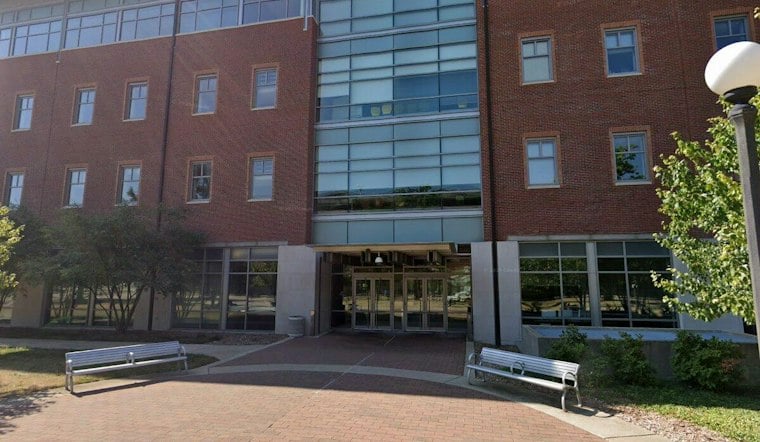
A new supercomputer called Garnet is coming to the University of Illinois Urbana-Champaign campus, backed by a $334 million grant from Schmidt Sciences, with researchers expecting it to come online by mid-2027. The system will run on Nvidia's Blackwell generation of GPUs in its initial rollout, though the specific chip variant and the number of GPUs have not been disclosed.
The National Center for Supercomputing Applications, or NCSA, announced the grant, and the figure and launch timeline were detailed in a report from Tech Times. According to that outlet, Garnet is designed to incorporate later hardware and emerging GPU technology as it evolves, keeping the system from becoming obsolete the moment it launches. Tech Times also reports that the machine will be housed at the National Petascale Computing Facility on the Illinois campus, and that it is intended to support research spanning artificial intelligence, astrophysics, biological sciences and climate sciences.
Garnet will operate inside the Schmidt Science Computing Network, a setup Schmidt Sciences describes as a distributed network of advanced computing systems built to help scientists work at scales they previously could not reach. The network is funded by Schmidt Sciences but owned and operated by the universities and research institutions that participate, according to the organization. Those participants contribute their own computing capability into the shared network, and grants under the program support GPU and CPU computing, storage, networking, research software and technical expertise.
How Researchers Will Get Access
Access to the network will run through defined allocation processes managed by participating institutions and select Schmidt Sciences programs, the organization states on its site. Specific access information and open opportunities will be published as individual systems and allocation pathways become available, Schmidt Sciences says, meaning the exact process for requesting time on Garnet has not yet been laid out publicly. Illinois researchers are expected to receive reserved campus allocations for the system, according to the CASRAI report on the award, which advises research offices to connect prospective users with institutional computing staff as those allocation routes emerge.
Tim Boerner, who will lead the Garnet project as NCSA's associate director of computing infrastructure, described the system as a central computing resource for the network that is focused on delivering scientific capabilities to researchers, per the CASRAI report. R. Srikant, who will serve as Garnet's chief scientific adviser and as NCSA director, said the center's experience operating national-scale computing infrastructure would support research across disciplines, the same report notes.
Part of a Broader Wave of Science Computing Grants
Garnet is not the only system Schmidt Sciences is funding this week. UC Berkeley and Lawrence Berkeley National Laboratory announced a separate Schmidt Sciences grant for what's being called the Berkeley Science AI Platform, scheduled for deployment in 2027 alongside Garnet. That system will add computing and storage capacity to Doudna, the lab's new flagship machine operated by NERSC, a Department of Energy scientific user facility, and will reserve dedicated capacity for Schmidt Sciences awardees and Berkeley researchers working in cosmology, genome engineering, earth science, materials science and computational biology, according to CASRAI's reporting.
Kathy Yelick linked the Berkeley platform to wider advanced-computing access for machine-learning applications and the Department of Energy's Genesis Mission, per the same report. Jennifer Doudna, for whom the flagship system is named, emphasized that scientists still have to decide which possibilities merit experimental attention even as computing power expands, CASRAI reports.
Johns Hopkins University also announced a gift of advanced computing resources to its Whiting School of Engineering this week. The gift will provide specialized computing and expanded data capacity for researchers in the university's Data Science and AI Institute, according to Johns Hopkins University, and is expected to support research across medicine, public health and other sciences. The gift builds on the university's earlier support for scientific software engineers, which Johns Hopkins joined as part of a multi-university initiative in 2022. Mark Dredze connected the new computing capacity to pursuing scientific questions across disciplines, per CASRAI's report.
How Garnet Stacks Up Against Past Systems
The $334 million figure puts Garnet in rare company among research computers, though its funding is a private-foundation grant, unlike the federal funding for systems such as DeltaAI and Blue Waters. Tech Times notes that NCSA's existing DeltaAI system, which runs 608 Nvidia H100 GPUs, was built with nearly $30 million in National Science Foundation awards, while the earlier Blue Waters system received $208 million in NSF funding plus another $150 million over five years for operations, a combined $358 million. By comparison, the University of Florida paid $24 million for 504 Blackwell GPUs across 63 Nvidia DGX B200 systems in a purchase announced in January 2025, according to the same outlet.
Schmidt Sciences has said it intends the broader computing network to build lasting scientific capability while complementing government-supported and university infrastructure, preserving scientific independence in the process. With Garnet, the Berkeley platform and the Johns Hopkins gift all surfacing within roughly a day of each other, the organization's push into large-scale research computing is now visible across at least three major university systems at once.




