

























































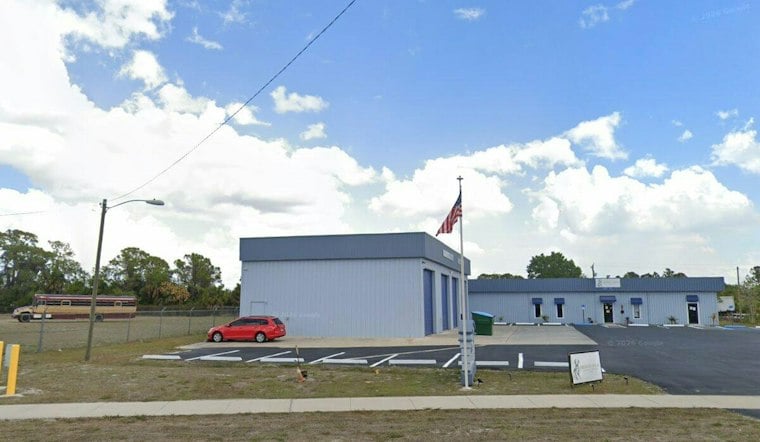
Immokalee Fire Control District has put on hold its plans to hire six additional firefighters, a move that would have pushed its roster from 39 to 45, after Florida voters approved a property tax relief measure that officials say threatens the district's already tight budget. Chief Michael Choate says the agency has little room left to cut expenses without touching staffing levels.
The decision comes as the district projects it will bring in $11.26 million in revenue during fiscal year 2028-29 against $12.42 million in expenses, according to WINK News. That revenue figure is roughly $3.2 million lower than what the district would have expected without the passage of Amendment 3, which Florida voters approved by 62%, according to the same report. About 80% of the district's budget goes toward personnel, leaving little flexibility once staffing is on the table.
Florida voters approved Amendment 3 to provide homeowners with property tax relief, and the measure raises the homestead exemption on non-school property taxes to $150,000 in 2027 and $250,000 in 2028, with annual inflation adjustments beginning in 2029, per the Florida Trib. The first effects of the cuts are expected to arrive in the 2027 tax year, though the full scope may not be clear for several years, the outlet notes.
A District Heavily Reliant on Property Taxes
Immokalee Fire operates as an independent fire district that relies heavily on property taxes rather than broader city and county funding sources, the station's report explains. Choate has said the department will continue responding to emergencies, but warns the district may reduce overtime currently used to staff trucks when firefighters are out sick or on vacation. If staffing drops too low, some trucks could be temporarily pulled out of service, and the district's overall service level could change if funding and staffing grow more constrained.
A Collier County report describes just how dependent fire districts are on this revenue stream: fire control districts represent 15.5% of the typical unincorporated-area property tax bill and are almost completely dependent on ad valorem taxes to fund fire operations, according to the Collier County Clerk of the Circuit Court and Comptroller. That same report states that proposed property-tax legislation provides no exemption for fire control districts, leaving agencies like Immokalee's exposed to the full impact of the cuts.
Choate Pushes Back on the Idea of a New Referendum
Choate has questioned the realism of asking voters for additional local revenue so soon after they approved tax relief, calling the idea of a new referendum ridiculous in the current climate. Local governments have proposed no new referendum so far, though local governments contacted by the station are evaluating the financial impacts of Amendment 3 and expect to hold public discussions about possible responses. Choate is also working with state lawmakers to explore other ways to fund the district.
Resident Danielle Pulaski, who lives at The National in Ave Maria, told the station she was surprised by the fire district's heavy reliance on property taxes and said a nearby fire station was part of what made her family feel comfortable moving to the community. She said she would support an additional tax if that is what it takes to protect local emergency services.
Immokalee's Budget Squeeze Mirrors a Statewide Pattern
Immokalee is far from alone in bracing for Amendment 3's fallout. Bonita Springs Fire Chief Greg DeWitt estimates his district could lose approximately $4 million in property-tax revenue in the first year of the changes, eventually growing to about $8 million, with roughly 98% of Bonita Springs Fire's revenue coming from property taxes and about 85% of its budget going toward personnel, per WINK's separate reporting. DeWitt has also estimated that Bonita Springs, Estero and San Carlos Park could collectively lose $18 million in revenue, and says merging the three districts would not eliminate the shortfall.
Statewide estimates of the amendment's fiscal impact vary. The Florida Trib reports that economists estimate the amendment could cut local property tax revenue by $4.9 billion in its first year, growing to $11.8 billion by 2031, while Prism Reports cites a state estimate of $4.9 billion lost in the first year rising to $8.7 billion in the second year. A Florida Policy Institute calculator cited by CBS12 projected a combined impact of $634.9 million in fiscal year 2028 and $1.14 billion in fiscal year 2029 across five counties, including a projected $62.9 million hit to the St. Lucie County Fire District — though CBS12 notes those figures represent estimates of reduced revenue, not adopted budget cuts, with local taxing authorities left to decide how to respond.
Rising equipment costs only add to the pressure facing fire districts statewide. DeWitt estimates that a ladder truck which cost less than $1 million in 2016 now costs approximately $1.8 million, according to WINK's reporting. For Immokalee, the squeeze is not new: the district previously received a $700,000 FEMA SAFER grant that covered 100% of salary and benefits for six firefighters over two years, a grant that was intended to bring back six laid-off firefighters and reopen a fire station, per FireRescue1.





