

























































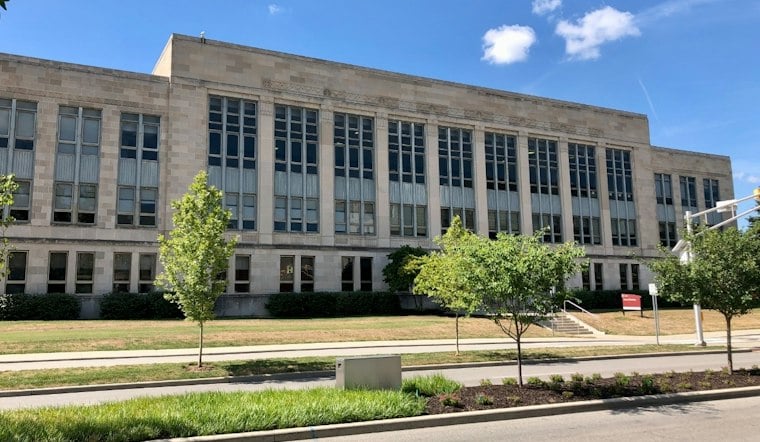
Indiana University School of Dentistry is using a $2 million federal grant to expand oral healthcare for children across rural Indiana, where dentists are scarce and some community clinics have no dental provider at all. The five-year project will bring dental hygienists and dentists to community-based healthcare centers around the state, serving people in underserved areas regardless of insurance status.
The grant comes from the U.S. Health Resources and Services Administration, as reported by WFYI Public Media. Indiana University is contributing an additional $888,000 to the effort, according to Indiana University School of Dentistry. Dentists will be based at existing federally qualified healthcare locations, and the project's long-term goal is creating a self-sustainable model rather than a temporary fix.
Why So Many Counties Are Going Without
Roughly 68 percent of Indiana's 92 counties are designated, in whole or in part, as dental health professional shortage areas — meaning there's fewer than one oral health provider per 5,000 people, per the school's announcement. A 2022 workforce report found three counties, Crawford, Union and Warren, had no reported practicing dentists at all, and described the state's dental workforce as geographically uneven, favoring urban counties while leaving rural ones to struggle. That same report found 61 of the state's 92 counties had population-to-provider ratios below the 5,000-to-1 threshold it uses to judge sufficient capacity.
E. Angeles Martinez Mier, the grant's principal investigator and project director, said some community healthcare centers have other clinicians on staff but lack a dentist entirely, per WFYI's report. Martinez Mier also said northern Indiana lacks any community-based healthcare provider receiving federal funding, according to the same report. The project aims to reduce barriers to care including transportation and time away from work that keep rural families from getting kids seen.
How the Program Will Actually Work
The plan places dental hygienists, supported by third-year dental students, directly into federally qualified health centers and other community settings, while fourth-year students provide care at participating practices, per IU School of Dentistry. Children will be able to receive initial examinations and preventive dentistry care from hygienists placed at the clinics, according to IPM News. That outlet also reports the grant itself will not cover the cost of initial exams or referred services — those will be billed to insurance instead.
The project is currently in its first year of planning and training, with the IU team set to begin placing students in community health centers starting in year two, WFYI reports. The school's announcement states the project is expected to be fully operational in its second year. IU School of Dentistry requires students to complete a four-week rotation in community health centers, per WFYI's reporting, and the project team will collect data over the full five years to track progress in access and youth oral-health treatment.
A Dean's Case for Early Care
Carol Anne Murdoch-Kinch, dean of the IU School of Dentistry, said early dental care can prevent most tooth decay and supports lifelong healthy routines, according to WFYI. Children's oral healthcare can also reduce school absences and improve overall health, per the same report. Martinez Mier said every child in Indiana will have access to a dentist, calling the project a great first step, WFYI reports.
The state is also addressing the broader care gap through a separate federal rural health program established under the One Big Beautiful Bill Act, according to WFYI. This isn't IU's first run at closing rural dental gaps — back in 2018, the school received a four-year, $1,592,502 HRSA grant, which it matched with $709,096 for total funding of $2,301,598, to tackle oral-health workforce shortages, per IU Newsroom. That program sent fourth-year dental students into two-week rotations at community clinics in shortage areas; between 2018 and 2021 it partnered with 15 community sites, drew 350 student participants, and served 7,460 patients who were mostly uninsured or on Medicaid, according to a study published on IU's ScholarWorks repository. The school has also made monthly trips to an Amish community clinic in rural northern Indiana since 1996, per its community outreach page.





