

























































Richard Moseley of Kearns, Utah, flew to France to stand in the barn where a farmer named Lucien Lestang once hid his wounded father from German soldiers, 82 years after the rescue that let his father survive the war. Moseley traced the steps of his father, 2nd Lt. Lonnie Moseley, a Utah World War II fighter pilot whose P-47 went down behind enemy lines on July 4, 1944, retracing a path from a French farmhouse to the English airfield where his father once flew.
According to KSL, Lonnie Moseley's plane came under heavy anti-aircraft fire and crashed in the French countryside roughly a month after Allied forces stormed the beaches of Normandy. He was left wounded and stranded behind enemy lines in German-occupied France. It was Lucien Lestang, a French farmer, who found him and took the enormous risk of hiding him, sheltering Lonnie in a barn while German troops occupied the region.
Lestang told German soldiers that the American pilot was simply a deaf mute working on the farm, according to KSL's report. Accounts of how long Lonnie remained hidden vary: KSL reports he lived in secret in the barn for about six weeks, while the Imperial War Museums history states he spent three weeks hiding in the barn, and a separate Imperial War Museums collection record says he spent two months total with the Lestangs, first in hiding and then posing as a deaf-mute migrant farm laborer. He needed to evade capture for nearly two months, and the Imperial War Museums American Archive states he lived with the family for three months.
Who Forged the Papers That Kept Him Alive
The record is similarly split on who produced the false identity papers that helped Lonnie pass as a local. KSL reports that Lucien Lestang himself created the false identity papers. But an Imperial War Museums collection record instead credits the Maquis, the French Resistance, with producing a false French identification card and ration books that identified Lonnie as Louis René Meslin. Sources also differ on which mission Lonnie was flying when he went down: an Imperial War Museums history describes it as his third combat mission, while BBC News has reported he was on only his second mission with the US Army Air Forces' 78th Fighter Group.
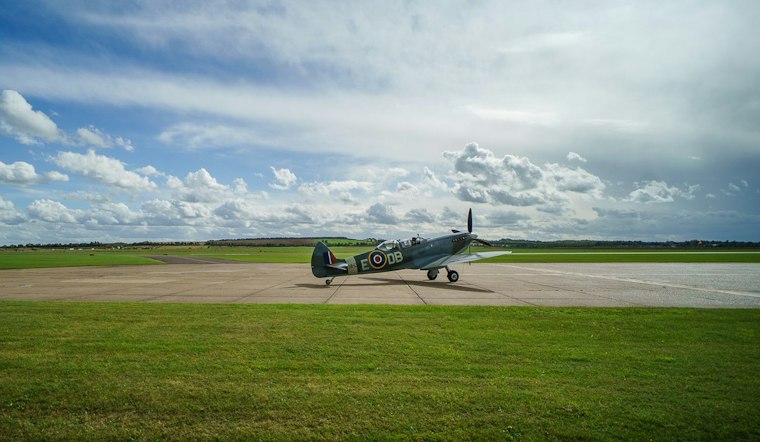
Lonnie was flying a P-47 fighter out of the former base of the 84th Fighter Squadron in Duxford, England, when his unit's mission over France went wrong. Decades later, Richard made a point of visiting Duxford himself, home to the Imperial War Museum, where his father's story is now part of the institution's record. “It's like walking on holy ground,” Richard said of the visit.
A Family Bond That Outlasted the War
The connection between the Moseleys and the Lestangs did not end when the shooting stopped. Lonnie Moseley and his family shared a bond with the Lestang family and visited them numerous times after the war, according to Imperial War Museums records. The museum's collection today includes documents and letters relating to Moseley's evasion in France from July through August 1944, items the family eventually donated, including his diary and false identity papers.
That history of preservation has continued into recent years. BBC News reported in December 2025 that forged identity documents supplied to Lonnie by the French Resistance, along with his diary and parachute ripcord, went on display at his former base at Duxford. Richard Moseley visited Duxford.
Standing Where His Father Once Hid
During the trip to France, Richard and Didier Lestang, Lucien's 66-year-old grandson, visited the farmhouse where Lucien hid Lonnie in 1944, according to KSL. Inside the Lestang family home, Richard found photographs of his father, family stories passed down over generations, and a preserved piece of his parachute. Didier said the message of the gathering was simple: not to forget.
Richard also paid tribute at the gravesite of Lucien Lestang and his wife, telling KSL that the Lestangs risked everything to save his father. He said Lucien's actions gave him the chance to be born at all, a sentiment rooted in Lonnie's own description of Lestang as his savior. Adrian Kerrison, a senior museum curator, described the story as one of survival, resilience and belief.
Artifacts Resurfacing After Decades
Family members recently found Lonnie's life vest, the one he wore the day his plane went down, hidden in an attic for decades, KSL reported. Another treasured family artifact is a communion dress made from Lonnie's parachute, sewn years ago for a young relative. One Lestang family member told KSL that the reunion felt like traveling back in time.
As the visit wound down, Richard said it was hard to say goodbye, though he and the Lestang descendants agreed they would meet again. Eighty-two years after Lucien Lestang hid a wounded American pilot in his barn and refused to give him up, the two families' bond, forged in wartime secrecy, endures into a new generation on both sides of the Atlantic.



