

























































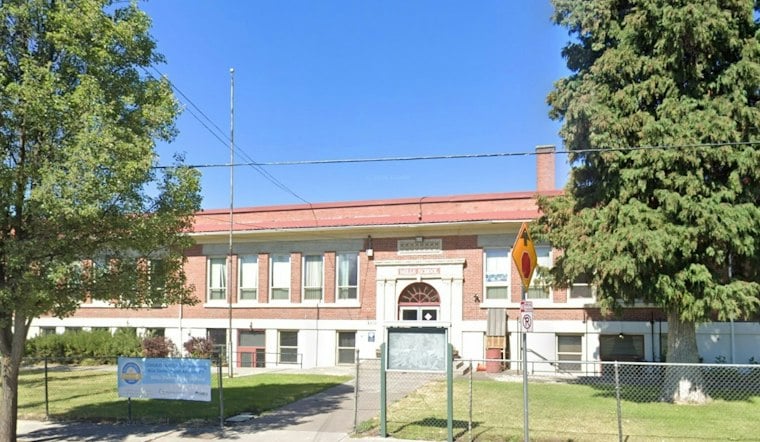
A new Houston-born discipline and instruction model rolled out this fall at two Klamath Falls schools has already pushed at least two families to pull their kids out of the district entirely. Vanessa Pate removed her three children days after the school year began, and Hannah McGillic pulled her sixth-grade son from Ponderosa Middle School after just two weeks. Both cited a rigid new system of silent hallway lines, limited bathroom breaks marked by traffic cones, and discipline policies they say failed their kids.
Klamath Falls City Schools adopted the New Education System model in September in an effort to boost student test scores, according to OPB. The model landed at Mills Elementary School and Ponderosa Middle School, two campuses the district says have high rates of poverty and students with disabilities, and where only about 9% of Mills students were proficient in math during the 2023-2024 school year. Superintendent Keith Brown, who has served as an administrator for 34 years, acknowledged the changes are hard but said students were not learning under the previous approach and argued the model will ultimately benefit students.
A Mother Describes 12 Difficult Days
Pate said her oldest son, who attends special education, struggled with the new model's structure almost immediately. During the 12 days he attended school this year, she said, he received 14 behavioral referrals and was suspended four times — and that his attitude toward school shifted within that same short window. Pate said those referrals and suspensions were tied to his disabilities and diagnoses, and that her other two children also began to hate school.
Part of what made the transition harder, Pate said, was that the district eliminated its behavior resource classroom, a space she said had previously helped her son when he became overwhelmed. McGillic, who withdrew her own sixth grader after two weeks, described the new structure as rigid and institutionalized. Some parents have criticized the model as simply too strict, while others have withdrawn their children from the district altogether, per the same OPB report.
Cones, Quizzes And Quiet Hallways
Under the new system, Ponderosa students walk silently in lines on one side or the other of hallways, a change Brown said has decreased discipline referrals and made hallways quieter and improved overall student behavior. Students also carry a traffic cone to the bathroom and place it outside the door, which Brown said helps teachers monitor occupancy and prevents crowds from gathering and students from vaping. At an open house, parent Carolyn Moon said she favored a more appropriately sized hall pass instead of a large bathroom cone, according to the Herald and News. That outlet reported the model limits restroom access to two students at a time, each carrying a large orange cone to mark their location.
McGillic said students only receive three bathroom passes per quarter, though Brown disputed that account, calling it inaccurate. The dossier does not resolve which version is correct. At Ponderosa, the newspaper also reported that the school's block schedule gives students 45 minutes of instruction followed by a 10-minute quiz, with students then routed to enrichment or lesson review depending on whether they pass.
Eighth Grader Tells Board She Dreads School
Not every voice at recent school board meetings has come from a parent. Ponderosa eighth grader Laycee Crist-Graham told the board during public comment on Oct. 12 that she no longer looks forward to coming to school, saying the rules, structure and environment left her feeling little freedom or control.
Staffing Changes And A Two-Year Timeline
The model brings more than new hallway rules. It includes copy clerks so teachers can spend more time on instruction, daily checks to evaluate students' understanding, and apprentice teachers who cover for absent staff and free up administrators to spend more time in classrooms, per OPB's reporting. Earlier this year, the district said it would hire 24 new employees across the two schools, including 10 apprentice teachers and seven student success specialists, according to Jefferson Public Radio. That rollout was projected to cost $3 million to $4 million, with the district planning to continuously assess student outcomes, implementation progress and impacts.
Brown said Mills enrollment increased this year and that the model is working well for special education students, even as the district works through complaints elsewhere. He expects it to take about two years for the district to see a real increase in test scores, a timeline he based on data out of Houston, where the model originated before Klamath Falls adapted it for a smaller, rural district. Mills and Ponderosa have seen generally declining test scores for years. In 2024-25, 60% of Ponderosa students were considered regular attenders, seven percentage points below the state average, compared with 2021-22 figures showing just 55% of students attended more than 90% of school days versus 64% statewide.
What Houston's Experience Shows — And Doesn't
Brown has pointed to what he described as major improvements in Houston's toughest schools under the model, and said the changes would ultimately lead to positive outcomes for Klamath Falls students. But Houston's version of the New Education System has drawn both praise and criticism, including concerns about high teacher turnover and enrollment declines, OPB reported. A University of Houston report found Houston ISD served 13,208 fewer students in 2024-25 than in 2022-23, with declines across campuses including some operating under or later opting into the model, according to the University of Houston. The same report found teacher retention there fell to 58.6% between 2023-24 and 2024-25, down from rates above 70% before the state takeover, and that the share of uncertified teachers rose from 0.3% in 2016-17 to 19.8% in 2024-25.
Even so, Houston ISD selected nine additional elementary campuses to join the New Education System for the 2026-27 school year after 12 principals expressed interest, according to Houston Public Media. That outlet reported NES campuses use district-approved curriculum, daily timed quizzes in four core subjects, and longer school days, and that teachers at those campuses can earn nearly $10,000 more than their peers elsewhere. Those Texas outcomes describe a much larger urban district and don't determine what will ultimately happen in Klamath Falls, where officials say they intend to keep adjusting the model as needed.



