

























































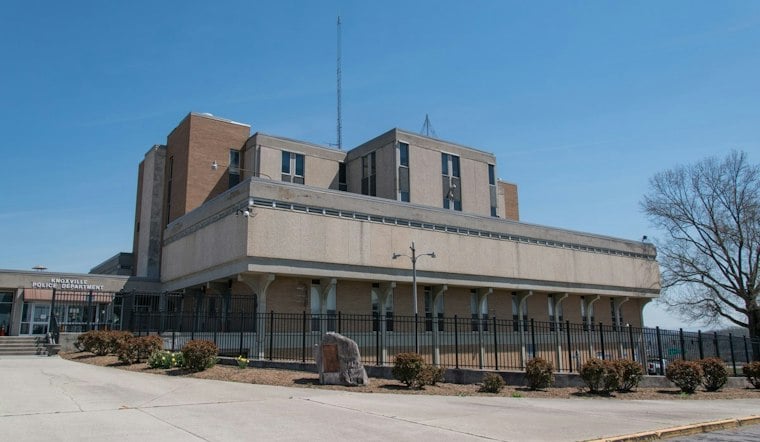
Knoxville residents asked police questions at a listening session at the Burlington Branch Library about two of the department’s most closely watched surveillance tools: drones that beam live video from 911 call scenes, and a license plate reader camera on University Avenue that logs every vehicle that passes it. The questions ranged from who gets to watch the footage to whether anyone outside the department can check how it’s being used.
Live Video From Call Scenes, and Who Gets to Watch It
Knoxville police use drones to send live video from active 911 call scenes back to department staff, according to WBIR. That video feeds into the Knoxville Police Department’s Real Time Information Center, which lets staff use camera footage to tell responding officers what’s happening as they arrive on scene, the outlet reported. The department also operates a license plate reader on University Avenue that records the plates of vehicles passing by.
Only six people are authorized to watch that University Avenue reader’s live feed, WBIR reported: four specialists, a sergeant and Captain Adam Minner. Those viewers cannot replay the live-feed video after the fact, but they can describe in real time an assault they see occurring on the feed, according to the station’s report.
Rules Around Plate Searches and Data Retention
Officers who want to search license plate records must tie the search to a case, enter a reason and identify the type of crime involved, per Scott Erland’s account relayed by the same outlet. An auditor checks each plate search, Erland said. The underlying Axon system deletes license-plate data after 30 days unless police preserve it as evidence, he added.
Those retention and audit rules echo broader scrutiny already underway in the region. A separate WATE report found that KPD currently operates 19 fixed license plate readers within city limits plus 30 mobile readers built into officer dashcams, and that the Real Time Information Center began running out of the Public Safety Complex at 1650 Huron Street in May. The department has said its readers do not detect facial images, people, gender or race, and that it does not rely on artificial intelligence to identify suspects, with command-level authorization required before officers can access the information, according to WATE.
A Resident’s Push for Public Access to Audits
Ellen Zavisca wanted to know who checks officers’ use of the information collected by these systems, the WBIR report said. She wanted to see the audits and said public access to them would help people assess whether the technology is being used carefully. She left with a question she had not gotten to ask: whether someone could obtain a copy through a public-records request.
Knoxville’s open-records page states that police reports, videos and photos fall under the Knoxville Police Department, according to the City of Knoxville.
Why the Knoxville Police Advisory Review Committee Convened the Session
The Knoxville Police Advisory Review Committee organized the listening session, allowing attendees to submit questions in advance or bring them in person and speak one-on-one with officers, per WBIR’s account. Jered Croom said the session humanizes uniformed officers and recognizes them as Knoxville citizens too, the station reported. The committee plans to hold its next quarterly meeting in January 2027.
A County-Level Debate Over Expanding the Camera Network
The questions in Knoxville arrive as a parallel fight plays out at the county level. Knox County officials had come close to installing nearly 300 additional license plate reader cameras throughout the county before the debate intensified, according to WSMV, which also reported that Tennessee lawmakers at the state and federal levels were working on new restrictions for the cameras ahead of the next legislative session. Notably, the station reported, the Knoxville Police Department uses Axon-brand cameras while the Knox County Sheriff’s Office relies on a different company, Flock.
Knox County commissioners voted unanimously to request a comprehensive review of the sheriff’s proposed Advanced Research and Communications Center and its automated license plate reader operations, per a separate WATE report, and asked that the center not become operational until that review is complete. Sheriff Tom Spangler said installation of new license plate reader cameras would pause while already installed cameras would remain operational, the outlet reported.



