

























































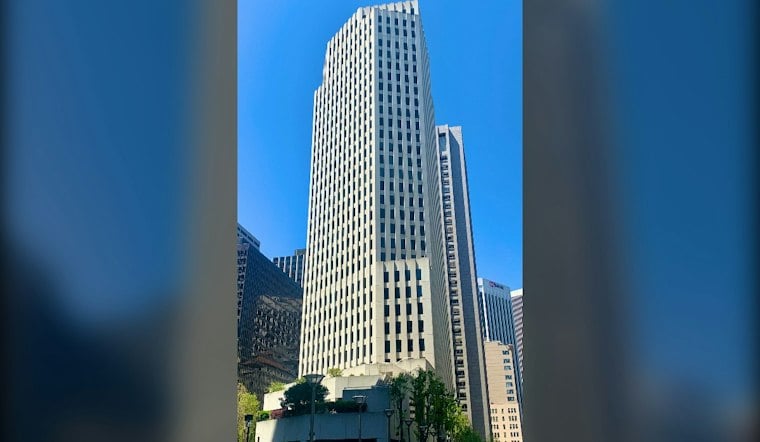
A legal technology startup that helps small law firms take on much bigger opponents in court has set up shop in downtown San Francisco. Eve has leased office space at 201 Mission St. and moved into the new quarters, according to CoStar.
The move, reported by CoStar, places Eve in one of downtown San Francisco's more sought-after office buildings at a moment when artificial intelligence companies are reshaping the city's commercial real estate landscape. The detailed terms of Eve's lease, including its size, cost and length, were not disclosed in the available reporting, and the CoStar article itself is available exclusively to its subscribers.
Eve was founded by David Zeng, Jay Madheswaran and Matt Noe, according to Fortune. The company builds case-management tools specifically for small plaintiff-side law firms, the ones representing everyday people who are suing larger, better-funded companies rather than defending them.
A Fast-Growing Platform for Plaintiff Lawyers
Eve's traction has been notable. The platform's case count jumped roughly 75% between June and the end of September, surpassing 350,000 cases spread across nearly 2,000 plaintiff law firms, per the same Fortune report. More than 50,000 of those cases have already closed, generating more than $3.5 billion in settlements and judgments.
The company raised a $103 million Series B in 2025 at a valuation topping $1 billion, Fortune reports. Eve's headcount had grown to 275 employees, up nearly 40% since June, and the company had plans to double its Bay Area headcount by spring 2026. Eve isn't alone in the plaintiff-side legal tech space; the article notes that EvenUp and Supio also target the same kind of practices, while a heavier-hitting rival, Harvey, caters more to Big Law firms and corporate in-house counsel and was valued at more than $15 billion in the same report.
San Francisco's Office Market Draws AI Tenants
Eve's arrival at 201 Mission St. fits into a broader pattern of AI companies snapping up San Francisco office space. The building already counts cloud-platform startup Vercel among its tenants, which signed a lease for nearly 42,150 square feet there in October 2025, covering the second and third floors through April 2028, according to CoStar.
That same CoStar report found San Francisco's office vacancy rate stood at about 23% in October 2025, compared with less than 6% in 2019, while the city's sublease rate had fallen roughly 30% over the prior two years. AI companies had expanded their combined San Francisco footprint to more than 5 million square feet over that stretch, the outlet reported, citing CBRE data.
More recent numbers suggest the trend has only accelerated. CBRE data cited by the San Francisco Chronicle showed vacancy easing to 30.8% in the first quarter of 2026, down from 33.5% at the end of 2025, with more than half of roughly 3 million square feet leased in recent months claimed by AI tenants. Databricks, for instance, expanded its footprint at 1 Sansome St. by 90,000 square feet.
OpenAI's Expanding Footprint Shows the Scale of Demand
The appetite for San Francisco office space among AI firms extends well beyond legal tech. The Chronicle reported that fast-growing AI startups have increasingly turned to short-term leases to meet immediate space needs, and OpenAI has been among the most aggressive players, having signed a 280,000-square-foot sublease earlier in 2026 at 1800 Owens, the former Dropbox headquarters.
OpenAI was also reportedly nearing a sublease spanning about 100,000 square feet, roughly one-third of 500 Terry A Francois Blvd., a deal that remained pending as of the week before the Chronicle's report. If completed, that sublease would push OpenAI's Mission Bay footprint above 1.1 million square feet, underscoring just how much room AI companies are consuming in a market still working through years of elevated vacancy.




