

























































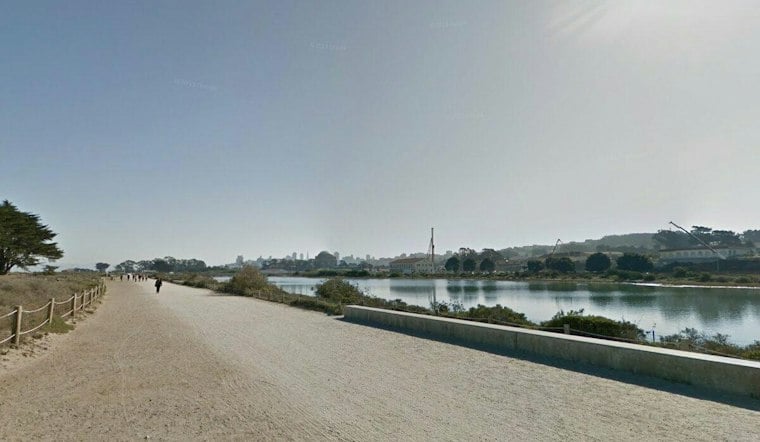
Eric Machado and Jessica Liu were walking their dog beside Crissy Field Marsh when something in the water stopped them in their tracks: a shark, gliding through the shallow marsh in plain view. They pulled out their phones and recorded the animal as it moved through the water, capturing a sighting that marine biologist Vicky Vasquez called very unusual for the spot.
The footage, taken Nov. 24, soon made its way to Vicky Vasquez, a marine biologist who reviewed the video and believes it was a leopard shark, the most common shark species in San Francisco Bay, according to NBC Bay Area. She said leopard sharks feed on crabs and worms and are not a threat to humans or pets, offering some reassurance to anyone who might have been startled by the sight.
Vasquez explained that a high tide likely opened up a temporary pathway for the shark, letting it slip from the bay into a part of the marsh that is normally out of reach. Once inside, it would have found muddy ground packed with food and no competition from other sharks, essentially a private buffet without the usual crowd.
A Second Expert Weighs In
Dave Ebert, with San Jose State University's Pacific Shark Research Center, offered his own read on the video, telling the San Francisco Chronicle that it was most likely an adult leopard shark, a judgment based on its size, swimming behavior and fin shape, though the species was not formally confirmed. Per the San Francisco Chronicle, adult leopard sharks can grow to about 5 to 6 feet long and are not considered dangerous to people.
Ebert also noted that sharks can swim into small lagoon-like areas and sometimes get temporarily stuck there, and he said the marsh's shallow water probably made this particular shark much easier for passersby to spot than it would be out in the open bay.
Could More Sharks Show Up This Winter?
Vasquez pointed to this winter's El Niño-fueled king tides as a possible reason San Franciscans might catch more glimpses of sharks in places like Crissy Field Marsh in the months ahead, the station's report noted. Still, she was clear that there's no reason for alarm, stressing that people should not be worried about unusual sharks turning up and posing a danger.
Ebert offered a different piece of the seasonal puzzle, saying leopard sharks typically clear out of the bay once the rainy season sets in. Depending on how much rain falls this winter, he said their return to the shallows may begin as early as March or April next year.





