

























































A 46-year-old man wanted in Alabama on charges of raping a child was arrested without incident Thursday evening in Cumberland County, Tennessee, after investigators say automated license plate readers helped them track his pickup truck to a remote campground. Joey Mineshaw had been wanted out of Marshall County, Alabama, and his capture near Crossville came after a multi-agency search that stretched from Prentice Cooper State Forest to Catoosa Wildlife Management Area.
According to the U.S. Marshals Service, as reported by WVLT, Flock camera footage ultimately led authorities to locate Mineshaw at a primitive campsite in the Catoosa Wildlife Management Area. The search began after the Marshall County Sheriff's Department contacted the Smoky Mountain Fugitive Task Force in Chattanooga with a tip that Mineshaw might be hiding in Prentice Cooper State Forest in Marion County, according to WATE.
A Campsite Found Empty, Then a New Lead
When the Tennessee Wildlife Resources Agency checked that forest, they found that Mineshaw had indeed camped there, but had already packed up and left, per the same account. With that trail gone cold, investigators turned to a different kind of evidence: automated license plate reader hits showing Mineshaw's pickup truck had been spotted in the Crossville area.
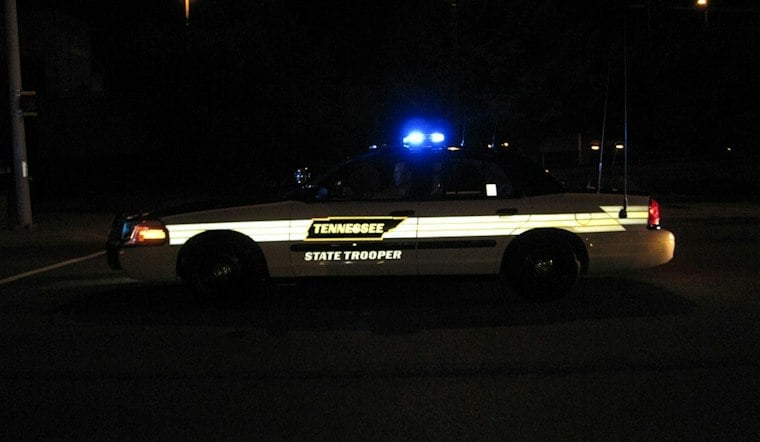
Those camera hits sent the Smoky Mountains Fugitive Task Force checking campgrounds throughout Cumberland County, working alongside the Tennessee Highway Patrol, the Tennessee Bureau of Investigation and the FBI, the report notes. The search eventually zeroed in on a primitive campground in the Catoosa Wildlife Management Area, north of Fairfield Glade, where authorities spotted Mineshaw's truck. The Chattanooga Police Department also assisted with the investigation and arrest, which happened Thursday evening without incident.
Cameras Under Scrutiny Even as They Aid an Arrest
The arrest lands amid an ongoing local debate in Crossville over the very technology credited with helping find Mineshaw. Just weeks earlier, on October 13, several residents spoke at a city council meeting where privacy concerns dominated public comment, according to 3B Media News. Crossville Mayor RJ Crawford moved to cancel the city's Flock camera contract, saying the system had generated enough concern that he no longer believed it was worthwhile, as reported by The UC Now; the motion ultimately failed among council members.
Camera counts for the Crossville system have been reported inconsistently. 3B Media News described a failed motion to remove seven cameras, while CrossvillePrivacy.org has pointed to a 2025 city invoice listing ten cameras billed at $3,000 each. The discrepancy has not been reconciled in available records.
A Broader Pattern of License Plate Technology in Manhunts
Mineshaw's capture is not an isolated case for the technology. Flock cameras and license plate reader data also helped authorities track and capture escaped Tennessee prisoner Jacob Allen Morley across state lines, leading to his arrest in Carroll County, Missouri, after a nine-day manhunt, according to The Kansas City Star. In that same report, ACLU policy counsel Chad Marlow argued that relying on the cameras comes at the cost of privacy for every person potentially captured by them.
Usage data from neighboring Bradley County shows how varied these searches can be: the sheriff's office there ran its ALPR system 14,379 times between September 2025 and August 2026, with just 14% of those searches tied to warrants, per Local 3 News. Dayton police reported 721 searches over a similar stretch, with a quarter categorized as searches for wanted persons. WVLT has separately noted that its own interactive map of East Tennessee surveillance tools relies on information agencies provide through open-records requests, underscoring how much of the public picture depends on what law enforcement chooses to disclose.





