

























































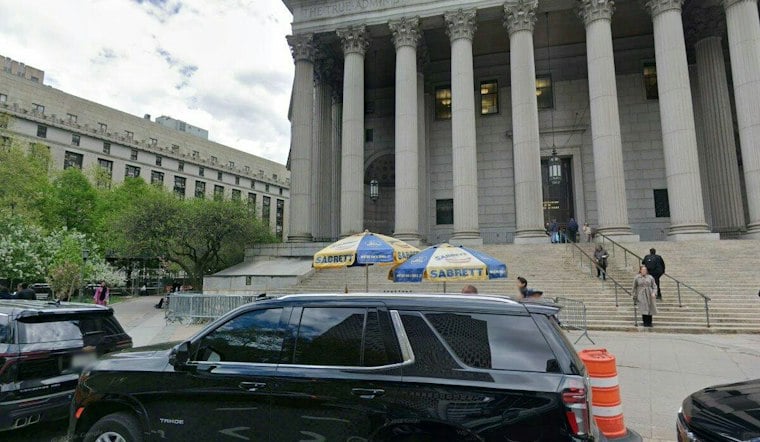
A Manhattan judge has rejected an attempt to use New York's Green Amendment to block New York City's Midtown South rezoning plan, ruling that the constitutional rights at the center of the challenge were not self-executing. The decision clears a path for a rezoning plan that permits more than 9,500 new residences across dozens of blocks in the heart of Manhattan, with over 2,800 of those units set aside as rent-regulated affordable housing.
According to New York Law Journal, the judge found that the Green Amendment, added to New York's constitution in 2021, declares that every person has a right to clean air and water and a healthy environment, but that right does not carry automatic legal force sufficient to halt a city rezoning on its own. The court went further, stating that the provision has limited application, according to the same report.
The challenge had come from the Midtown South Community Council, which alleged failures in the environmental review process and sought to have the rezoning annulled, according to amNewYork. The Midtown South Mixed-Use plan permits residential development across 42 blocks, with amNewYork describing the area as spanning between West 23rd and 40th Streets and Fifth and Eighth Avenues. A separate notice from the New York State Department of Environmental Conservation described the plan's footprint as extending further west, to Ninth Avenue, rather than Eighth.
What the Rezoning Allows
Beyond the boundary dispute, the numbers at stake are substantial. The plan opens the door to more than 9,500 new residences in an area long dominated by commercial and office buildings, and amNewYork reports that over 2,800 of those units would be rent-regulated affordable housing — a sizable addition to the city's housing stock in a neighborhood that has seen little residential construction in decades.
A Pattern of Rejected Green Amendment Claims
The Midtown South ruling fits into a broader trend playing out in New York courts since the Green Amendment took effect in 2022. Since then, numerous environmental and community groups have brought claims under the amendment challenging various projects and permits, according to a legal analysis from Beveridge & Diamond. Appellate courts have repeatedly been asked to decide how far the amendment reaches, including whether it is self-executing and whether judges can force agencies to take enforcement action.
In one such case, People of the State of New York v. Norlite, LLC, the Third Department affirmed dismissal of a Green Amendment claim earlier this year, rejecting arguments that the amendment creates a self-executing substantive right imposing environmental standards beyond the existing regulatory regime, per the same law firm's analysis. In another, a High Acres Landfill dispute covered by Inside Climate News, the Fourth Department ruled that citizens could not obtain a court order compelling state regulators to curtail noxious odors, finding that agency enforcement decisions are generally unsuitable for judicial review.
Courts have reached similar conclusions in cases closer to the Midtown South dispute geographically. In Marte v. City of New York, a trial court dismissed a Green Amendment challenge to a Lower East Side residential development, finding there was no basis to revisit the project's environmental analysis after earlier challenges had already addressed it, according to Climate Case Chart. A separate action tied to the Two Bridges Project sought to annul approvals and halt construction on similar grounds, arguing that inadequate environmental review and unmitigated impacts violated neighboring residents' rights under the amendment, according to Pace University's New York's Green Amendment case archive.
Taken together, the string of rulings suggests New York courts have so far been unwilling to treat the Green Amendment as a standalone tool capable of overriding city land-use decisions or compelling specific agency action. The Midtown South case adds another entry to that record, leaving the rezoning plan intact for now.





