

























































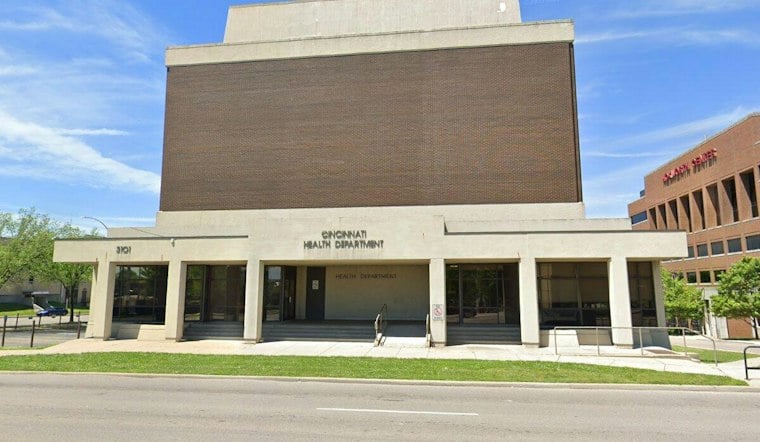
When nobody else comes to say goodbye, Cayce Gray does. As the coordinator of Cincinnati's Unclaimed Remains Program, she has helped lay 41 people to rest so far this year, standing in for the families who either could not be found or could not afford to send their loved ones off properly. For some of those funerals, she is the only person in the room.
Gray works as the administrative technician for the Cincinnati Health Department's Unclaimed Remains Program out of an office in Over-the-Rhine, according to WCPO 9 News. The program exists for people who die in Cincinnati when their families cannot be located, or when relatives exhaust their resources trying to cover final arrangements. “We become their family,” Gray said.
Referrals land on her desk from hospitals, the coroner's office and nursing homes, and the need has not slowed down. Gray recently received four referrals in close succession, including one involving a person who had been experiencing homelessness, the station reports. She said she helped lay more than 50 people to rest two years ago, a pace that has continued into this year with 41 cases already handled.
Checking for Veterans Before Burial
Before Gray closes out a case, she checks whether the deceased person served in the military. If someone qualifies, Cincinnati works to see they're buried at Dayton National Cemetery rather than left anonymous, a detail Yahoo News also confirmed in its own reporting on the program. A ceremony this November recognized two veterans whose families were unable to handle funeral arrangements themselves.
Those services can carry real military honors. Dayton National Cemetery honor guards attend some of the ceremonies, where attendees read the veteran's name aloud one final time before a rifle salute and the playing of Taps, according to the station's report. For people with no family left to grieve them, it's often the only send-off they get.
Gray told the outlet the work is emotionally complicated. Asked whether the job was hard or fulfilling, she said simply, “Both.” “It's a worthwhile day,” she added. “I'm just thankful I'm allowed to do this work.”
How the Process Works
Once a case is confirmed as unclaimed, the remains are cremated and stored at a local crematory, per the same account from Yahoo News. If a relative later comes forward to claim someone's remains, that family member becomes responsible only for cremation costs, and only if the cremation has already taken place by that point.
The Cincinnati Health Department describes the program on its own terms as well: it serves people whose families either could not be located or could not provide for the proper disposition of remains, according to the City of Cincinnati Health Department. Cases referred to the program vary year to year — the city logged 60 of them in 2025, per Health Department administrator Ashanti Salter, as reported by Yahoo News.
Ohio law addresses at least one slice of this landscape directly. Under Ohio Revised Code section 5121.53, the state bears the expense of burial or cremation specifically for an indigent patient who dies in a hospital and goes unclaimed — though that statute doesn't spell out a process covering every unclaimed-remains case Gray encounters.
A Trend Playing Out Statewide
Cincinnati isn't alone in grappling with a rising caseload. In Columbus, the number of indigent residents handled by Day Funeral Service climbed to 502 in 2024, up from 206 in 2016 and a low of 160 in 2018 before steadily climbing again, according to The Columbus Dispatch. That funeral home was paid more than $318,000 for its work cremating those residents last year, charging $995 per cremation, the paper reported.
In nearby Delaware County, Day Funeral Service founder Rick Day has taken an even more personal approach, bringing unclaimed remains to his own farm for several years and scattering ashes in a creek there, the Dispatch reported. It's a reminder that across Ohio, the task of caring for the forgotten dead often falls to a small number of people willing to treat strangers like family.
For Gray, that's the whole point of showing up. “They are human beings,” she said. “And we have to take care of them.”





