

























































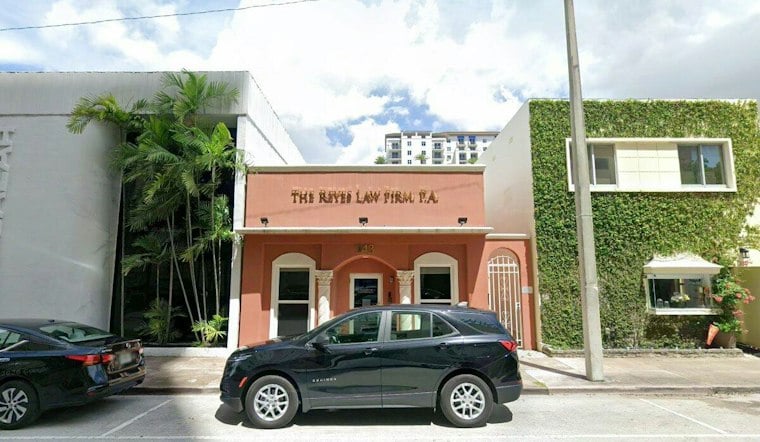
A group of companies is suing Miami-Dade Sheriff Rosie Cordero-Stutz over a legal arrangement that lets a private law firm take a percentage of whatever cash and property it helps the sheriff's office seize. The companies argue that paying a law firm by commission to pursue civil forfeitures gives it a financial stake in every seizure, and they say that stake crosses a constitutional line.
The firm at the center of the dispute, Reyes Law Firm, is based in Coral Gables and represents the sheriff's office in civil forfeiture cases. According to the Miami Herald, the firm keeps 20% to 35% of the proceeds it recovers, plus an additional 5% if a case goes to appeal. The companies suing allege that giving a private law firm a profit motive to pursue seizure of property and money violates due process rights, according to the lawsuit described by the paper.
Cordero-Stutz is defending her office's contract with the firm in court, and her attorney has pushed back directly on the due-process argument. Per the same account, the sheriff's attorney argues the arrangement is lawful because the sheriff's office retains oversight and makes the decisions about which cases to pursue and which settlements to accept.
Millions Already Seized, Billions More Targeted
The companies say more than $45.2 million has already been seized in cases handled by the Reyes firm, with another $2.6 billion targeted for seizure, the Herald reports. No one at the electronics companies involved has been charged in connection with the alleged scheme described in the case, the paper notes.
Estimates of what the firm stands to collect if that larger pool of assets is forfeited vary depending on who is doing the math. Legal documents cited by the Herald indicate the firm could gain $9 million to $13 million from the funds already seized, and roughly $480 million if the additional $2.6 billion were seized. Timothy Sandefur, vice president of the Goldwater Institute, offered a different figure, estimating in comments reported by Big Country News Connection that the lawyer stands to gain an estimated $520 million if he wins the case. That outlet also reported that the agreement was established in 2025 and pays the lawyer a contingency fee to bring asset-forfeiture lawsuits, and that Sandefur said the sheriff's department has yet to seize assets as a result of the agreement while the case is ongoing.
Fight Already Headed to Appeals Court
The legal battle over the arrangement is not new. A Miami circuit judge in April denied a motion to disqualify the Reyes firm from the forfeiture cases, and the matter is now on appeal in Florida's 3rd District Court, the Herald's report notes.
Florida's civil forfeiture law allows seizures to proceed even without a criminal arrest. The Herald points out that even after Florida reformed civil forfeitures in 2016, they can still be carried out without an accompanying arrest. Under Florida's Contraband Forfeiture Act, the Florida Senate's statutory text requires an adversarial preliminary hearing at which the seizing agency must establish probable cause that the property was used in violation of the Act. Agencies that receive or spend forfeited property or sale proceeds must also submit a completed annual report by December 1 documenting those receipts and expenditures, according to the Florida Department of Law Enforcement.
Not the Only Agency With This Setup
The Reyes firm's business model with the sheriff's office is not unique to Miami-Dade. The same firm has a similar forfeiture arrangement with the Coral Gables Police Department, the Herald's reporting notes.
Arrangements letting private attorneys profit from forfeiture cases have drawn scrutiny elsewhere, too. An LA Times opinion piece notes that Indiana is the only state in the U.S. that allows elected prosecutors to contract out civil asset-forfeiture cases to private lawyers, who get a substantial cut of whatever they win and nothing if they lose. One attorney, Joshua Taylor, holds forfeiture contracts in 20 of Indiana's 92 counties, according to the same piece. The op-ed also recalls that a Georgia appeals court called that state's contracting-out practices “repugnant” in 2012, after which the Legislature outlawed them.
As first reported by the Tampa Bay Times, the dispute over Miami-Dade's forfeiture arrangement remains before Florida's 3rd District Court of Appeal, with Cordero-Stutz's office maintaining that its oversight of the firm's casework keeps the contract on solid legal footing.




