

























































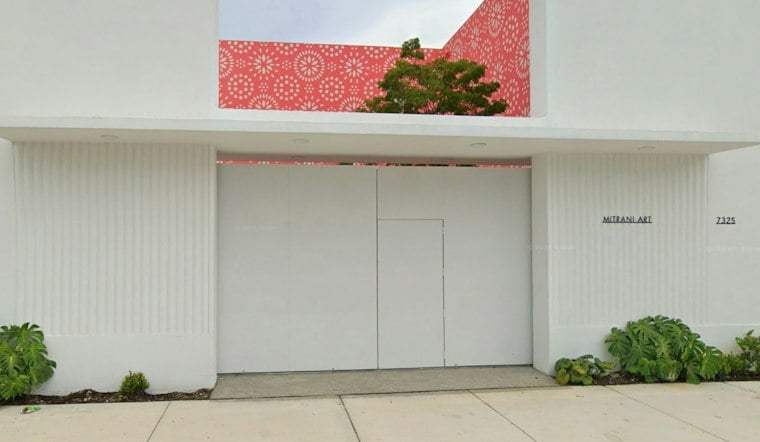
A converted mechanic shop in Little River is set to open as Mitrani Art on November 30, a nonprofit venue for photography, film and video that marks the return of sisters Dina and Rhonda Mitrani to a permanent exhibition space after nearly a decade without one. The inaugural exhibition runs from 6 to 9 p.m. at 7325 N Miami Ave, bringing together galleries, a screening room and artists' studios under one roof for the first time since their old Wynwood warehouse closed.
According to The Art Newspaper, the project is an evolution of the sisters' former Wynwood space, where Dina and Rhonda Mitrani started Mitrani Warehouse inside their family's old clothing factory in 2002. That venture grew out of a deeper family history in the neighborhood: the sisters had relocated back to Miami from New York in 2001 specifically to repurpose their relatives' former garment factory into art studios, according to Mitrani Art's own account. Dina went on to open her contemporary photography gallery there in 2008, while Rhonda opened The Screening Room in 2013 as what The Art Newspaper describes as Miami's first dedicated venue for filmmakers and video artists.
From a Shuttered Warehouse to a New Little River Build
The Wynwood warehouse closed in 2017, per The Art Newspaper, after artists and galleries were priced out as the neighborhood transformed around them. Dina Mitrani has described that shift in her own words, telling LensCulture that “by 2017, Wynwood was a global destination, but many of the art studios and galleries dispersed to other, more emerging neighborhoods of the city.” In the years that followed, The Screening Room and Dina Mitrani Gallery relied on pop-up programming scattered across Miami rather than a fixed home, The Art Newspaper reports.
The sisters purchased a mechanic shop in Little River in 2019, according to The Art Newspaper, a building the outlet says offered high ceilings and room to expand with a separate studio facility. They hired R+R Studios, a local multidisciplinary architecture firm run by Argentine artists Roberto Behar and Rosario Marquardt, to design the new facility — a choice with personal resonance, since Behar and Marquardt were themselves longtime residents of the old Mitrani Warehouse studios, per the same report. Rhonda Mitrani has said the project has been seven years in the making, and The Art Newspaper notes it was delayed along the way by the pandemic, permitting issues and other roadblocks.
Galleries, a Screening Room and Four Artist Studios
The finished building pairs the converted mechanic shop with a newly built extension of studios wrapped around an enclosed outdoor courtyard meant for cultural and private events, according to Mitrani Art's website. The shop itself houses multi-use galleries, a screening room and a library of photo books, the organization says. The Art Newspaper reports the facility includes four studio spaces, each large enough for two artists, and that artists are already moving into the new building.
Mitrani Art will operate as a nonprofit — formally Mitrani Art Projects Inc, started by the sisters to run educational programming in the space — and describes itself on its site as dedicated to the cultivation of photography, film and video art through exhibitions, screenings and workshops. Dina Mitrani has said the new space will continue the Wynwood model of building community through art studios and event spaces, per The Art Newspaper. The venue will also give The Screening Room and Dina Mitrani Gallery a permanent address for the first time since 2017, according to the same report.
Inaugural Show Spotlights Lens-Based Art
Mitrani Art will welcome emerging and established artists to experiment and create new work, and its opening exhibition, Reexposures: The Magic Within, is billed as a group show of lens-based art, The Art Newspaper reports. Among the works is Antonia Wright's Suddenly We Jumped, a video capturing her 2013 live performance of shattering a glass ceiling. Rhonda Mitrani has said Wright's work focuses on important social issues and that the video is impactful, according to the outlet.
The sisters' individual paths to the project ran through New York before looping back to Miami. Both left the city for university and later moved to New York, where Dina worked at Christie's and at two galleries, including one specializing in Latin American photography, per The Art Newspaper. Rhonda, meanwhile, made a documentary film about her father's return to Cuba. The Screening Room, which Rhonda opened as Miami's first dedicated venue for filmmakers and video artists, had originally debuted inside the Wynwood warehouse with an exhibition of video works by Venezuela-born artist and architect Carola Bravo, according to Miami New Times. Rhonda has credited that founding mission to a gap she saw in the city's cultural landscape, telling the outlet she recognized “there was a need in Miami for a space dedicated to experimental film and video art work.”
Rents and the Pressure on Miami Studio Space
Mitrani Art is pricing its spaces at the lower end of the neighborhood market rate, The Art Newspaper reports, and the sisters hope to keep rents low over time by securing grant funding. That goal lands amid a broader squeeze on Miami studio space that has drawn scrutiny well beyond Little River. A 2022 report from The Art Newspaper described Little River as an emerging art hub drawing galleries and nonprofits, including planned moves by Locust Projects and Oolite Arts, even as it noted concerns about gentrification and climate risk taking hold in the neighborhood.
Those pressures show up in the numbers. The price per square foot of industrial space in the local market climbed about 26 percent over two years, according to a 2024 report from WLRN, which also found that roughly 300 artists applied for just six free studios at Oolite Arts in a single year and that Fountainhead Studios, a longtime Little River complex, had already closed after 15 years. A 2023 Art Newspaper piece separately reported that about 85 percent of artists surveyed at Bakehouse Art Complex earned $50,000 or less annually, underscoring why a low-rent lens-based art space in Little River matters to a local arts community still absorbing the lessons of Wynwood's transformation.




