

























































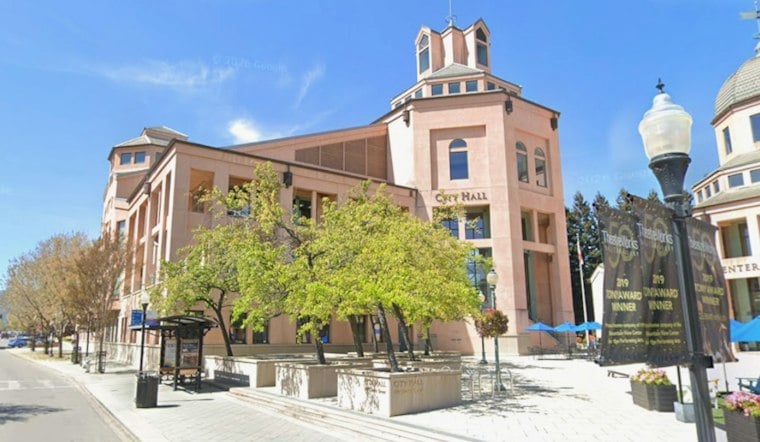
Mountain View's City Council is scheduled to vote today on two ordinances that would bar unhitched trailers from city streets and outlaw vanlording, the rental of vehicles as lodging on public property.
Neither proposal would become law on a single reading. Mountain View Voice reports that a second and final vote is scheduled for Dec. 8, with the rules taking effect 30 days after that vote if the council approves them.
What the Ordinances Would Ban
The trailer ordinance would prohibit unhitched trailers and semitrailers from parking on city streets at all times. Those vehicles need a separate motorized vehicle to move, which is part of why staff have tied the rule to emergency access as well as to rental practices.
The exceptions are narrow and practical: permitted construction and public utility work, damaged trailers being unloaded for repairs, and trailers used for deliveries. Living in a parked trailer is not on that list.
The companion ordinance would prohibit advertising, leasing, lending or providing vehicles as lodging on city-controlled property, including streets, alleys and parking lots. A staff report calls vanlording an unregulated practice that targets vulnerable residents, and says it "takes advantage of public resources (the public right-of-way) by renting out substandard housing for personal financial gain."
If the ban passes, vanlords could face a misdemeanor. Tenants would not be subject to enforcement under the ordinance. Staff say the rental arrangements already make ordinary parking rules harder to enforce, because officers have to find both the vehicle owner and the person living in it. Mountain View already limits parking in one spot to 72 hours.
A Larger Count, and a Narrower Map
In July, city staff counted 428 inhabited vehicles on Mountain View streets, 40% more than the previous year. Of those, 402 were oversized vehicles, and 67 of the oversized vehicles were unhitched trailers.
An earlier snapshot, reported by Palo Alto Online, put the August 2025 count at 306 inhabited vehicles. Seven months later the city counted 438, and 402 of those were RVs and trailers, most of them in commercial and industrial areas. The July figure is a later count with its own categories, not a revision of that earlier tally.
Staff have attributed part of the influx to the removal of parking on El Camino Real for bike lanes and to tighter rules in neighboring cities. The vehicles did not simply appear. Some of the street they used to occupy was redesigned, and some of the cities next door got stricter.
Residents have complained about hazardous-waste dumping and about unsafe conditions for people walking, biking and driving. They have also described the concentrations as unwelcoming to nearby homes, businesses and schools. Businesses told the city that RV concentrations hurt profits. Several tech companies, meanwhile, urged Mountain View to build bike lanes on streets that still accommodate oversized vehicles.
$428,000 in Recommended Services
Alongside the restrictions, staff are recommending that the council appropriate $428,000 for homelessness prevention and response. That is a recommendation, not money already spent.
The package would send $150,000 to the city's direct financial assistance program for extremely low-income households, $200,000 to expand meals, laundry and showers at Hope's Corner, and $78,000 to the Community Services Agency for additional outreach workers. The three lines add up to the full request.
The ordinances are framed as a response to predatory rentals and blocked emergency access. The funding is the part of the packet aimed at people who would still need a place to sleep, shower and get help if the parking rules tighten.
Rules the City Already Has
Mountain View already bars oversized vehicles from narrow streets and from streets with bike lanes. Those limits cover the vast majority of city roadways, which is why the remaining legal curb is so concentrated.
The city has also gone six years without adopting new rules that would further restrict RVs and oversized vehicles on its streets. Today's scheduled vote is the first reading of an attempt to change that, not the end of the process.
Three new council members were elected on Nov. 3 and are set to take their seats in January 2027. The council scheduled to take both the Tuesday vote and the Dec. 8 vote is the current one.
A Settlement Clock, and Palo Alto's Version
A legal settlement protecting vehicle residents is set to expire at the end of February 2027. As of Feb. 28, 2027, Mountain View will no longer have to maintain at least three miles of streets with parking on both sides for oversized vehicles.
Palo Alto banned unhitched trailers and vanlording in 2025. Before that ban, a Palo Alto committee had recommended prohibiting vanlording first and deferring an outright ban on other RV parking while the city looked for alternatives, including streets that could be designated for legal RV parking through a permitting program.
Palo Alto staff also identified land at the Baylands Athletic Fields that could hold 10 to 20 safe-parking spaces. Using it would require undedicating parkland and holding a citywide special election, which is a slower path than a parking ordinance.
If Mountain View's council approves both readings, the new rules would start 30 days after the Dec. 8 vote, in early January, the same month the new members are seated. The three-mile parking obligation from the settlement would remain in place until Feb. 28, 2027.



