

























































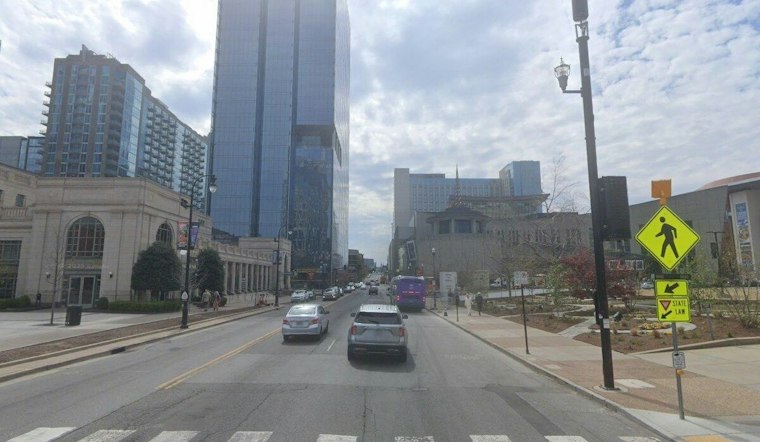
A Nashville Metro Council member is pushing a resolution this week that would force city departments to map every spot where people walking or biking have been hit by cars on the city's greenways over the past year, and then come back with solutions and cost estimates to fix them. The measure, sponsored by council member Jacob Kupin, comes after multiple people have been hit or killed at Nashville greenway crossings over the last two years, with no single roadmap in place to prevent the next one.
A Resolution Born From Repeated Tragedy
Kupin's resolution asks the Nashville Department of Transportation and Metro Parks to jointly study greenway crossing safety, review existing safety measures, and determine whether additional improvements are necessary, according to WSMV. The resolution is up for a Metro Council vote this week. Kupin said Nashville has already committed to its Vision Zero plan to eliminate traffic deaths, but argued the city still lacks a clear roadmap for the greenway safety changes it needs.
“Nashville has road improvement priorities but no roadmap for needed greenway safety changes,” is how the gap was described in the council member's push for the measure. Kupin said quick fixes like the pedestrian beacon added along Third Avenue North would be a good start, but that a comprehensive plan is still needed across the city's growing trail network.
The Crossing That Became a Flashpoint
The resolution's urgency traces back to the Magdeburg Greenway crossing at Third Avenue North in Germantown, where 77-year-old Dot Dobbins was struck and killed by a car in June, according to the Nashville Banner. A Nashville.gov police notice said the preliminary investigation indicated a Chevrolet Silverado pickup truck was traveling north on Third Avenue North as Dobbins was crossing the roadway. A cyclist was later injured in a hit-and-run crash at the same crosswalk in August, the Banner reported.
NDOT installed rectangular rapid flashing beacons and stop signs with flashing red lights at the crossing, measures meant to remain in place until a pedestrian hybrid beacon was installed later that year, per the same account. A pedestrian beacon was ultimately added to the Third Avenue crossing after Dobbins was killed there the previous summer. Metro leaders had approved those crosswalk protections for the Magdeburg Greenway crossing, and the Traffic and Parking Commission approved plans for the hybrid beacon, which an NDOT engineer said should be installed in October, the station's earlier report noted. NDOT was also working on a proposal for a raised crosswalk design at the same location to make the area even safer, though it's unclear whether that proposal has since moved forward.
Walkers Describe a Patchwork of Safety
Lauren Quillo said Third Avenue is the one place on the greenway where she always feels safe, but she wants more safety changes at other points on the path to protect people from distracted drivers. She said she wished pedestrians could have their voices heard without a tragedy prompting change in the first place. Just down the path, the next crosswalk along Third Avenue has only a couple of warning signs and road stripes, nowhere near the protection offered at the beacon-equipped crossing.
Stuart Kershaw, who walks around Germantown every day during his lunch break, said he pays extra attention at greenway road crossings that lack pedestrian beacons. He said more beacons make crossings feel safer and genuinely make a difference for people on foot. Cierra Garza said larger crossing signs make drivers more aware of greenway users and prompt them to slow down, though she added that crosswalk lines are often hard to see at night — signs help, she said, even if a light isn't needed at every single crossing.
What the Resolution Would Actually Require
Under Kupin's proposal, NDOT and Metro Parks would be tasked with mapping locations where people walking and biking were hit by cars on greenways over the past year, reviewing current safety measures, and providing solutions along with cost estimates. NDOT typically manages crosswalks and street crossings, and the resolution calls on the department to work with Metro Parks as the trail network continues to grow, building safety considerations into new development from the start.
Kupin said the approach would combine quick-build fixes, such as updated signs and refreshed faded road markings, with a longer process of identifying larger safety projects that require more planning and funding, prioritized by how dangerous and immediate the risk is at each location. He wants a final report submitted to Metro Council by April 1, 2027, after which the council may consider the recommendations during next year's budget process.
A Citywide Problem Beyond One Crosswalk
The resolution lands amid a broader spike in pedestrian and cyclist deaths across Nashville. A Metro Greenways and Open Space Commission presentation reported 28 deaths involving people walking or biking in 2026, compared with 27 during all of 2025, according to WSMV. The commission called for safety reviews where trails intersect with roadways and discussed the toll amid concern that shortening fall and winter daylight hours further limit visibility for drivers and pedestrians alike.
Nashville's Choose How You Move transportation program is funding 86 miles of new sidewalks and upgrades to 592 intersections, per the commission's presentation. Separately, the Nashville Scene reported that the city's Vision Zero initiative is entering the final phase of its five-year action plan while some intersections and stretches identified for years as top priorities remain untouched. The outlet noted that a 2024 referendum opened up dedicated funding for walking and biking infrastructure, but that many of the resulting projects remain mired in engineering and planning phases. If pedestrian deaths continue at the pace described, the Scene reported, 2026 would match Nashville's ten-year high.
Kupin is not the first council member to push for faster action. He also sponsored a separate nonbinding resolution urging NDOT and the mayor's office to renew and accelerate Metro's Vision Zero commitment, which the Scene reported passed during the council's July 21 meeting. Nashville has pursued other pedestrian-safety upgrades this year as well: the city completed a raised crosswalk at Fourth Avenue South and Symphony Place, the third in a series of four such projects, with construction on the fourth planned to begin the following month at Anne Dallas Dudley Boulevard and Church Street, WSMV reported. Those projects have included raised crossings, updated signs, ADA upgrades and new pavement striping.





