

























































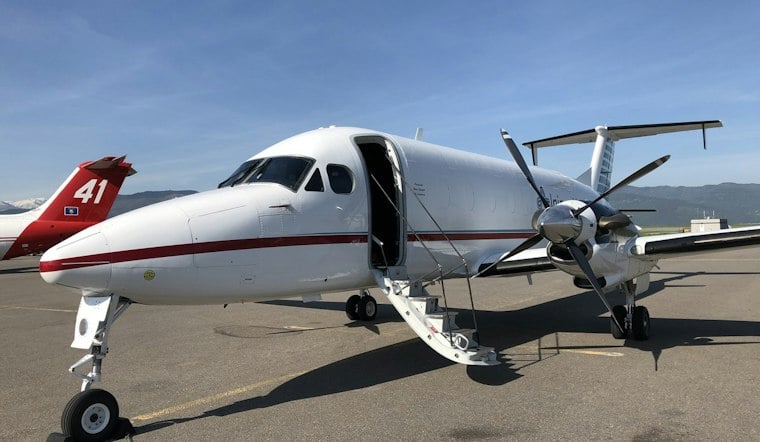
A Nashville-area nonprofit just notched a milestone that most volunteer pilots only dream about: 200 rescue flights. On Oct. 14, Race for Life Rescue completed that 200th mission, flying 112 animals out of overcrowded Louisiana shelters to shelters in the Northeast.
The group, founded in 2021 by Jim and Pam DeFrancesco, has now flown more than 12,000 animals and worked with shelters in more than 30 states, according to Morningstar, which ran the organization's press release marking the anniversary. Jim DeFrancesco serves as the nonprofit's founder and chief pilot, flying the missions himself out of the group's home base in the Greater Nashville area.
The workhorse behind those 200 flights is a 1999 Beechcraft 1900D, a 19-passenger commuter plane that's been converted to carry more than 100 crated animals in a climate-controlled cabin, per the release. The aircraft can cover about 1,000 nautical miles in under five hours, turning what would otherwise be a 20-to-25-hour drive by road into a same-day trip for dogs and cats who might not survive the wait in an overcrowded shelter.
Screened Before Boarding, Escorted the Whole Way
Every animal that boards the plane has already been screened by the sending shelter, and a partner representative flies along on every mission, the release notes. Shelters themselves pay nothing for the flights — Race for Life Rescue covers those costs through donors, foundations and partners, including the BISSELL Pet Foundation and the ASPCA, according to an earlier PR Newswire release marking the organization's 10,000th animal saved.
Jim DeFrancesco is matching every donation made to the organization through Dec. 31, according to the press release. In the same release, he reflected on what the work means beyond the logistics of moving animals from point A to point B. “An airplane is simply a machine until you give it a purpose,” DeFrancesco said. He added that watching rescue workers receive the animals at their destination showed him that “the flight wasn't simply transportation. For those animals, it was a flight to a new life.”
From Hurricane Relief to a Weekly Rhythm
The nonprofit's very first mission carried relief supplies from Nashville to Naples, Florida, after Hurricane Ian — though accounts differ on the exact date. The press release marking the 200th mission states the flight happened Oct. 2, 2022, while the organization's earlier 10,000-animal release put the date at Oct. 3, 2022. Either way, the plane returned to Nashville with nearly 40 displaced cats bound for adoption, a detail both releases agree on.
Since then, Race for Life Rescue says it has averaged about one mission a week, and the pace hasn't slowed in 2026: the organization reports completing 49 missions carrying 3,267 animals so far this year. The group's own rescue-missions page lists an Oct. 22 flight from Baton Rouge, Louisiana, to New York City and Binghamton, New York — one of the regular Southern-to-Northeast routes that have become its specialty. A separate flight documented by WICZ brought 49 dogs and nine cats to New York's Southern Tier.
A Small Plane Against a Nationwide Gap
The flights land against a backdrop of mounting pressure on the shelter system nationwide. During the first six months of 2026, 3.7 million dogs and cats entered shelters and rescues across the country, up 72,000 animals from the same period a year earlier, according to Shelter Animals Count. Cat intake alone rose 3.5% during that stretch, while dog intake stayed relatively flat.
Nationally, shelters and rescues took in 213,000 more cats and dogs than left through adoption, transfer or other outcomes in that same six-month window, the data summary found. Transfers between organizations — the exact mechanism groups like Race for Life Rescue rely on — have actually declined 18.8% compared with a decade ago, even though roughly 94% of transferred animals have gone on to be adopted since 2019.
Race for Life Rescue isn't the only operation flying pets out of crowded shelters. Wings of Rescue transports tens of thousands of pets, and its aircraft have no cargo hold. Greater Good Charities, meanwhile, conducts two to five airlifts a month and has moved more than 20,000 animals with partners in 30 states — including a flight that carried 60 at-risk dogs and cats from New Orleans to Waukesha, Wisconsin, as reported by NBC New York.





