

























































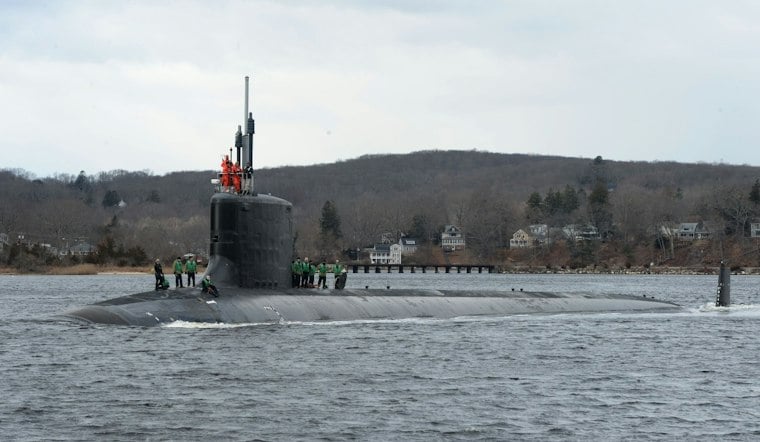
The Navy relieved the commanding officer, executive officer and chief of the boat of the submarine USS South Dakota on Oct. 14 following what sources describe as a grounding incident, and nearly a month passed before lawmakers overseeing the service learned about it at all. Reps. Joe Courtney and Adam Smith say they only found out when a reporter called asking for comment.
Lawmakers Say They Were Left in the Dark
According to USNI News, the South Dakota's commanding officer, executive officer and chief of the boat were all relieved on Oct. 14, reportedly following a grounding incident. A source familiar with the matter told the outlet the removal followed a soft grounding of the submarine's rudder. Courtney and Smith said that nearly one month later, no notifications of the firings or the underlying incident had been made to the House Armed Services Committee, a lapse USNI News notes runs counter to how the Navy typically handles at-sea incidents, accidents and command-triad dismissals.
In a letter to Acting Navy Secretary Hung Cao and Chief of Naval Operations Adm. Daryl Caudle, the two lawmakers did not mince words. “The Department of the Navy's failure to communicate these incidents to Congress is unacceptable,” they wrote, according to the same USNI News report. Courtney and Smith also said the Navy's silence raised broader concerns about transparency and the service's relationship with Congress.
What Lawmakers Are Demanding
Per Inside Defense, the lawmakers asked the Navy for a preliminary cost assessment of any damages, a detailed report on structural damage, and an expected maintenance timeline for the South Dakota. They also want an explanation for why Congress was never notified. Inside Defense reported that the Navy did not respond immediately to its request for comment.
The South Dakota incident is drawing comparisons to the 2021 collision involving the USS Connecticut, which struck an underwater seamount and suffered extensive damage, as USNI News notes in laying out the stakes of unreported submarine incidents. Separately, Defense Daily reported that the two Democratic committee leaders said the Navy did not notify Congress of the October grounding incident that led to the submarine's three top leaders being relieved of their duties.
A Destroyer Commander Was Also Quietly Removed
The South Dakota case is not the only recent command change the Navy has handled without its usual public notice. The Navy relieved Cmdr. Caitlin Cunningham of command of the destroyer USS Michael Murphy on Sept. 27, citing a loss of confidence, a Navy spokesperson confirmed to USNI News in a separate report. Cunningham had assumed command of the Michael Murphy on Oct. 24, 2025, meaning her removal came just under a year into her tenure, and the Navy offered no public comment on the move at the time.
USNI News notes that the Navy typically announces command firings like Cunningham's within days, making the delay in this case, as well as the South Dakota disclosure gap, part of a broader pattern. As reported by WKMG, the Navy has quietly fired or removed several top officers in recent months, departing from its usual practice of announcing such changes and drawing pushback from Congress.
Context Around the Fleet
The removals come as the Navy has warned families that deployments lasting 10 to 11 months will be the new standard for the next couple of years, according to the same USNI News reporting on the Michael Murphy. Acting Navy Secretary Hung Cao, who is seeking permanent appointment as the Navy's top civilian official, faces a potentially contentious confirmation hearing next week, adding further scrutiny to how the service has handled its recent leadership changes.



