

























































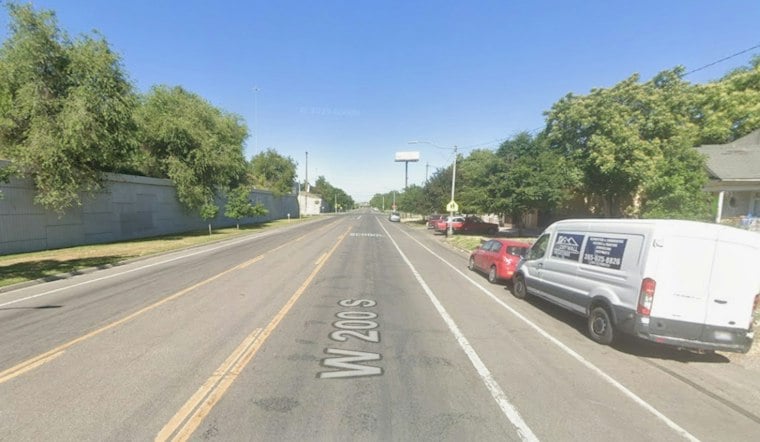
A newly opened apartment complex on Salt Lake City's west side is adding 105 affordable homes to a rental market that city leaders describe as badly strained. Latitude Apartments, at 940 W. 200 South, reserves every unit for residents earning 60% or less of the area median income, with 16 of those homes set aside for people earning 30% or less. Construction on the nearly $39 million project began in spring 2025, and it opened recently in a part of the city where officials say affordability has long been a struggle.
The project sits in the stretch of the city between North Temple and I-80, and between I-15 and Redwood Road, according to KSL News. Salt Lake City directed about $2.8 million toward the development, while project officials raised more than $13 million through federal tax credits and received another $3 million from state tax credits to help cover the cost. About 30% of the units feature two or three bedrooms, a mix meant to accommodate families as well as single renters and seniors.
Jonathan Olson, senior development manager for developer and owner Chelsea Investment Corporation, said the larger, family-sized units can help residents put down roots. He said those units can help residents grow and become part of the neighborhood, per the same report. The building also includes a fitness center, shared laundry spaces on every floor, bike storage, a community lounge, a dog washing station and electric vehicle charging areas in its parking garage.
A Widow Finds Quiet Near the Freeway
Among the first residents is Lynda Davison, who moved into Latitude Apartments a few weeks before the complex was featured in the KSL report. Davison had moved to Utah to live with her sister while visiting her husband in a nursing home, and she lost him months before settling into her new apartment. She said finding affordable housing was difficult because so many people need it, the station's report notes.
Despite the complex's location overlooking I-80, Davison said her apartment is surprisingly quiet. “I feel at home here. I feel at peace,” she said, according to the same account. She added that she feels lucky to have moved in.
Why the West Side Is Building So Fast
Salt Lake City Council Chairman Alejandro Puy, whose district covers the Fairpark and Poplar Grove neighborhoods, said the city cannot control wages but can invest in housing. He called projects like Latitude a miracle for many families. Puy said the area is growing faster than most neighborhoods largely because land is cheaper there while construction costs remain high, per KSL's reporting — and Fairpark and Poplar Grove are neighborhoods where residents commonly struggle to find housing.
Roughly 1,000 housing units are being built within a few blocks of one another in this part of the city right now, according to the report. That building boom extends beyond Latitude: seven proposed buildings would add 1,111 apartments along a roughly one-mile stretch between 900 West and 1800 West near North Temple, according to Building Salt Lake. Those proposed projects, like Latitude, depend on developers landing subsidies from some combination of federal, state and city funding sources.
A Shortage That Stretches Across Utah
The need extends well beyond this one neighborhood. Utah has an estimated shortage of approximately 44,000 affordable and available rental units, KSL reports. A 2026 state housing profile from the National Low Income Housing Coalition found that only 28 rental homes are affordable and available for every 100 extremely low-income households statewide, with the state needing 44,097 more homes affordable to that group.
There are some signs of stabilization. The Kem C. Gardner Policy Institute found that Utah had approximately 108 affordable rental units available for every 100 households earning no more than 80% of area median income in 2025, up from 100 units in 2023. Apartment asking rents in the state's five most populous counties also declined 2.3% between March 2024 and March 2026, even as rents for detached homes and townhomes climbed.
More Subsidized Projects in the Pipeline
Latitude is not an isolated effort. Salt Lake City has also set aside $2.1 million for two family-sized workforce housing developments nearby, including a 13-unit townhome proposal called Maltair Lanes in Poplar Grove and roughly 18 townhome-style units or multifamily condos planned for a Stanbridge property in Fairpark, per Building Salt Lake. Those developments are described as deed-restricted for families earning 120% of area median income, with at least 20% of units affordable to households earning 80% of area median income.
The city has also funded affordable housing through its broader Housing Development Loan Program. It recently awarded $17.7 million across 14 projects — the largest amount the city has ever offered through that program — which are expected to create 1,179 new dwellings and rehabilitate 361 existing ones. City officials hope projects like Latitude will help keep families on the west side, or draw new ones there, as the region works through a shortage that has reshaped the neighborhood for years.




