

























































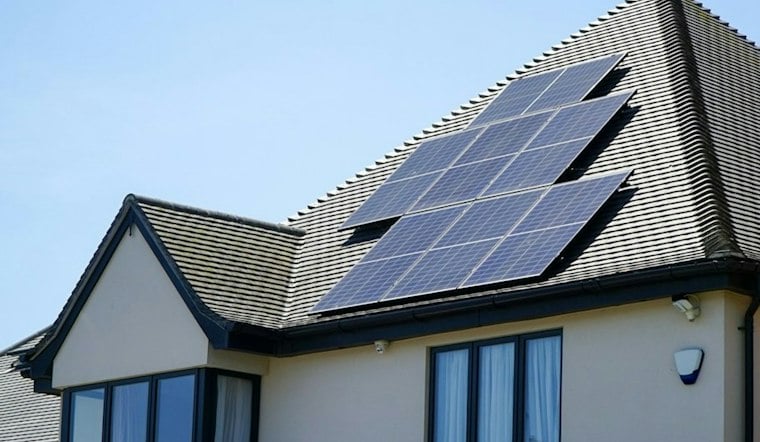
New Orleans residents eyeing a cheap, DIY way to cut their power bills could soon get clearer rules on whether small plug-in solar panels are allowed to connect to the city's electric grid. The City Council's Climate Change and Sustainability Committee is set to consider a resolution at its 10 a.m. meeting on Monday that would open a regulatory review of the devices, often called balcony solar.
What the Proposed Review Would Examine
The proceeding, if the committee opens it, would look at how New Orleans should regulate plug-in solar devices and whether they can be safely connected to the local electric grid, according to New Orleans CityBusiness. The devices use small, portable solar panels that connect to a standard household outlet, the outlet reports, and the council says they generally cost less than rooftop systems and can typically be installed without a professional. Advocates say the appeal is straightforward: a panel you can plug in yourself, at a lower price point than a full rooftop installation, with the potential to shave down a monthly electric bill.
But the underlying wiring in most American homes was never built with that kind of setup in mind. Household outlets in the U.S. are not designed to carry power in two directions, and backfeeding electricity into a circuit can bypass built-in protections, creating fire or shock hazards, according to Stateline. That gap between consumer enthusiasm and electrical code reality is part of what the council's proposed review would need to sort out.
States Rushing Ahead of National Standards
New Orleans would be joining a fast-moving national conversation. At least 30 states have authorized plug-in solar devices or are considering policies governing them, including 10 that already allow their use, according to the council's own figures cited by the outlet. Stateline's count, from a separate report in September, put the number at 12 states that had recently passed bills authorizing balcony solar, with nine signed into law and three awaiting a governor's signature at the time, including new laws in Connecticut, Maine, Maryland, New Hampshire, New Jersey and Vermont since 2025.
Other national counts vary depending on timing and category. Canary Media reported that about half of U.S. states were considering legislation to enable residents to adopt plug-in solar, while an earlier February report from the same year found legislators in 24 states pursuing bills on the issue, according to The New York Times. Utah was the first state to pass a law letting residents plug small solar systems straight into a wall socket, the Times reported. As of Sept. 30, 2026, California's balcony solar bill had passed but remained on Gov. Gavin Newsom's desk. Stateline also noted that national electrical code revisions addressing the technology will not be issued until 2029, leaving states to write their own interim rules. Germany, by contrast, has more than 1 million balcony solar systems installed, producing more than 2 gigawatts of power, per Stateline's reporting.
Utility Rules and Residential Solar
Any New Orleans review would unfold within the broader context of residential solar and utility regulation. Net metering and generator interconnection are among the issues a review could consider for plug-in solar.
Grid Reliability on the Same Agenda
The same meeting is set to host a session on regional transmission planning and grid reliability, with representatives from Entergy New Orleans, GridLab, the Midcontinent Independent System Operator and EDP Renewables North America discussing transmission needs and challenges in the southern portion of the regional grid. The committee will close with a panel featuring Entergy New Orleans, the Alliance for Affordable Energy and the Union of Concerned Scientists focused on how utilities and grid operators can coordinate transmission planning to improve reliability while keeping electricity affordable.





