

























































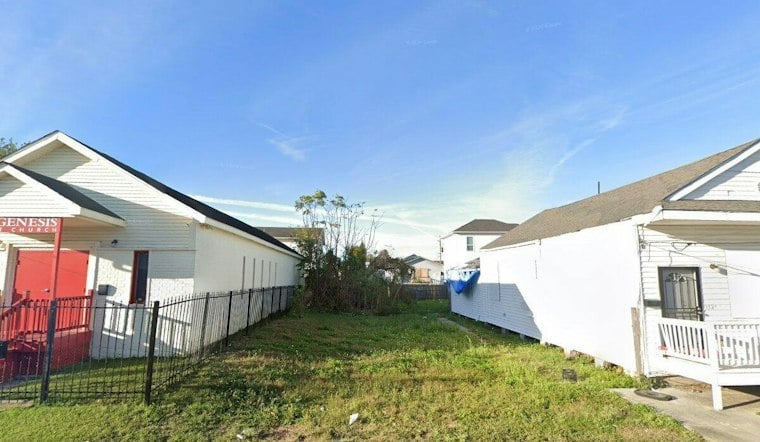
New Orleans has more than 6,000 properties stuck in tax adjudication, and Mayor Helena Moreno’s administration says it finally has a plan to get many of them back into productive use. Instead of auctioning the backlog as-is, the city wants to hire a title company to clear ownership disputes before any sale, starting with pilot efforts in the Hoffman Triangle neighborhood and the Lower 9th Ward.
The effort is now led by the city’s Office of Community Development, which took over the pilot project in September 2026, according to NOLA.com. That shift came after Moreno rescinded an executive order that had created a task force spanning multiple city departments, also in September 2026. The original Adjudicated Property Task Force, announced at a June 11 news conference in the Lower 9th Ward, had been charged with developing strategies to shrink the city’s adjudication list.
Why Auctions Alone Weren’t Working
City officials say the old approach of listing adjudicated properties for public auction as-is often backfired, with properties cycling back onto the market because of title disputes, zoning conflicts or unclear redevelopment goals. The adjudication process itself has prevented would-be homeowners and small developers from securing financing, since tax liens and murky title ownership scare off lenders. That dynamic is why the city is now shifting away from blanket as-is auctions toward a model where titles get cleared first.
Clearing a title isn’t simple. It requires notifying every party with a claim to the property, and sometimes litigation is needed to remove claimants altogether. That’s part of why New Orleans officials plan to hire a title company to handle the process before a property ever reaches a buyer, and why they are exploring legal options to transfer properties to buyers who will use them beneficially and can be held accountable afterward.
At a news conference announcing the original task force, officials framed the stakes in blunt terms. Jeffrey Schwartz said addressing blight requires getting down to the level of specific properties and specific communities, not just citywide statistics. The administration has described its overall aim as tackling blight while expanding the city’s tax base through new development, with affordable housing identified as a priority for adjudicated properties caught up in the pilot.
Two Neighborhoods, Different Visions
The city and the New Orleans Redevelopment Authority held a public workshop at Pleasant Zion Missionary Baptist Church in the Hoffman Triangle to gather resident input on dozens of tax-delinquent properties. Attendees asked for more interventions to curb homelessness, drug use and prostitution in the area, alongside requests for communal gathering spaces and more single-family homes rather than additional rental units.
Blake Satterlee argued that homeownership, rather than more rentals, helps residents put down roots and become genuine stakeholders in their community. Officials say they plan to assess sites for possible development based on existing zoning, and both city officials and NORA are aiming to use existing developments nearby as anchors for new growth rather than starting from scratch on isolated lots.
A Central City Chef’s Cautionary Tale
In Central City, chef Gary Netter offers a glimpse of both the promise and the difficulty of redeveloping long-vacant buildings. Netter, a lifelong Central City resident once dubbed New Orleans’ culinary ambassador by former Mayor LaToya Cantrell, opened the Wholistic Culinary Market in a building at 2132 Simon Bolivar Avenue that had sat vacant for years, according to Chefs Brigade. He wanted to bring fresh produce and affordable healthy dishes to a part of the neighborhood considered a food desert, and described the market as a potential gathering spot where people could share food, talk and hear music.
Netter closed the market after two years. He said he was trying to serve the community holistically despite the sheer number of vacant properties around him, and he has said he’d like to see more healthy food options and community gardens in Central City instead of corner stores that prioritize cigarettes and lottery tickets.
How This Compares to the City's Broader Backlog
The scale of the challenge is significant. NOLA.com has described the effort as involving dozens of properties in Hoffman Triangle and the Lower 9th Ward.
Separately, the New Orleans Redevelopment Authority has pursued its own auction track, putting 140 vacant properties up for bid, with 40 reserved for urban farms and community green space. NORA also introduced a non-housing development option in January, letting urban farmers and community organizations buy land for agricultural uses rather than construction. The city's Treasury department, meanwhile, has temporarily suspended adjudicated-property sales while it transitions to a new vendor.




