

























































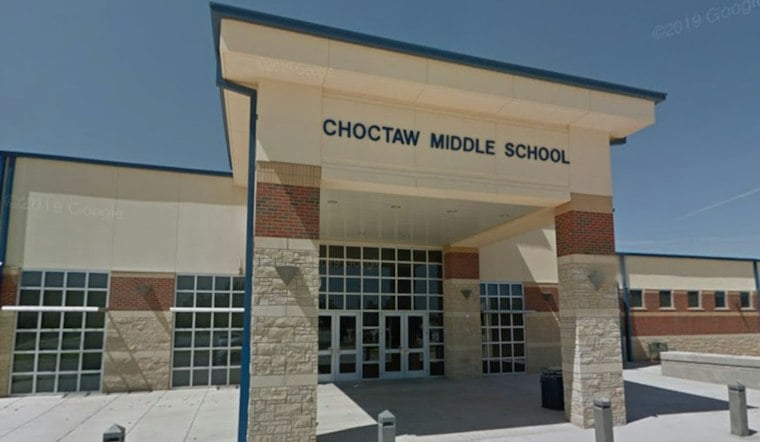
A fourth-grade classroom at Choctaw Elementary went from 18 students last year to 26 this year, and the experienced teacher who leads it says the jump hasn't been easy. Monica Short told Oklahoma lawmakers she had picked up her 26th student, the kind of late-arriving growth that reshapes a classroom overnight.
Short's roster swelled after redistricting in Choctaw-Nicoma Park Public Schools, according to Oklahoma Voice, which reported on an interim study held last week at the state Capitol where House legislators heard from educators and experts about the effects of class size. Short said having 26 students is difficult even for a veteran teacher, and that giving individual attention, managing behavior, offering individual feedback, and running small-group instruction all become harder as a class grows. She told lawmakers that broad student success becomes tougher to achieve with a bigger roster.
A Law With Wide Loopholes
Oklahoma law technically caps elementary classrooms at 20 students, but the outlet reports that the law allows broad exemptions — and one of them is doing a lot of work. Districts that have borrowed 85% or more of their bonding capacity are exempt from the class-size limit altogether, a carve-out that applies to 185 districts, according to the Oklahoma Appleseed Center for Law and Justice. Those 185 districts educate just under half of all students enrolled in Oklahoma public schools, the organization found.
Brent Rowland, executive director of the Oklahoma Appleseed Center for Law and Justice, said class size is regulated on paper but largely not measured and consistently enforced in practice. He encouraged lawmakers to gather more data, including which districts are actually relying on the exemption and how often.
One Classroom, Eight Subjects, Four DHS Cases
Short wasn't the only teacher describing a classroom stretched thin. Susan Johnson, who taught 21 third graders this year in what she described as a high-need, high-trauma classroom, told lawmakers that one of her students reads at an eighth-grade level while another reads at a kindergarten level. Four of her students had active cases with the Department of Human Services, and two were involved in court proceedings, per the same reporting.
Johnson said a classroom with that much complexity affects learning and requires her to teach eight subjects each day regardless of how varied her students' needs are. Her account echoes a broader pattern: Oklahoma teachers have reported in statewide surveys that large classes and disruptive student behavior rank among their top challenges. A separate Oklahoma Department of Education and Oklahoma State School Boards Association survey found that higher pay and smaller class sizes topped educators' list of needs statewide, the outlet's earlier report noted.
Why One Lawmaker Called the Study
Republican Rep. Ronny Johns of Ada, a former teacher and principal, requested the interim study after teachers in his House district complained about classroom disruptions and a need for more support. Johns said class sizes feel increasingly relevant as Oklahoma rolls out child-literacy laws, including the Strong Readers Act, which will require students who score below basic reading level on statewide tests to repeat third grade starting in the 2027-28 school year. Based on 2025-26 test scores, 44% of Oklahoma third graders — about 21,100 students — would have been at risk of repeating the grade had the law already been in effect, according to the reporting.
Johns said the Legislature may consider funding to reduce class sizes and framed investment in strong early education as worthwhile. Separately, Republican state Rep. Rob Hall has held his own interim study at the Capitol focused on school discipline and how the state could better support teachers and administrators, according to News 9. Hall said he's weighing legislation that would give teachers and administrators clearer legal standing to enforce baseline classroom discipline policies.
What the Research Actually Shows
Whether shrinking classes would fix any of this remains genuinely unsettled. Research is not conclusive on whether lower class sizes lead to better academic results, the Capitol study heard. A Brookings analysis of the research landscape found that class-size reduction has worked for some students in some grades, in some states and countries, while its impact has been mixed or undetectable elsewhere. Brookings notes that very large reductions — on the order of 7 to 10 fewer students per class — can produce meaningful long-term effects, particularly in early grades and for students from less-advantaged backgrounds, pointing to Tennessee's STAR study from the late 1980s, in which students in classes averaging 15 outperformed peers in classes averaging 22 by an amount equivalent to roughly three additional months of schooling four years later.
Tim Lewis, a professor at the University of Missouri College of Education & Human Development, told lawmakers there's a class-size “sweet spot” of about 20 students, but argued that resources for individualized instruction matter more than the number on a roster. “They're going to leave if they're not successful,” Lewis warned, referring to teachers who burn out without adequate support. He urged the state and local districts to put nearly all of their effort — he put it at 99.9% — into classroom support systems rather than headcount alone, saying policymakers should prioritize backing teachers over simply chasing a smaller number.





