

























































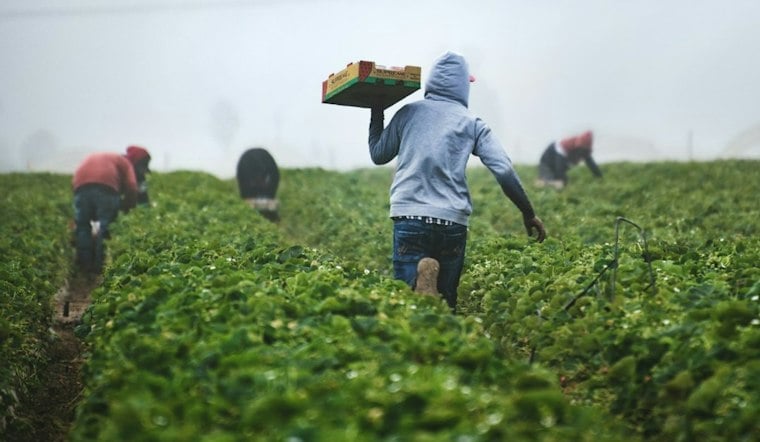
Oregon has no single system for tracking data on farmworkers or handling their complaints about working conditions, according to a new state report that examined everything from pesticide exposure to substandard housing. The 75-page review, released by the Legislative Policy and Research Office, found that the state’s agricultural data is scattered across agencies, outdated by the time it reaches decision-makers, and incomplete in ways that make it hard to see the full picture of life and labor on Oregon farms.
The report comes in response to a 2025 state law that directed legislative analysts to study Oregon’s agricultural industry and how the state administers its labor standards, according to the Oregon Capital Chronicle, which first reported on the findings. Those protections touch on pesticide use, heat safety, housing security, minimum wage and anti-discrimination standards, the outlet notes. State analysts identified limited coordination between agencies when it comes to enforcing those protections, even though agencies are supposed to work together where their responsibilities overlap through statutory duties, complaint referrals and interagency agreements.
Data Gaps Blur the Picture of Farm Labor
The report describes Oregon’s agricultural industry data as fragmented, lagged and incomplete, according to the Portland Tribune, which also covered the review. That fragmentation makes it harder for the state to track employment trends, the wellbeing of family farms, how well temporary visa programs are functioning, and the use of farm labor contractors, the report found. The stakes for getting this right are significant given how the industry is structured: in 2022, more than 80% of farms in Oregon were family operations with gross cash income under $150,000, the same reporting shows.
Reyna Lopez, executive director of Pineros y Campesinos Unidos del Noroeste, Oregon’s leading farmworker union, said the report reflects a long-standing imbalance. Farmworkers historically have not received the same fair labor, wage and safety standards as other workers, Lopez said, and she argued more action is needed around piece-rate wages and overall farmworker conditions. Lopez also said farmworkers remain excluded from collective bargaining protections under both state and federal law, and that many still live in inadequate housing that lacks indoor plumbing or cooking spaces.
Industry Group Sees Common Ground
Not everyone reads the report as an indictment of agriculture specifically. Jenny Dresler said the farmworker data gap isn’t unique to the farming industry, noting that multiple agencies already regulate and enforce workplace protections across several sectors of Oregon’s economy. The Oregon Farm Bureau, which represents farmers and ranchers statewide, said it views the report as affirming that farmworkers deserve rights and protections similar to those of other workers in the state.
Overtime Thresholds Still Shifting
The data debate lands alongside an ongoing fight over Oregon’s agricultural overtime law. This year, the law guarantees overtime pay for farmworkers putting in more than 48 hours a week; that threshold drops to 40 hours starting in 2027, per the same reporting from the Capital Chronicle. Oregon is set to deliver a report to lawmakers on the economic impact of agricultural overtime by the end of this month, and the Legislature could revisit the law entirely during the 2027 session.
Research cited in the same coverage, from Oregon State University in 2025, found that the overtime law has pushed hourly wages up but left agricultural employees with less money overall. Other states have taken different paths on the same question: Colorado raised its agricultural overtime threshold from 48 to 56 hours a week, while The Oregonian/OregonLive reports that both California and Washington have held their thresholds at 40 hours.



