

























































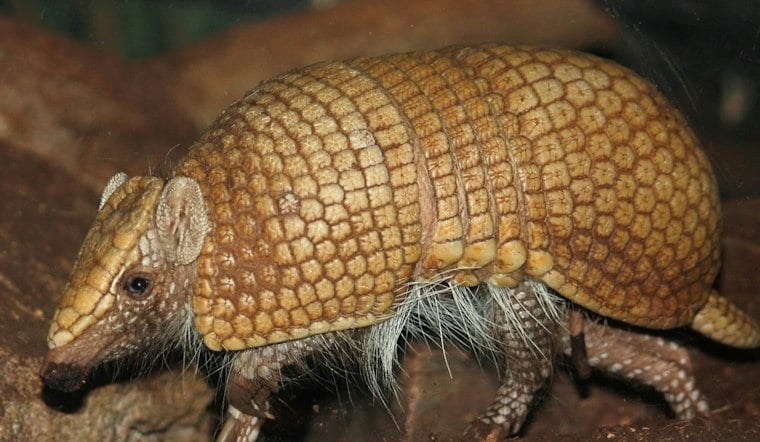
The Oregon Zoo has a new pup to show off: a three-banded armadillo named Rook, born September 28 to parents Max and Toby. Rook tipped the scale at just 22 ounces, a sliver of the roughly three pounds an adult three-banded armadillo typically weighs, and this is the pair's third offspring together.
According to KPTV, zoo staff have not yet confirmed whether Rook is male or female, with that detail expected to come out during a future checkup. For now, Max is doing all the work herself. Keeper Eliza Lee told the station that Max is a great mom, so staff have not needed to step in at all.
Rook is being kept cozy inside the nest Max has built, the station's report notes, and mom is staying close by for the time being. Lee said that will change soon enough, as the pup is expected to start venturing out and exploring before long. In the meantime, Max, Toby and Rook will remain together in their behind-the-scenes maternity den.
A Fast-Growing Addition to the Family
Per the same account, Rook is growing fast, and Lee said the pup is getting bigger every day. That kind of rapid growth tracks with what's typical for the species: according to the Oregon Zoo, southern three-banded armadillos are born roughly the size of a golf ball and blind, arriving as a single offspring after a gestation of about 120 days.
Rook joins a growing family tree for Max and Toby. The Oregon Zoo previously announced the birth of a pup named Bugsy, described as the pair's second offspring, born on June 10. An earlier Oregon Zoo announcement had marked the first pup born to the pair as also the first armadillo ever born at the zoo.
Wild Populations Face Pressure, Though Status Labels Differ
Zoo officials have noted that three-banded armadillo numbers in the wild are declining due to habitat loss, hunting and the illegal pet trade. The Oregon Zoo's own materials describe the species as listed as Near Threatened by the IUCN, while a separate assessment from the Xenarthrans specialist group lists the Brazilian three-banded armadillo as Vulnerable, noting that Brazil's own national reassessment categorized it as Endangered. That same group estimates the Brazilian three-banded armadillo population has dropped by more than 30 percent over the last 10 to 15 years.
For now, Rook's story is a simpler one: a new pup bulking up under a watchful mother's care in a quiet den behind the scenes. Zoo staff have said little beyond that Rook is thriving and growing, with more details, including the pup's sex, expected once the next checkup arrives.





