

























































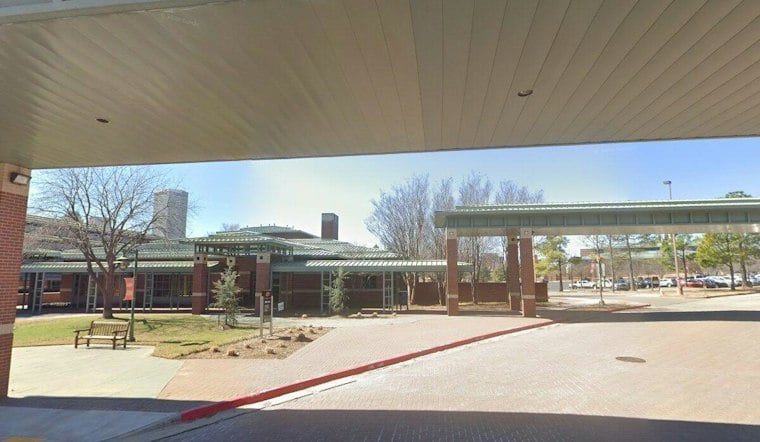
The central question in OSU President Jim Hess’s Tulsa proposal is whether closer coordination between OSU-Tulsa and Tulsa Community College could help more students complete bachelor’s degrees without changing TCC’s local role. Hess has described a shared admissions entry point, governance and instruction for students attending either OSU-Tulsa or a renamed OSU Tulsa Community College. The proposal has prompted concern at the state’s largest community college system.
Hess discussed the plan on Nov. 3 and said he had shared it with TCC leaders, state higher-education boards, Gov. Kevin Stitt, lawmakers and other groups before it became public, according to Oklahoma Watch. He has said the proposal is not a merger and would let students start and finish their education at the same institution, rather than move between separate schools, Tulsa World reports. Separately, OSU presented its new five-year strategic plan, focused on student success, workforce preparation and coordination across the OSU system, at a kickoff event at OSU-Oklahoma City on Oct. 30.
Why TCC's Property-Tax Base Is Central to the Debate
At the heart of the concern is money. TCC's Fiscal Year 2027 budget includes $58.5 million from local property taxes, nearly 43% of its revenue, per the Oklahoma Watch report. Tulsa voters approved the property-tax collections that support the community college, and under Hess's proposal, OSU-Tulsa local property tax funding would remain in Tulsa County for adult and technical education under the oversight of TCC regents. Hess has said he wants taxpayer dollars used efficiently to produce more Tulsa graduates with bachelor's degrees, and that without an agreement, OSU would simply continue to grow organically in Tulsa anyway.
Hess's proposal states that TCC's two-year accreditation would be preserved and that all existing TCC transfer agreements with other institutions would remain in place. The plan also calls for lower-division coursework for students of both institutions to be taught by community college faculty, with that coursework shifting toward OSU-Tulsa and the renamed OSU Tulsa Community College. TCC is currently overseen by its own board of regents, while OSU falls under the Regents of the Oklahoma State University and Agricultural and Mechanical Colleges — two separate governance structures the proposal would need to reconcile.
What the Law Changed—and What It Did Not
The Oklahoma Legislature’s enrolled text for Senate Bill 701 repealed the provision concerning a prohibition on OSU-Tulsa courses duplicating TCC courses. That change addressed course offerings; it did not create the governance arrangement Hess proposes. Separately, the Oklahoma State Regents for Higher Education’s governance policy says the Regents determine institutional functions and courses of study across the state system. Those state-level responsibilities do not resolve the separate question of TCC’s local property-tax funding or how its board and OSU’s governing board would work under any new arrangement.
Figures Show the Scale of the Issue
The figures reported by Tulsa World and Oklahoma Watch help show the scale of the potential overlap: both outlets say 67% of TCC students are on a transfer path. Oklahoma Watch reports that TCC enrolls 17,211 students across four campuses. Hess told Tulsa World he believes OSU-Tulsa has established 72 lower-division courses, a figure also reported by Oklahoma Watch. Both outlets say OSU-Tulsa reached a campus enrollment record of 3,419 in fall 2025.
A 2025 state law changed what courses OSU-Tulsa may offer, but did not itself establish shared governance with TCC. OSU-Tulsa, founded in 1999 as an urban branch of the university, offers bachelor’s, master’s and doctoral degrees as well as graduate certificates. OSU has said a 2026 expansion would allow students to begin and complete a bachelor’s degree entirely at its downtown Tulsa campus. The university’s history includes an earlier, distinct transition: according to OSU-Tulsa, the former University Center at Tulsa campus became Oklahoma State University-Tulsa on Jan. 1, 1999.
Past Partnerships Set the Stage
TCC and OSU-Tulsa have worked on transfer pathways before. Their Transfer Maps initiative aimed to make the process more transparent and connect it with students’ career goals, according to Tulsa Community College. TCC’s Tulsa Transfer Project brought together six regional university partners to raise transfer rates, improve how credits apply toward majors and increase bachelor’s completion. The Oklahoma State Regents for Higher Education also provides a course-transfer matrix outlining courses that transfer among Oklahoma public colleges and universities.
A TCC transfer report noted that Oklahoma ranks third in the nation for student transfers to four-year institutions but performs below average on those transfer students actually completing a bachelor's degree.
What Consolidation Elsewhere Has Looked Like
Tulsa has considered other models for coordinating higher education. A decades-old proposal envisioned a new Tulsa university managed by OSU in partnership with OU, according to The Oklahoman. In its review of consolidations in Connecticut, the District of Columbia and Georgia, Oklahoma Watch reported that former community colleges’ workforce programs in areas including nursing, allied health, advanced manufacturing and data analytics diminished over time. That comparison has been raised in discussion of TCC’s future.
Hess’s proposal remains under discussion, not a finalized agreement. TCC continues to offer free tuition programs and serves 17,211 students across four campuses, with its transfer agreements intact. Whether the institutions pursue shared governance, a renamed college or another arrangement remains unresolved.





