

























































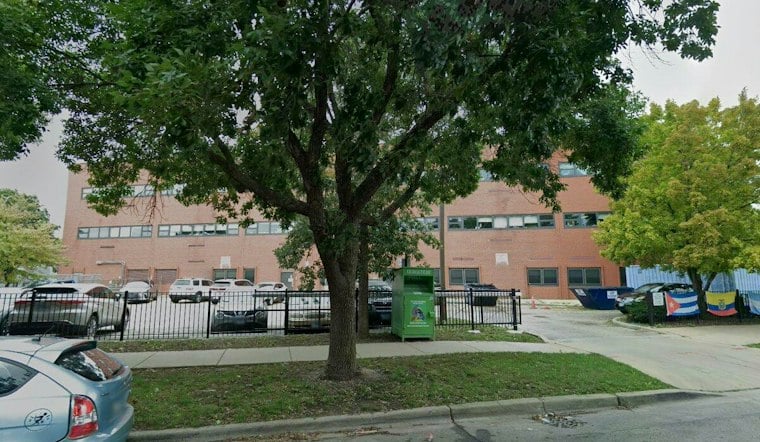
Chicago Public Schools enrollment has slipped to about 304,700 students, its lowest level in more than two decades, after losing another 11,500 students this year — a roughly 4% drop that is hitting Pilsen and other immigrant-heavy neighborhoods especially hard. At Irma Ruiz Elementary in Pilsen, the school lost 45 students just this year and has shed 372 students, a 48% decline, since the 2016-17 school year.
A Decade of Decline at Ruiz Elementary
CPS officials announced the preliminary enrollment figures Thursday, according to the Chicago Sun-Times, which reported that Latino enrollment fell by about 7,800 students this year — more than two-thirds of the district's overall decline, per a Kids First report cited in that account. Districtwide, Latino enrollment has fallen 22% and dropped by around 38,000 students since the 2016-17 school year, according to the same reporting. The Sun-Times also found that CPS enrollment overall has reached its lowest student count in more than two decades.
Ruiz Elementary illustrates just how steep that slide has been. Patricia Mota, who graduated eighth grade at Ruiz in 2008 and says her graduating class had about 100 students, won a seat on the school's local school council in 2020 and served until summer 2026. The school's 2008 enrollment was more than twice what it is today, and the Sun-Times reports Ruiz has experienced significant enrollment drops over more than 10 years, even as it saw a slight increase in 2023 and 2024. Imelda Rodriguez, a parent at the school, said her son has lost friends from his own kindergarten cohort as families have left.
Little Village, Brighton Park and Belmont Cragin Also Hit Hard
Pilsen is not alone. The steepest enrollment declines this year hit Little Village, Brighton Park and Belmont Cragin, according to the Kids First report referenced by the Sun-Times, while the Lower West Side — which includes Pilsen — also saw a large decline this year, per CPS. Earlier reporting from South Side Weekly found Ruiz had seen a 15% enrollment drop in the prior year, underscoring how long the slide has been building. Meanwhile, enrollment increased in pockets including Kenwood, O'Hare, the Near North Side and Lincoln Park, the Sun-Times reports.
Gage Park High School offers another stark example: its enrollment fell below 300 students for the first time this year, an 84% decline since 2010, per the Sun-Times. Many of the areas seeing the steepest enrollment declines were also hotspots for the federal deportation campaign last year, the paper notes.
Rising Housing Costs Squeeze Pilsen Families Out
Experts have linked the enrollment dips to high property taxes, expensive housing and rising living costs. The typical Pilsen homebuyer earned around $170,000 a year last year, up from $114,000 in 2019, and higher interest rates and property taxes now make that kind of income effectively necessary to buy a home in the neighborhood, according to the Sun-Times report. Developers have also converted two- and three-flat buildings into single-family homes, reducing Pilsen's total housing stock.
The shift in who lives in Pilsen shows up in the numbers on households with kids: they made up 37% of Pilsen households in 2010 but just 21% in 2024, compared with a citywide drop from 30% to 23% over roughly the same period. Geoff Smith said higher living costs may have enabled childless families to move into Pilsen, contributing to the enrollment decline, while the Sun-Times also notes the decline may include families whose children started in CPS and later left the neighborhood altogether.
Latino Families Moving to the Suburbs
Pilsen lost more Latino residents than any other neighborhood from 2010 to 2023, according to a report from the UIC Great Cities Institute, which also found Latinos now make up nearly 30% of Chicago's population and are increasingly dispersed across the city. The Lower West Side has lower Latino homeownership rates than other parts of the city, per the Sun-Times account, and the number of Lower West Side rental units costing $900 or less a month is far smaller than it was a decade earlier — affordable units made up just 15% of available Lower West Side rentals in 2024, down from 73% in 2010.
Ivan Arenas said areas outside Cook County are increasingly popular destinations for Latino families, and experts believe many have likely settled in suburbs where homes are more attainable. The number of Latino residents in the collar counties — McHenry, DuPage, Kane and Lake — doubled between 2000 and 2023, while Latino residents in Cook County increased more slowly over the same period, per the Sun-Times. Within the city, the Great Cities report found Latino population growth happening beyond historic centers, in areas including Austin, Garfield Ridge, Chicago Lawn, Ashburn, Clearing and West Lawn.
What Low Enrollment Could Mean for Pilsen Schools
Declining enrollment carries consequences beyond the classroom. Schools with few students can become targets for closure, and CPS used low enrollment as a metric to identify schools for closure back in 2013. Enrollment numbers can also affect sports teams and extracurricular offerings, and according to the Illinois Report Card, enrollment figures and trends can inform decisions about busing, staffing, building requirements and boundary configurations.
Joel Rodriguez attributed family departures from the area to rising housing costs, safety concerns and low job availability, and said the city needs a comprehensive strategy to attract more families. The pressures are not unique to Chicago — Chicago has seen fewer children being born as families have fewer kids than in previous decades, with citywide births falling from about 45,000 in 2005 to around 27,000 in 2023, a decline of more than 40%, according to the Sun-Times. A Kids First Chicago report pointed to a combination of decreasing births, slowing growth of Latine families in the city and growing out-migration of Black families as drivers of the broader CPS enrollment crisis.
A National Pattern Beyond Chicago
CPS enrollment had briefly stabilized and even ticked up with the arrival of thousands of immigrant students in 2023 and 2024, but that trend proved short-lived, the Sun-Times reported, with district enrollment now down from its peak of nearly 439,000 students in the 2002-2003 school year. The pattern echoes what researchers are seeing nationally: according to NPR, national public-school enrollment fell by roughly 1.5 million students from its 2019 peak through the 2024 school year, with researchers projecting at least 2 million more losses by 2030.
Texas lost more than 76,000 public school students statewide in 2025, with most of that drop among Hispanic students and children of immigrant families, NPR reported, while Los Angeles Unified has lost more than 300,000 students over the past two decades. A study of California's Central Valley found student daily absences spiked more than 20% in communities affected by 2025 immigration raids. Similar drops in new immigrant enrollment have been documented in Oakland Unified and on Long Island, where state data obtained by Newsday showed immigrant student enrollment fell 15%, to about 18,000, between the 2024-25 and 2025-26 school years.





