

























































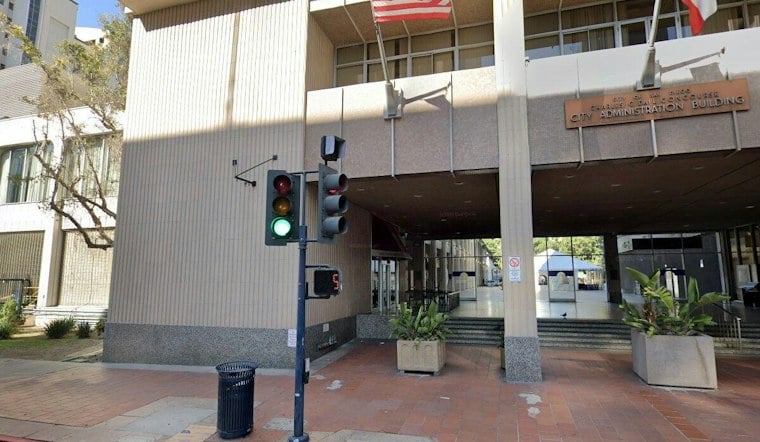
Poway's City Council voted unanimously to take the first formal steps toward complying with a statewide ban on using drinking water to irrigate ornamental turf, a move that is expected to touch somewhere between 150 and 200 properties across the city. The ordinance, consistent with California's Assembly Bill 1572, is scheduled for adoption on December 1, and it mostly targets public-owned properties rather than residential lawns.
The vote, covered by the San Diego Union-Tribune, puts Poway in line with a state law that bans potable-water irrigation of nonfunctional turf at specified nonresidential properties. Poway's rule is intended to reduce unnecessary potable-water consumption while still preserving turf used for recreation and community activities, according to the Union-Tribune's reporting.
What Counts as Nonfunctional Turf
City staff define nonfunctional turf as ornamental grass outside recreational-use areas or community spaces, per the Union-Tribune's account of the staff report. The prohibition generally excludes residential properties, meaning homeowners can keep watering their own front lawns. Common landscaped areas maintained by homeowners associations are not exempt, however, and will eventually fall under the same restrictions.
Golf courses are carved out of the rule entirely. Carlos Cortes, Poway's utilities administrator, said golf courses are exempt because their commercial properties generate revenue using functional turf, the Union-Tribune reported. The law itself also provides exceptions to protect tree health and address health and safety concerns, according to the city staff report cited in that coverage.
A Phased Timeline Stretching to 2029
Compliance rolls out over several years rather than all at once. State and municipal agency properties begin phased compliance January 1, 2027, with commercial, industrial and institutional properties following on January 1, 2028. Under the statewide law, public water systems must adopt or revise their own ordinances and notify customers of the requirements by that same January 2027 date.
HOA common areas and similar community-group spaces don't face compliance deadlines until January 1, 2029. That timeline mirrors what happened in Fullerton, where the City Council voted 5-0 on October 20 to approve its own ordinance, Ordinance No. 3360, putting the statewide ban into city code. Fullerton staff clarified that the 2029 phase there applies only to HOA common areas, not the lawns in front of individual homes, according to the Fullerton Observer.
Notices Already Going Out to Property Owners
Poway has been reaching out to affected property owners for about a year, Cortes said, with letters sent in November 2025. Another round of letters is planned for the week after the Union-Tribune's report, again aimed at potentially impacted property owners. Cortes said local and state agencies may enforce the rules, a point that aligns with the broader statewide framework described by bbklaw.com, which notes that cities or counties must notify a retail public water system before taking enforcement action against one of its customers.
The affected properties in Poway cover about 25 acres, according to Cortes. City officials estimate the ban may save up to 25 acre-feet of drinking-water supply compared with replacing turf through efficient landscaping, representing roughly 0.26% of Poway's annual potable demand. The California Water Efficiency Partnership, a statewide network of more than 270 water agencies, businesses and institutions focused on urban water conservation, represents the kind of broader coordination effort into which local rules like Poway's fit.
Mayor Calls It an Unfunded Mandate
Poway Mayor Steve Vaus didn't mince words about the state's role in forcing the city's hand. Vaus called the state legislators' action an unfunded mandate, according to the Union-Tribune, and said Poway had no choice in passing the ordinance. His comments echo tension seen elsewhere in the state, where cities like Paso Robles have had to absorb real costs to comply.
In Paso Robles, the city evaluated about 65 acres of its maintained landscaping and found only about 1.5 acres met the legal definition of nonfunctional turf, according to the San Luis Obispo Tribune. That city plans to begin replacing city-maintained nonfunctional turf with drought-tolerant plants and water-efficient landscaping in early 2027, after the January 1, 2027 deadline for public properties, at a cost of about $80,000 from the general fund. Poway's own path toward the December 1 ordinance adoption suggests a similarly methodical rollout, even as local officials continue to push back on the state mandate behind it.





