

























































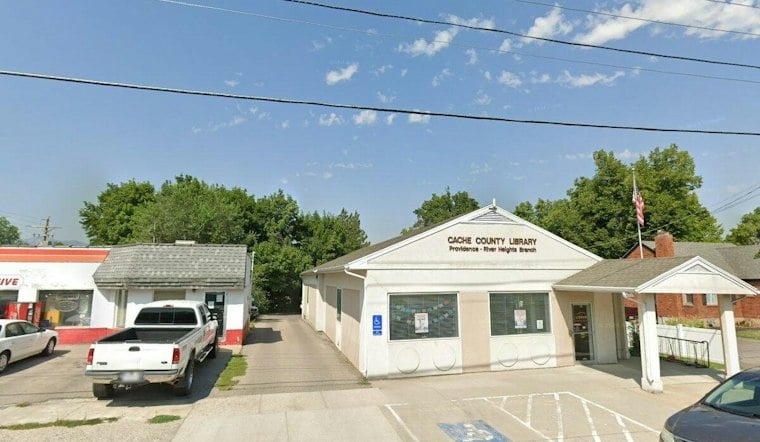
Unofficial election results show Providence residents narrowly favored a nonbinding question asking whether the city should consider a property tax levy to fund a city library — with 54.3% voting yes and 45.7% voting no. The margin between the two sides came down to just 300 votes, leaving the library's long-term future still unresolved even as the vote offers city leaders a signal of where residents stand.
The ballot question, placed by Providence officials on residents' general election ballots, asked whether the city should consider imposing a property tax levy for a city library and related services, according to The Salt Lake Tribune. The measure estimated an annual cost of about $55.30 for the owner of a $500,000 primary residence. Because the question was nonbinding, the vote itself does not create a tax or finalize any takeover — it simply gauges public appetite before the city council acts.
A County Budget Crunch Sparked the Fight
The uncertainty traces back to 2025, when Cache County Executive George Daines recommended defunding the library to help close a reported $7 million county budget shortfall, as Utah Public Radio reported. The county's approved 2026 budget ultimately included $134,600 for the library — enough, officials said, to cover about six months of operating costs, with a review planned for June to decide whether more funding was needed.
Daines has also argued it was unfair for some Cache Valley taxpayers to help fund the county library while also paying for libraries in their own communities, and he has said residents without local library access could instead use the county library by paying nonresident fees. In a February letter, Daines wrote that the county would transfer the library to Providence, River Heights, Millville, or some combination of the three cities. The same letter stated the County Council had funded the library only through June 30, 2026 — half of the originally proposed annual funding. The Tribune's more recent reporting, however, states that the County Council voted to fund the library through the end of 2026, a later date than what Daines described in February.
By July, the library was already operating with two fewer employees, one position cut and another not rehired, according to The Herald Journal. That same report said Providence planned to first ask Cache County to continue funding the library for the first six months of 2027, with city reserves as a backup if the county declined.
Why Providence Is a Natural Fit
Providence already owns the building that houses the Cache County Library, a detail that strengthens the case for a city takeover. Cache County Library director Brynnan Sainsbury has said a shift to Providence ownership would let staff focus on the immediate community and use fewer resources across a smaller service area, rather than stretching thin to cover the whole county.
Sainsbury described the past year as frustrating, saying the situation changed suddenly. She has also said she would like to eventually create a “library of things” patrons could borrow, and she has voiced concern that a Providence takeover could require residents from outside the city to pay to use the library — a tension she weighed against her belief that everyone deserves free library access.
Neighboring towns have signaled interest in staying involved. River Heights and Millville have discussed contributing to keep the library open, though Providence City Recorder Megan McCuistion said no final decisions have been made about how such a partnership might work. River Heights official Blake Wright has said his town intends to keep supporting the library even if Providence takes it over.
Residents Split on How Much to Pay
A Providence city survey found that about 80.1% of respondents considered a local library somewhat or very important. But opinions diverged sharply on funding: 54% supported the current library budget, 26% preferred a part-time model with no tax increase, and 20% backed an increased funding model, per the Herald Journal's reporting.
For some residents, the stakes are personal. Brittney Morris, who lives in nearby Paradise, said losing the library would leave affected people feeling unseen by city leaders — a sentiment that underscores how a seemingly administrative funding fight carries real weight for families who rely on the branch.
What Happens Next
Providence City Council member Scot Campbell said the council still has a lot to work out when it comes to supporting the library and determining how fees would function under any new arrangement. The council's next meeting is scheduled for Nov. 18, and McCuistion said members are expected to discuss the library issue then.
Until the council acts, the library's fate remains tied to the same question voters narrowly answered: whether Providence residents are willing to pay for a library that has spent more than a year caught between a county short on cash and a city still deciding how much responsibility it wants to take on.





