

























































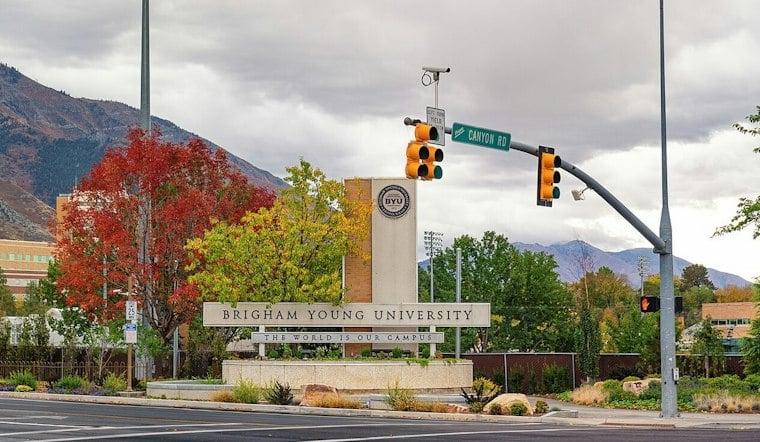
For nearly a decade, students at Brigham Young University in Provo have spent their time tracing obscure family trees for a cause far beyond the classroom: helping identify the relatives of American service members who never came home from war. Their research has helped connect families to seven service members whose remains were ultimately returned, work that continues this Veterans Day.
The students work through BYU’s Center for Family History and Genealogy, where research teams are notified by the Defense POW/MIA Accounting Agency about lost service members in need of identification, according to FOX 13 News Utah. Since 2017, DPAA has sent individual deceased personnel files of lost service members to the center, and student teams research the families to identify living next of kin and relatives who may be eligible to provide DNA samples, per BYU’s own account of the project.
Most of the cases BYU receives involve service members who went missing during World War II or the Korean War, according to BYU. To track them down, students comb through sometimes hundreds of genealogical and public historical records — birth, marriage and death records, historical newspapers and other public documents — searching for the thread that connects a missing soldier to someone still living today.
Language Skills Put to Use on Foreign Records
Some of those records are written in languages other than English, including Czech, German and French, the university’s report notes. That’s where many BYU students have an edge: FOX 13 News Utah reports that students bring language skills gained through missions or travel outside the United States, letting them work through foreign-language documents that might otherwise stall a case. Once students identify potential DNA donors through this documentary research, a researcher follows up directly to confirm the relationship to the soldier and ask whether the person is willing to participate.
If a family member agrees, the appropriate Service Casualty Office sends a DNA kit to the eligible donor, whose sample is then used to confirm the family connection. The Armed Forces DNA Identification Laboratory compares that donor’s DNA to DNA extracted from unidentified remains to determine whether they are a match, according to the same BYU account.
Seven Families, Seven Homecomings
Since the project began, BYU has helped with seven cases in which service members’ remains were ultimately returned home. One of those cases involved Lt. Blaine Wilcox and Lt. Edgar W. Nevois, who were killed on the same mission in 1944; with the help of BYU’s research and DNA testing, DPAA was able to positively identify both soldiers’ remains, which were returned to their families for burial with full military honors.
Molly Petersen, who has worked on the project, said the work gives hope that soldiers may be exhumed and returned home, and that it helps families remember them. Megan Smith, another student involved in the research, said she feels fortunate to make a difference for deceased service members and for living relatives who may not even know they have a military family member connected to this history.
Scope of the Backlog Remains Large
The scale of the challenge is considerable. As of June 2018, the military had assigned BYU 65 cases, and BYU students and faculty had found family members for 48 of them, according to a report at the time from The Salt Lake Tribune. BYU isn’t the only university DPAA has turned to for help. In 2023, the University of Nebraska System signed a memorandum of understanding with DPAA to expand collaboration on accounting for missing service members, letting the agency draw on Nebraska’s faculty, students, resources and facilities, according to the university. As part of that partnership, the University of Nebraska at Omaha developed software that the university says reduced the work of identifying human remains from weeks on spreadsheets to hours or days.
For families still waiting for answers about a missing service member, BYU’s report notes they can register as next of kin with DPAA through dpaa.mil and submit photos or records tied to that service member. It’s a process that, for seven families so far, has ended with a long-delayed homecoming.





