

























































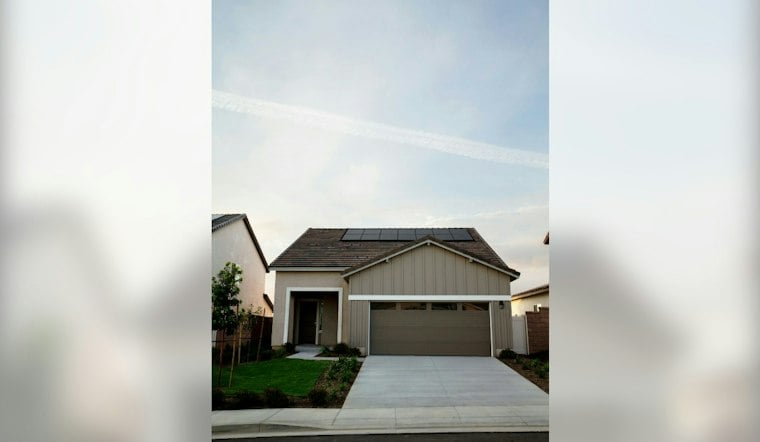
A newly certified Passive House in Rock Hill, Missouri is designed to produce as much energy as it consumes over the course of a year, pairing rooftop solar panels with an all-electric build that its owners say leaves little to no monthly electric bill beyond basic utility fees. The home is an all-electric structure built with super-insulated materials, airtight construction, and an advanced ventilation system that continuously supplies fresh, filtered outdoor air.
The project is being described as a first-of-its-kind home in the St. Louis area showcasing this approach to energy-efficient living, according to FOX 2. Architect Jessica Deem told St. Louis Magazine the house was the first residence certified as a Passive House in the eastern half of Missouri — a distinction that comes with an asterisk: a 2023 Kansas City Business Journal item separately described a Beacon Hill home as the first certified passive house in the state.
Rooftop solar panels on the Rock Hill home are expected to generate 14,844 kilowatt-hours of electricity annually, St. Louis Magazine reports. Homeowner Nate Brack estimated to the magazine that “the house could probably run for like a week without having to use Ameren.”
How the House Stays Warm Without Much Help
Brack also described a day when the temperature dropped to negative 8 degrees, before the home's HVAC system was even running. “We just heated the whole house with like two space heaters,” he told the same outlet. The home's area has been reported differently across coverage: FOX 2's reporting puts it at 3,400 square feet, while Green Home Builder describes it as a 3,466-square-foot home.
Passive houses in general are built to maintain more consistent indoor temperatures, improve air quality through constant filtration and air exchange, and reduce outside noise through heavy insulation and airtight construction. Those qualities, according to FOX 2's reporting, make the approach well suited to St. Louis weather extremes, including summer heat and humidity alongside winter cold.
An International Standard Still Rare Around St. Louis
Passive House is an internationally recognized building standard focused on reducing energy use, and per Passive House's official certification guidance, it rests on five core principles: strong thermal insulation, highly energy-efficient windows, controlled mechanical ventilation with heat recovery, elimination of thermal bridges, and airtightness. The standard can be achieved in any climate zone worldwide.
The certification system also includes tiers based on energy generation: a Classic rating applies to buildings without renewable energy generation, a Plus rating applies when annual generation equals annual consumption, and a Premium rating applies when a building generates significantly more energy than it consumes. FOX 2's reporting notes that Passive House homes can use 70 to 90 percent less energy for heating and cooling than conventional construction, though architects quoted by the outlet say Passive House construction remains relatively uncommon in the St. Louis area, slowed by a lack of familiarity among homeowners, builders, and contractors.
A Regional Comparison in Kansas City
The Rock Hill project is an example of energy-efficient home construction. A comparable example already exists across the state: the Kansas City Passive House includes thermally broken triple-pane windows, roof and foundation insulation, and a whole-house humidifier. The insulation-heavy approach is intended to reduce energy use for heating and cooling.
The Rock Hill home could serve as a model for future projects. According to FOX 2, architects behind the project hope it will demonstrate what's possible and encourage more high-performance, sustainable homes in the St. Louis area, with a long-term goal of making energy-efficient building practices standard rather than exceptional.




