

























































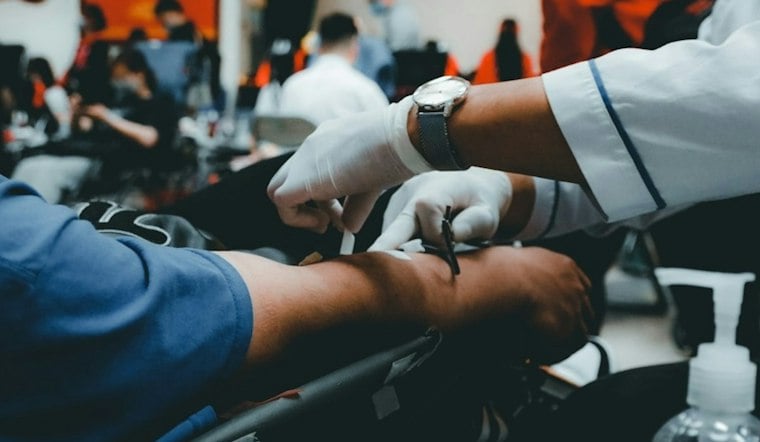
Rock River Valley Blood Center is facing an emergency shortage of red blood cells, with most blood types now sitting at less than a one-day supply. Officials say at least 400 donors are needed between now and Tuesday to help stabilize the inventory, and the shortfall is raising concerns about the center's ability to keep up with demand from local hospitals.
The center provides blood products to more than a dozen hospitals across the Stateline, according to MyStateline, which first reported the emergency appeal. A separate report from the same outlet put the figure at 14 area hospitals, while a 2023 account from Rock River Current described the center as supplying 13 hospitals and needing at least 800 donors per week to keep up. Those discrepancies reflect different points in time, but the underlying message has stayed consistent for years: the region's hospitals lean heavily on a steady stream of local donors just to function day to day.
O-Negative Blood Is the Most Urgent Need
The center's most pressing shortfall right now is O-negative blood, the universal type used in trauma cases and emergencies when there is no time to match a patient's exact blood type, the center said in a report from mystateline.com. Local donations are described as critical to maintaining inventory for patients who need transfusions, whether from surgery, chronic illness or sudden injury. Because donated blood only remains usable for 14 to 35 days, according to WTTW News, supplies like these have to be replenished constantly rather than stockpiled once and forgotten.
Donors can give at any of the center's four donor center locations in the Rock River Valley, through mobile blood drives, or at community blood drives, per the center's own site, rrvbc.org. Walk-ins are welcome, and appointments can be scheduled by calling 815-965-8751.
A Regional Shortage Rooted in a National Crisis
The Stateline's shortage lands amid a much broader national squeeze on blood supplies. The American Red Cross declared its second-ever national blood supply crisis in late July, citing a four-year summer low in donations combined with rising demand during the summer trauma season, per WTTW News. That followed an emergency shortage the Red Cross announced after its blood supply fell nearly 25% in June, a decline the organization said hit platelets and O-positive and B-negative blood especially hard, according to the American Red Cross.
More recent national data paints a mixed picture heading into fall. The AABB reports that red-blood-cell availability often improves with the arrival of autumn, though it noted pockets of strong demand for type O and B-negative blood remain, along with an uptick in demand for type O fresh frozen plasma. The organization also said platelet demand is being fully met within 24 hours nationally due to saturation, according to the AABB.
Other Regional Blood Banks Are Sounding the Same Alarm
The Stateline isn't alone in its struggle to keep shelves stocked. Hoxworth Blood Center, which supplies blood to 31 hospitals across Southwest Ohio, Northern Kentucky and southeast Indiana, issued its own urgent call for donors earlier this month after a decline in its supply, according to the Cincinnati Enquirer. Hospitals in that service area said they had protocols in place to reserve O-negative blood for the most emergent patients, and Hoxworth has reported receiving more hospital requests for emergency blood than it's been able to fill quickly.
Locally, roughly 3% of eligible Rock River Valley residents donate blood, compared with less than 5% nationally, according to Rock River Current's 2023 reporting. That low participation rate has made the region especially vulnerable whenever national supply tightens, a pattern that played out again in January when the center hosted a blood drive amid what it called an extreme regional shortage, according to Rockford News First. Rock River Valley Blood Center has said it must collect more than 800 units of blood each week just to meet the needs of its hospitals.
With the 400-donor goal looming before Tuesday, the center is encouraging anyone eligible to give blood soon, whether by walking into one of its four donor centers or scheduling ahead of time. Officials have framed the appeal plainly: local donations are what keep the Stateline's hospitals supplied, and right now the margin for error is thin.




