

























































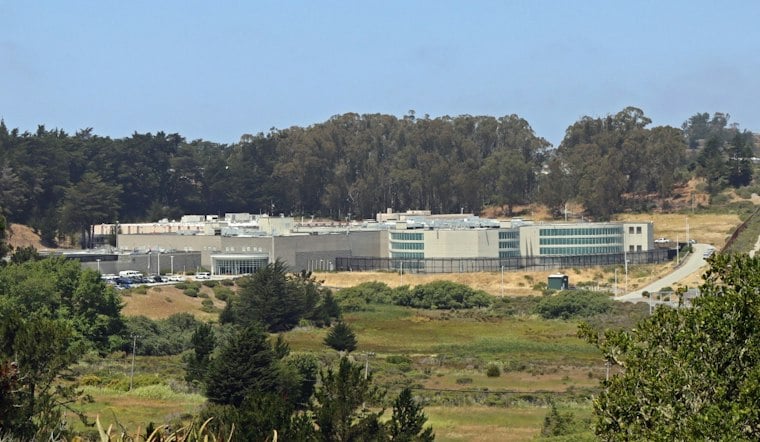
San Francisco jail officials have acknowledged that sheriff’s deputies recorded confidential phone calls between people awaiting trial and their defense attorneys, then handed at least some of those recordings over to prosecutors. The San Francisco Public Defender’s Office says at least 20 of its confidential calls with clients were captured and delivered to the District Attorney’s Office, while the Sheriff’s Office has described its own finding as more than a dozen such calls over the past two years.
Sheriff’s Office Points to an “Administrative Breakdown”
According to Mission Local, the Sheriff’s Office — which runs San Francisco’s county jails and records nearly every call made by people in custody — said an “administrative breakdown” led deputies to record and share the calls. The two agencies’ numbers don’t line up: the Public Defender’s Office count and the Sheriff’s Office count describe different scopes, and the available record does not explain how the two figures relate to one another. What is consistent is that both sides agree calls that should have been protected were not.
The Sheriff’s Office is supposed to keep attorney-client calls off the recording system entirely. Attorneys representing incarcerated clients submit their phone numbers to the department, which then places those numbers on an exclusion list meant to stop the calls from being recorded in the first place, the outlet’s reporting notes. But the Sheriff’s Office investigation found that at least 38 phone numbers associated with the Public Defender’s Office were never properly registered on that list, leaving those calls exposed to the same recording system used for everyone else in the jail. Calls placed through the jail’s phone vendor, Viapath, are recorded by default unless a number has been flagged as an attorney line, and callers are warned their conversations are being recorded.
How the Leak Surfaced
The breach came to light when public defenders discovered recordings of their own calls while reviewing document disclosures prosecutors had turned over ahead of trial, per the same account. In at least one instance, a prosecutor recognized a public defender’s voice on a recorded call, stopped listening, and emailed a colleague in the Public Defender’s Office to flag it. The Sheriff’s Office says it opened an internal investigation after being informed of the leaks earlier this year.
Tara Moriarty, writing on behalf of the Sheriff’s Office, said the improper sharing resulted from an administrative mistake and that some emails containing lists of excluded attorney numbers were not processed correctly. She said attorney phone number lists have since been revised and updated, and wrote that the office will evaluate its technology and administrative processes to strengthen safeguards and prevent similar errors. The Sheriff’s Office has not said whether it will make longer-term changes to how it records or shares call data going forward.
A Deputy Public Defender’s Account
Deputy Public Defender Kwixuan Maloof told the outlet that at least five calls he made with clients from his line in the past year were recorded and later improperly shared with prosecutors. He said he discussed legal strategy on every one of those calls, and that three of them involved homicide cases. Maloof gave his phone number to the Sheriff’s Department back on July 8, 2025.
“The prosecutor can’t unhear what he heard,” Maloof said, describing the damage as impossible to undo once a privileged conversation has reached the other side. He said many of his clients no longer want to talk on the phone, and that some now believe prosecutors have listened to their calls even after he’s told them that shouldn’t be possible.
DA Requests Now Require a Subpoena
California law prohibits recording conversations between people awaiting trial and their attorneys, and classifies intentionally recording such a call as a felony. The District Attorney’s Office routinely requests jail call recordings as evidence in prosecutions, and according to Public Defender’s Office data cited in the reporting, DA staff requested jail phone records from the Sheriff’s Department more than 1,000 times between January 1, 2025, and July 2026.
The Sheriff’s Office restricted access to recordings while it conducted its investigation and froze its regular process for sharing recordings on Aug. 27. Since then, District Attorney’s Office staff have had to subpoena any recordings they want, rather than requesting them through the department’s usual channel. The District Attorney’s Office had not responded to Mission Local’s request for comment.
An Echo of Past Cases Elsewhere
San Francisco isn’t the first jurisdiction to confront this problem. In Orange County, jail phone contractor Global Tel Link publicly acknowledged in 2018 that 1,079 calls between inmates and attorneys had been improperly recorded between January 2015 and July 2018, attributing the breach to human error, according to Voice of OC. A later court filing described by the Orange County Register alleged that sheriff’s staff there accessed 544 calls between inmates and attorneys a total of 723 times. The available evidence doesn’t establish that the San Francisco and Orange County cases share the same underlying cause, but both involve the same basic failure: calls that are supposed to be off-limits ending up in the wrong hands.





