

























































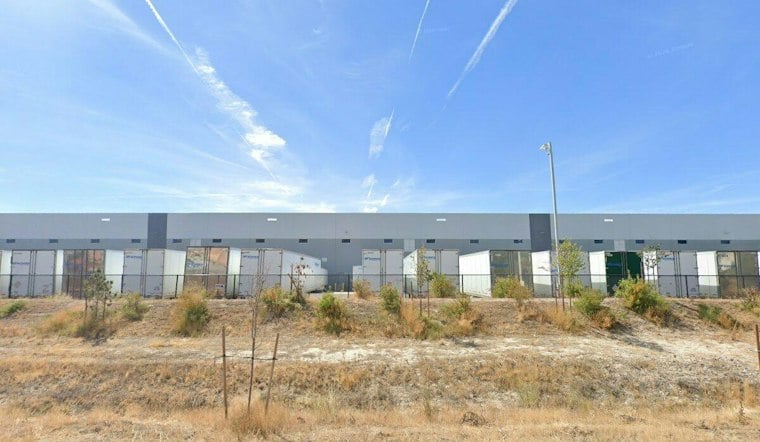
A one-story data center with a construction cost of at least $105 million could rise in Salt Lake City's Northpoint neighborhood, directly south of and across 2200 West from a cluster of existing homes. The company behind the proposal, Qlevr LLC, filed a state air-quality permit application in late September seeking approval for diesel-fired backup generators, while a separate city building permit application describes the project's scope and cost.
What Qlevr Has Filed So Far
According to The Salt Lake Tribune, Qlevr is proposing the facility at 2258 W. 2950 North, and its state application seeks a permit for diesel-fired emergency engines and associated fuel tanks to provide backup power. The Salt Lake City building permit application separately describes the project as one story, costing at least $105 million to build. Both filings would need to clear their respective reviews before any construction could begin.
The state air-quality process is not finished. Dungan Adams requested additional information from Qlevr and was waiting to review it, the Tribune's report notes, and the application must undergo multiple reviews and a public comment period before Utah's air quality agency could approve it. Salt Lake City officials must also approve the building permit before construction can start.
A Site Zoned for Just This Kind of Project
The property sits on land zoned business park, which allows a data center under current rules, and the city's zoning also caps water use for such facilities at less than 200,000 gallons per day. Qlevr has said it plans to use a closed-loop cooling system that continuously recirculates water to cool its servers rather than relying on evaporative cooling, per the same Tribune report.
The proposed facility appears to be part of the larger Scannell Logistics Campus project under development to the north and west, according to the Tribune's reporting, though a definitive project relationship has not been established. Marketing materials for that campus describe a 434-acre, business-park-zoned development with 15 buildings totaling nearly 6 million square feet, according to a brochure posted by slcindustrial.com.
Ownership Questions Remain Unanswered
The Salt Lake County recorder's website lists the parcel owner as AC II 2691 NORTH 2200 WEST, LLC, a company registered in Delaware. The Tribune's report describes this as likely an individual holding company for the land, itself owned by another firm, though the evidence does not confirm the full ownership structure or establish that the listed owner is the project's developer. Neither Scannell Properties nor JLL replied to requests for information about the property and its ownership, and Qlevr did not respond to questions about the project, the outlet reported.
Salt Lake City Council member Victoria Petro, who represents Northpoint, told the Tribune in a text on Friday that she had not heard about the project yet.
How Qlevr's Other Projects Have Fared
Qlevr has pitched similar data center facilities in Charlestown, Indiana, outside Louisville, Kentucky, and in Inver Grove Heights, Minnesota. The Charlestown and Inver Grove Heights projects have both moved forward in their approval processes despite facing significant public opposition, the station's report notes, and both could use up to five megawatts of electricity at full capacity.
In Minnesota, the Inver Grove Heights City Council voted to allow Qlevr's proposed 55,000-square-foot data center to continue despite a citywide one-year moratorium on such projects, according to MPR News. In Indiana, Qlevr proposed a similarly priced $105 million, 3-megawatt facility on 12 acres in Charlestown, with plans to use closed-loop cooling, create roughly 20 jobs, skip tax abatements, and have its development group cover required utility upgrades, per Data Center Dynamics.
The Bigger Picture for Utah's Grid and Water
The Salt Lake City proposal lands amid a broader data-center buildout across Utah. A University of Utah Gardner Institute analysis found the state already hosts 48 operational data centers drawing 920 megawatts of power, with another 2,600 megawatts under construction, according to Deseret News. That same analysis found Utah's 10 largest data centers account for roughly 80% of the state's current capacity, and projected permanent data-center operations jobs statewide could reach 2,000 to 3,250 by 2030, even as construction employment — which peaked near 6,000 positions last year — is expected to decline through the decade.
Nearly all of the state's operational and planned data centers sit along the Wasatch Front, an area classified as having high baseline water stress, the Deseret News analysis found. Statewide, data centers could eventually require as much as four times the electricity currently consumed by all Utah residents and businesses combined, according to a separate Salt Lake Tribune report, which also found that developers have increasingly turned to generating their own power, mostly from natural gas, because Rocky Mountain Power lacks the capacity to meet rising demand.
Water use varies widely among existing Utah facilities. The NSA data center in Bluffdale consumed more than 126 million gallons of water between October 2024 and September 2025, while the DataBank Granite Point campus in Bluffdale used a combined 7.7 million gallons over a 12-month period, according to the Great Salt Lake Collaborative. That same reporting notes some companies have adopted closed-loop cooling or water recycling to cut water impacts, even though those systems can demand more electricity — newer closed-loop systems are reportedly 70% to 75% more efficient than the evaporative cooling once standard at data centers.
For now, the Salt Lake City proposal remains in its early stages, with the type of data the facility would handle, its expected energy and water use, and any economic benefits to the city all unaddressed in the filings reviewed so far.





